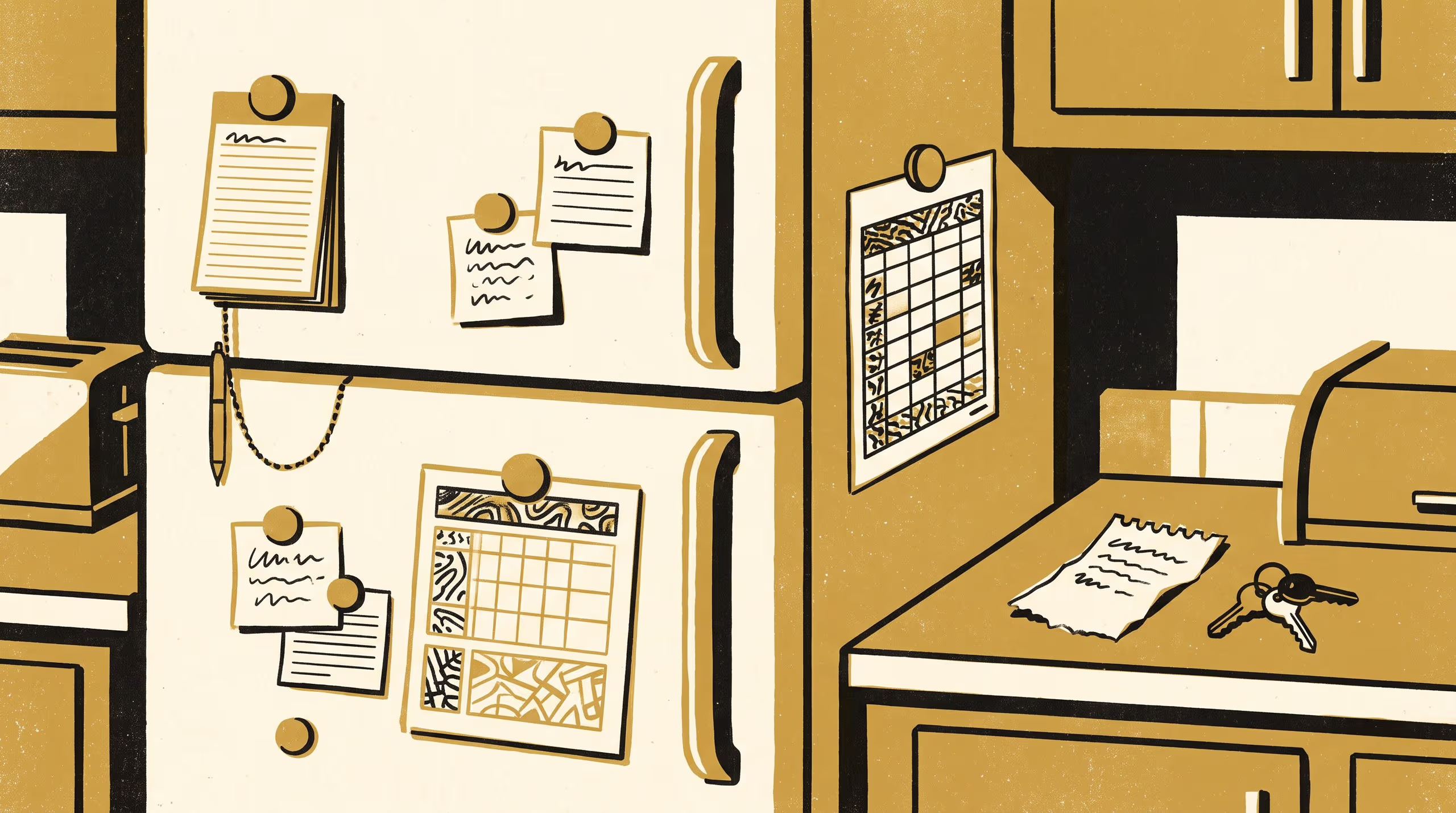
Slop as an inequality of effort in the written messages of sixty-four households
A doctoral thesis from the School of Emergent Priorities takes literally a definition of slop as whatever cost its maker less effort than it asks of the person who must understand it, and computes it for the 11,482 notes that sixty-four households left one another in twenty-six weeks. A tethered pen timed the writing of 9,604 of them (median eight seconds), fieldworkers timed 2,950 readings at home and 186 shopping trips made from the households' lists, and a crossover trial in 48 households tested two remedies. One note in seven asked more of its first reader than it had cost its writer and 69.0 per cent had cost their readers more by the time they came down, while the handover document, the kind rated hardest to understand, almost never did; the thesis argues that slop under the definition is a date and not a kind of text. The University has adopted the recommended Parity Rule, under which every document it issues states the time spent producing it, carries a register of the time spent reading it, and is withdrawn when the second exceeds the first, with no provision for extension.
| Authors | Gunnhild Ekwueme |
|---|---|
| School | School of Emergent Priorities |
| Output type | PhD thesis |
| Published | |
| DOI | 10.5555/slop.v6ey7n |
| Pages | 164 |
| Version | 1.0 |
| Licence | CC BY 4.0 |
Cites
- What the Word Was Worth
- Received Before It Was Checked
- Noted on Title
- Argued Until Marked
- What the Portal Can Read
- Still Says Free Delivery
- Codes That No Longer Resolve
- Put Trace
- In Square Brackets
- Open at the Data Cut
- Thawed Once More
- Running a Blank
- Copies of Copies
- What the Tray Remembers
- Closed, Still Waited At
- Level Five Is a Bucket
- Mid-Morning at the Cart Ledge
- Fit to Be Seen
- Nobody Finishes Last
- Notes on a Scoreboard That Will Not Show a Seventh Ball
- STRIKE
- The Rebook Button as Tenancy Instrument
- HEDGE
- Nobody Slips on a Landmark
- Towards a Shortage Response Standard
- What Belongs on the Fridge Door?
- A Household's Bin-Night Compliance Rating Depends on the Bin, Not the Household
- Carried Forward, Unopened
- Measuring the Off-Peak Line
- SCORE
- Most Raffle Tickets Are Sold by a Few Volunteers
- Pinned, Not Practised
- Did Anyone Read It?
- Three Classes, Six Answers
- Credited to the Sign
- Was Like That When We Moved In
- The Fridge Holds What the Form Does Not
- Fifteen Minutes, As Instructed
- Spun Fair, Done Elsewhere
- The Lane You Picked Is Not the Lane You Swim
- Some Notes Get Answered Faster
- Still Assigned to Whoever Left
- Logged More, Lightened Less
- What the Standard Doesn't Say
- The Minute as Alibi
Cite as
@phdthesis{slop_v6ey7n,
  author       = {Gunnhild Ekwueme},
  title        = {You Know the One: Slop as an inequality of effort in the written messages of sixty-four households},
  year         = {2026},
  school       = {Slop University},
  doi          = {10.5555/slop.v6ey7n},
  url          = {https://slop.university/outputs/slop-thesis-you-know-the-v6ey7n/},
}