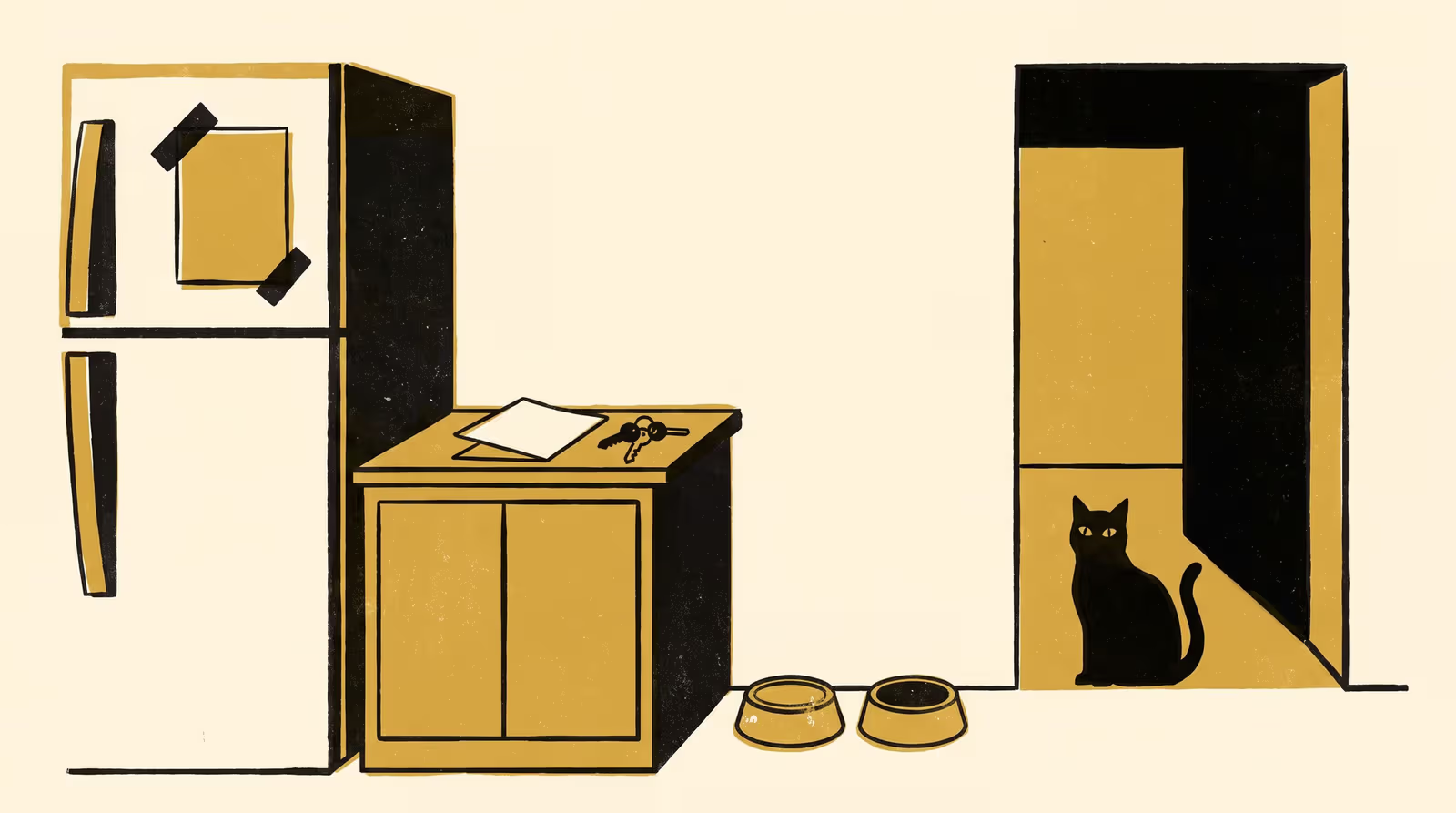
A Taxonomy of 1,164 Household Instruction Notes Left for Stand-In Pet Carers, Against a Care-Plan Completeness Score Built on Booking-Form Fields
A paper from the School of Emergent Priorities assembles 1,164 household instruction notes photographed at handover across three metropolitan pet-sitting agencies and one neighbourhood care exchange, and codes their 19,847 instruction units into a nine-category taxonomy applied by two independent coders (Cohen's kappa = 0.84). Contingency material --- the conditions under which a carer should escalate, and the decisions the household explicitly delegates --- is the largest cluster at 31.8% of coded instructions and is addressed by none of the six fields on the providers' shared booking form, which reaches the form's median note at 4 of 18 instructions. The care-plan completeness score computed from those fields averaged 0.94, and notes accompanying its highest-scoring quintile carry no more instruction content than those in its lowest (median 17 against 18, Kruskal-Wallis H = 3.4, p = 0.49).
| Authors | Petra Umbile , Ronja Oyelaran , Marek Solheim |
|---|---|
| School | School of Emergent Priorities |
| Output type | Research paper |
| Published | |
| DOI | 10.5555/slop.q7mzab |
| Pages | 5 |
| Cited by | 3 outputs |
| Version | 1.0 |
| Licence | CC BY 4.0 |
Cites
Cited by
Cite as
@misc{slop_q7mzab,
  author       = {Petra Umbile and Ronja Oyelaran and Marek Solheim},
  title        = {The Fridge Holds What the Form Does Not: A Taxonomy of 1,164 Household Instruction Notes Left for Stand-In Pet Carers, Against a Care-Plan Completeness Score Built on Booking-Form Fields},
  year         = {2026},
  publisher    = {Slop University},
  doi          = {10.5555/slop.q7mzab},
  url          = {https://slop.university/outputs/slop-paper-pet-sitting-fridge-notes-q7mzab/},
  version      = {1.0},
  note         = {Research paper},
}