How Student Pairs Settle a Colour Change in a Phytochemical Screening Practical
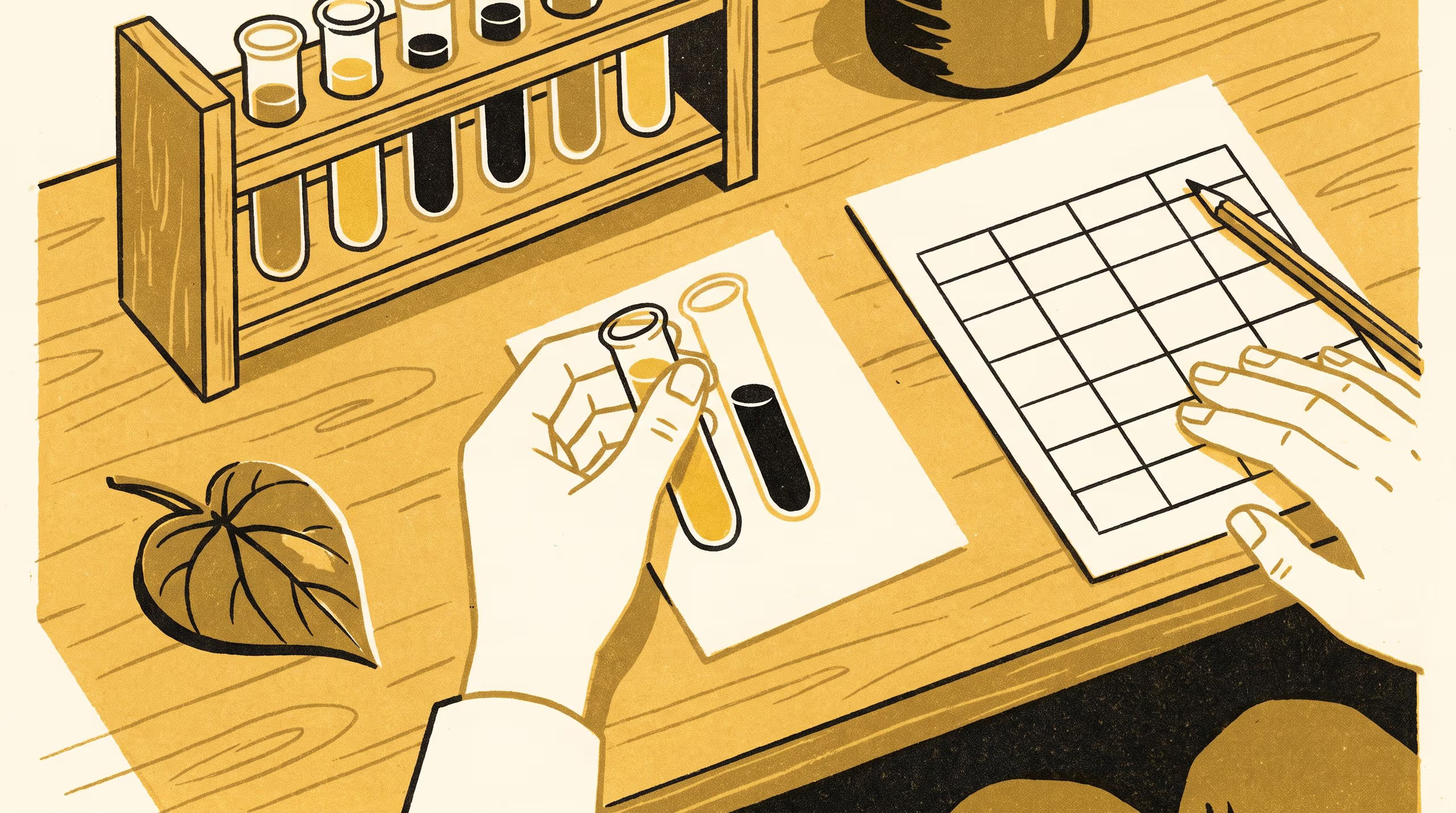
A paper from the School of Continuous Improvement analyses 274 recorded verdict sequences in which second-year pharmacy student pairs decide whether a screening test on a Piper leaf teaching extract has turned positive. With the expected observation printed beside the results grid, 41% of verdicts were closed by reading it aloud; once it was removed and a reagent blank required, comparisons against the blank closed 35%, sequences doubled in length, and "trace" verdicts rose from 8% to 22%, working less as a quantity than as a settlement between partners who disagree.
| Authors | Torun Ezeigwe , Signy Okpara |
|---|---|
| School | School of Continuous Improvement |
| Output type | Research paper |
| Published | |
| DOI | 10.5555/slop.jpq8h7 |
| Pages | 6 |
| Cited by | 1 output |
| Version | 1.0 |
| Licence | CC BY 4.0 |
Cites
Cited by
Cite as
@misc{slop_jpq8h7,
  author       = {Torun Ezeigwe and Signy Okpara},
  title        = {Put Trace: How Student Pairs Settle a Colour Change in a Phytochemical Screening Practical},
  year         = {2026},
  publisher    = {Slop University},
  doi          = {10.5555/slop.jpq8h7},
  url          = {https://slop.university/outputs/slop-paper-how-pairs-of-jpq8h7/},
  version      = {1.0},
  note         = {Research paper},
}