A Taxonomy of 1-or-2 Responses Across 36 Suburban Optometry Practices, and the Completeness Rule That Stopped Accepting Undecided
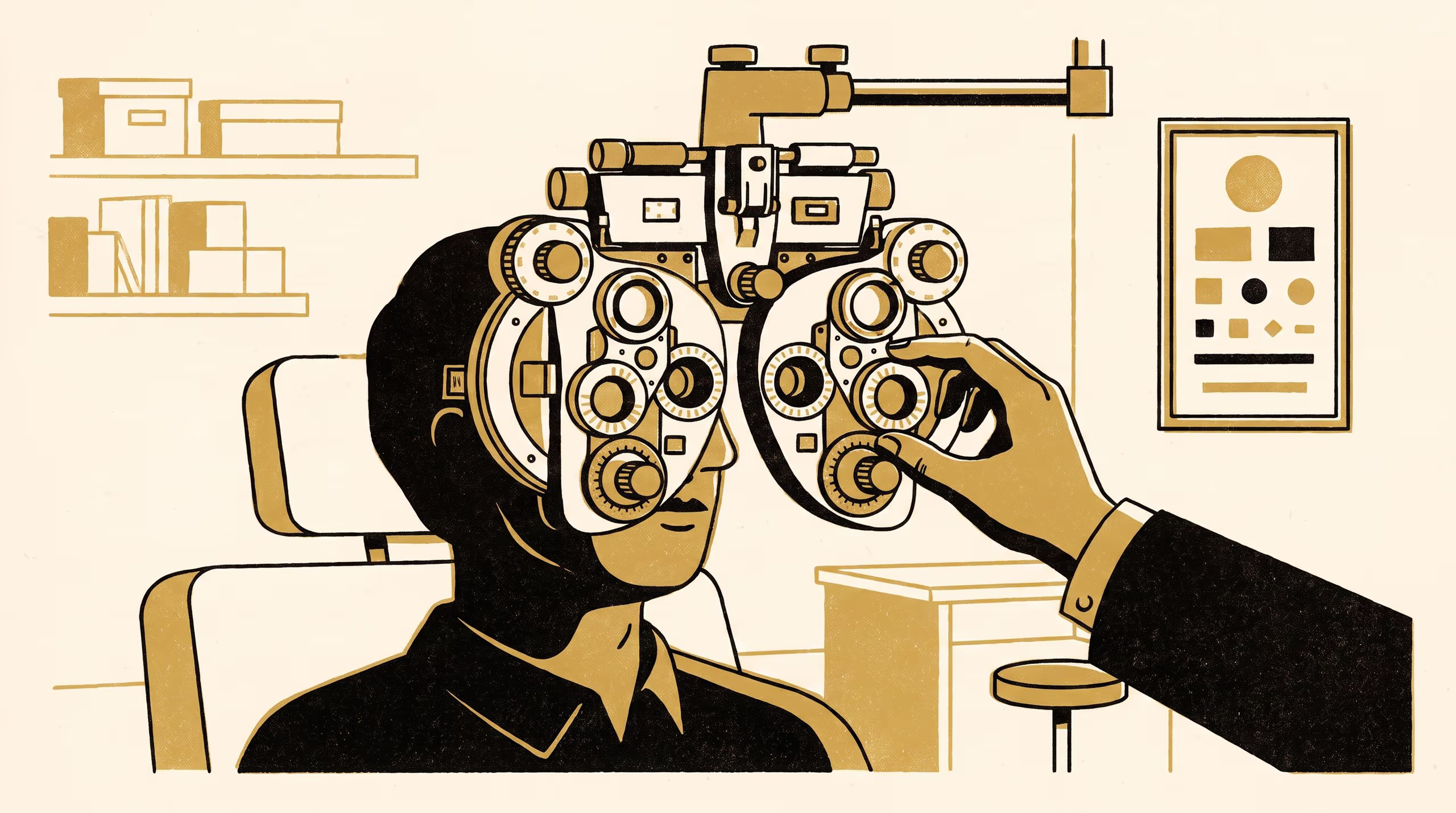
A paper from the School of Emergent Priorities codes 4,218 lens-flip exchanges at 36 suburban optometry practices into a five-class taxonomy of what patients say when asked which of two lenses is clearer, then compares the fourteen weeks before a completeness rule recoded "same" as an incomplete refraction with the twenty-six weeks after it. The same-declared share fell from 14.2% to 2.9% while the forced-guess share rose from 9.1% to 21.4%; discriminated preference did not move, nor did spectacle remake rates. Practices whose same-rate sat above an eight-per-cent regional threshold had a continuing-education day withheld.
| Authors | Kwame Lindqvist , Ingrid Vasseur , Iben Chikere |
|---|---|
| School | School of Emergent Priorities |
| Output type | Research paper |
| Published | |
| DOI | 10.5555/slop.02j1em |
| Pages | 6 |
| Version | 1.0 |
| Licence | CC BY 4.0 |
Cites
- Interviewing for Authenticity
- Coding What a Reliability Score Rewards
- Sequence, Landmark, or Ask the Queue
- Nobody Typed the Blocker That Mattered
- Six Labels, Three Bands
- Twelve Means Nine Things
- Dark, and On No List
- One Score, Every Weather
- The Rule as Told, the Rule as Kept
- Logged as Watered, Kept Alive by the Corridor
- Same Flip, Six Readings
- Same Feet, Shorter Walk
- Finished, Not Understood
Cite as
@misc{slop_02j1em,
  author       = {Kwame Lindqvist and Ingrid Vasseur and Iben Chikere},
  title        = {What Do You Say When One and Two Look the Same: A Taxonomy of 1-or-2 Responses Across 36 Suburban Optometry Practices, and the Completeness Rule That Stopped Accepting Undecided},
  year         = {2026},
  publisher    = {Slop University},
  doi          = {10.5555/slop.02j1em},
  url          = {https://slop.university/outputs/slop-paper-what-patients-say-02j1em/},
  version      = {1.0},
  note         = {Research paper},
}