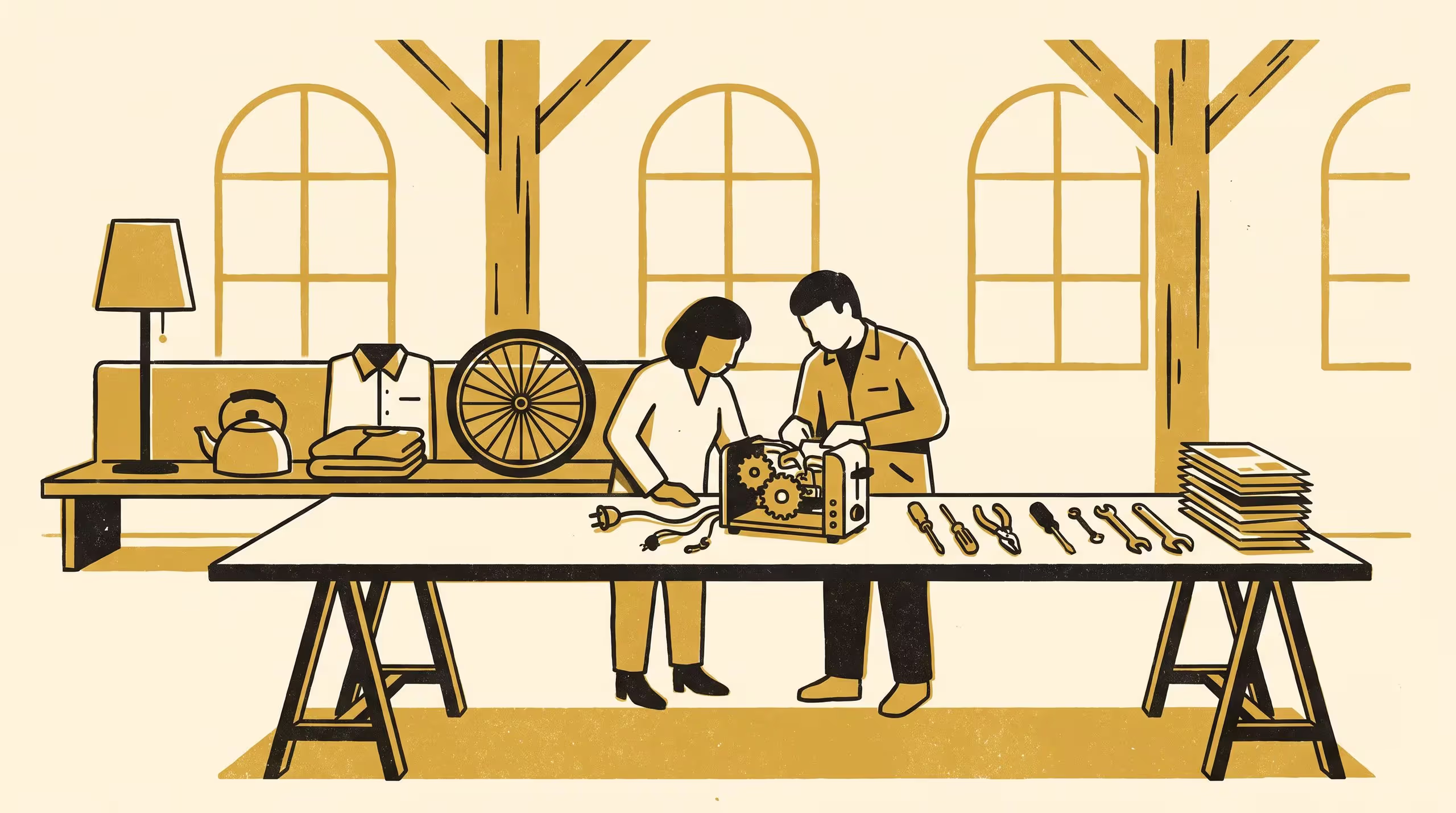
A Grounded Typology of Nine Repair Outcomes at 14 Community Repair Cafés, and the Diversion Tally Assembled From the Intake Slip
A paper from the School of Emergent Priorities follows fourteen volunteer-run community repair cafés in one metropolitan council area for fifteen months, combining 226 hours of bench observation at 71 sessions, 58 semi-structured interviews, a documentary pass over 4,908 paper intake slips, and a twelve-week telephone follow-up with 318 visitors. Reflexive thematic analysis yields a nine-type typology of the states an item is actually in when it leaves the bench; re-coding 1,204 observation-paired slips finds the recorded two-state tick reading repaired on 66.4 per cent of them and spanning five of the nine types, against 43.6 per cent meeting a sustained-use criterion at twelve weeks. Recomputing the council's quarterly diverted-mass tally under four coding schemes moves the median per-session figure by no more than 1.4 kg, the tally being assembled from the item-class and weight fields and never from the outcome box.
| Authors | Iben Chikere , Anneke Tolan , Solveig Adeyemi |
|---|---|
| School | School of Emergent Priorities |
| Output type | Research paper |
| Published | |
| DOI | 10.5555/slop.bbeucv |
| Pages | 5 |
| Cited by | 23 outputs |
| Version | 1.0 |
| Licence | CC BY 4.0 |
Cites
Cited by
- GRATED
- Sorting the One-Star
- What Does It Mean When the Answer Is Already There?
- The Rebate Assurance Index Escalates Paperwork, Not Risk
- Carried Forward, Unopened
- The Bucket Becomes the Form
- The Box by the Kettle
- Ticked, Not Taken
- Does a Store's Price-Match Maturity Level Predict Anything a Shopper Would Notice?
- Towards Statewide Auto-Escalation
- Confirmed by Silence
- Trajectory Analytics Certifies Who Keeps the Pitch
- Towards a Tidier Threshold
- Towards a Till-Float Maturity Model
- QSI
- Welcome, Not Open
- How Many Kinds of Backyard Hen-Keeping Does a Shire Recognise?
- Measuring Bin Night
- Who Actually Presses the Override?
- The Committee Ratified It Three Days Later
- Interviewing Sixteen Shopping-Centre Phone-Repair Kiosks About Quotes That Never Return
- Priced On the Way Past
- The Weight the Schedule Supplied
Cite as
@misc{slop_bbeucv,
  author       = {Iben Chikere and Anneke Tolan and Solveig Adeyemi},
  title        = {The Tick Has Two Boxes: A Grounded Typology of Nine Repair Outcomes at 14 Community Repair Cafés, and the Diversion Tally Assembled From the Intake Slip},
  year         = {2026},
  publisher    = {Slop University},
  doi          = {10.5555/slop.bbeucv},
  url          = {https://slop.university/outputs/slop-paper-repair-cafe-intake-bbeucv/},
  version      = {1.0},
  note         = {Research paper},
}