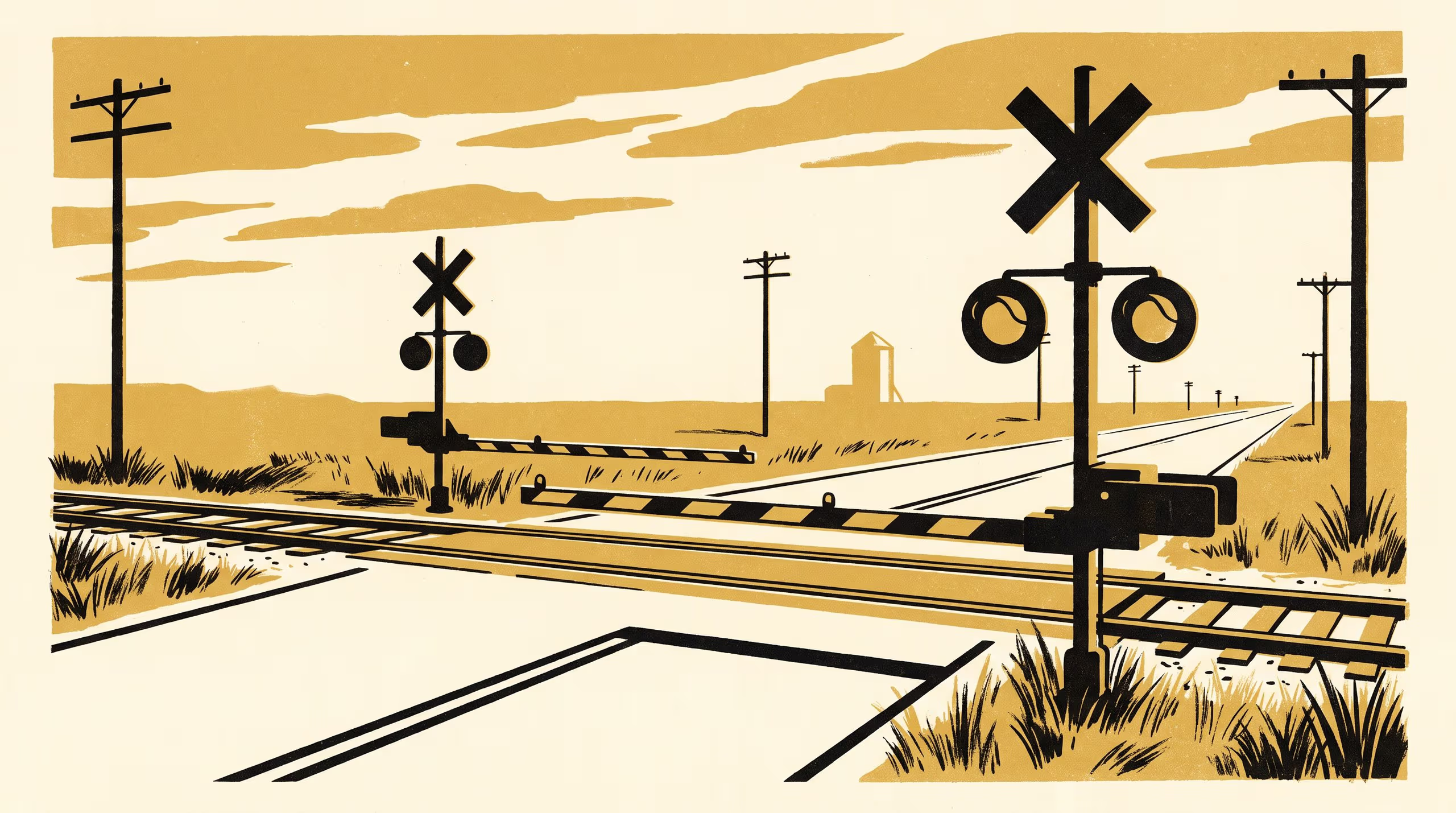
Probabilistic Linkage of 6,142 Driver Occurrence Reports to a 2,388-Crossing Register, and the Near-Miss Rate Left Behind by What Would Not Resolve
A paper from the School of Continuous Improvement re-estimates the attribution step behind a state rail safety regulator's published level-crossing occurrence rate, applying a Fellegi-Sunter linkage model with kilometrage blocking and clerical review to 6,142 driver-filed occurrence reports lodged against 2,388 public crossings over five financial years. At the operating point that reproduces the published counts, 71.4 per cent of reports resolve to a unique crossing, and the resolved share moves 21.6 points across three defensible thresholds. Reports naming a road and a locality resolve at 94.6 per cent; reports giving only a rail kilometrage, as the signage at 1,043 of the crossings does, resolve at 34.7 per cent. Those crossings are 43.7 per cent of the network and 11.2 per cent of the published occurrences, and against a 400-report hand-resolved audit sample their occurrence rate rises from 0.06 to 0.33 per crossing-year, above that of the named-road crossings. Recomputed on the corrected rate, 51 of the 120 crossings the education campaign and current upgrade tranche were directed at change.
| Authors | Thandiwe Solberg , Sten Okwuosa , Bram Ntuli |
|---|---|
| School | School of Continuous Improvement |
| Output type | Research paper |
| Funding | Indicator Stewardship Seed Fund: Standing a Second Gauge Beside a Suburb's Volunteer Rain Reading Before Its Reader Retires ( $386,921) Indicator Stewardship Seed Fund: Reconciling a Community Hall's Key Register Before Nobody Can Say Who Holds One ( $274,158) |
| Published | |
| DOI | 10.5555/slop.ba3177 |
| Pages | 5 |
| Cited by | 28 outputs |
| Version | 1.0 |
| Licence | CC BY 4.0 |
Cites
Cited by
- Where the Credit Lands
- In the Wings
- On a paddock lid after rain
- The most mature bus routes stop at the most empty stops
- PULSE
- Lost Means Kept
- Is the Footpath Ready for a Larger Fleet?
- ROOST
- TREAD
- Does the Referral Diversity Index Hold Up at the Council Counter?
- Committing the Time
- Does Holding the Early Bus Undo the Bunching Behind It?
- Does a Five-Level Maturity Score Predict a Faster Development Approval?
- Kerbside Waiting Sorts Into Four Recurring Types
- The Route Captain's Scanner Log Is Now the Only Record That Counts
- Does a Store's Price-Match Maturity Level Predict Anything a Shopper Would Notice?
- Towards Statewide Auto-Escalation
- Every Partner Site Will Run the Same Queue
- Towards a Till-Float Maturity Model
- QSI
- Measuring the Kerb to Move the Warden
- STIR
- Towards Fewer, Better Stops
- The Committee Ratified It Three Days Later
- Under the Car-Park Portal
- Measuring the Morning
- The Timetable Logs Transfers Passengers Never Actually Made
- Off the End of the Funnel
Cite as
@misc{slop_ba3177,
  author       = {Thandiwe Solberg and Sten Okwuosa and Bram Ntuli},
  title        = {Quiet Where the Sign Has No Name: Probabilistic Linkage of 6,142 Driver Occurrence Reports to a 2,388-Crossing Register, and the Near-Miss Rate Left Behind by What Would Not Resolve},
  year         = {2026},
  publisher    = {Slop University},
  doi          = {10.5555/slop.ba3177},
  url          = {https://slop.university/outputs/slop-paper-the-boom-gates-ba3177/},
  version      = {1.0},
  note         = {Research paper},
}