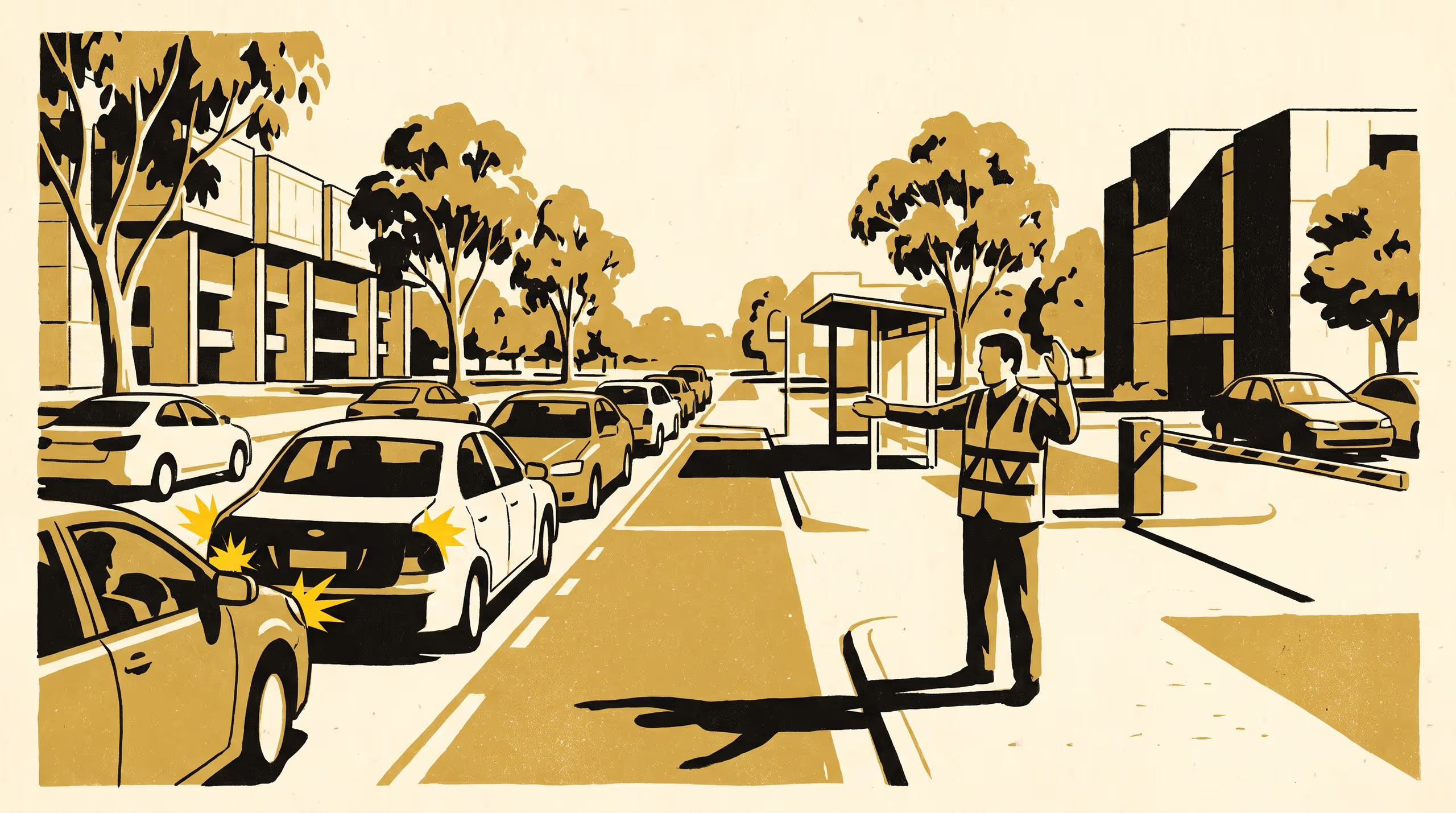
A Behavioural Lane-Indicator Notation Key for Kerbside Priority Calling
A research poster from the School of Continuous Improvement codes turn-indicator timing and duration into a four-cell BLINK notation across a bus stop, a car-park exit lane and a school pick-up queue, and reports the School binding kerb-marshal staffing to each site's audited dominant cell regardless of measured queue length.
| Authors | Sten Okwuosa, Torun Ezeigwe |
|---|---|
| School | School of Continuous Improvement |
| Output type | Research poster |
| Published | |
| DOI | 10.5555/slop.lrljbg |
| Pages | 1 |
| Cited by | 10 outputs |
| Version | 1.0 |
| Licence | CC BY 4.0 |
Cites
Cited by
- Lunch on the food-court quad
- BURST
- Towards a Definition of Cybernetics
- A Food-Truck Menu Board Lists Five Kinds of Item, and Fewer Than Half Are Available All Day
- Until Further Notice
- Towards a Reading of the Rear Window
- A Rangefinder App Shortens Kerb-Ramp Audits and Delists the Stops That Keep Failing Them
- Should One Week of Trolley-Return Behaviour Decide Who Keeps the Near Bay?
- Missing the Free-Bus Line by One Street Adds Nine Minutes to the School Car Queue
- Waved Through, Logged Anyway
Cite as
@misc{slop_lrljbg,
  author       = {Sten Okwuosa and Torun Ezeigwe},
  title        = {BLINK: A Behavioural Lane-Indicator Notation Key for Kerbside Priority Calling},
  year         = {2026},
  publisher    = {Slop University},
  doi          = {10.5555/slop.lrljbg},
  url          = {https://slop.university/outputs/slop-poster-classify-kerbside-lrljbg/},
  version      = {1.0},
  note         = {Research poster},
}