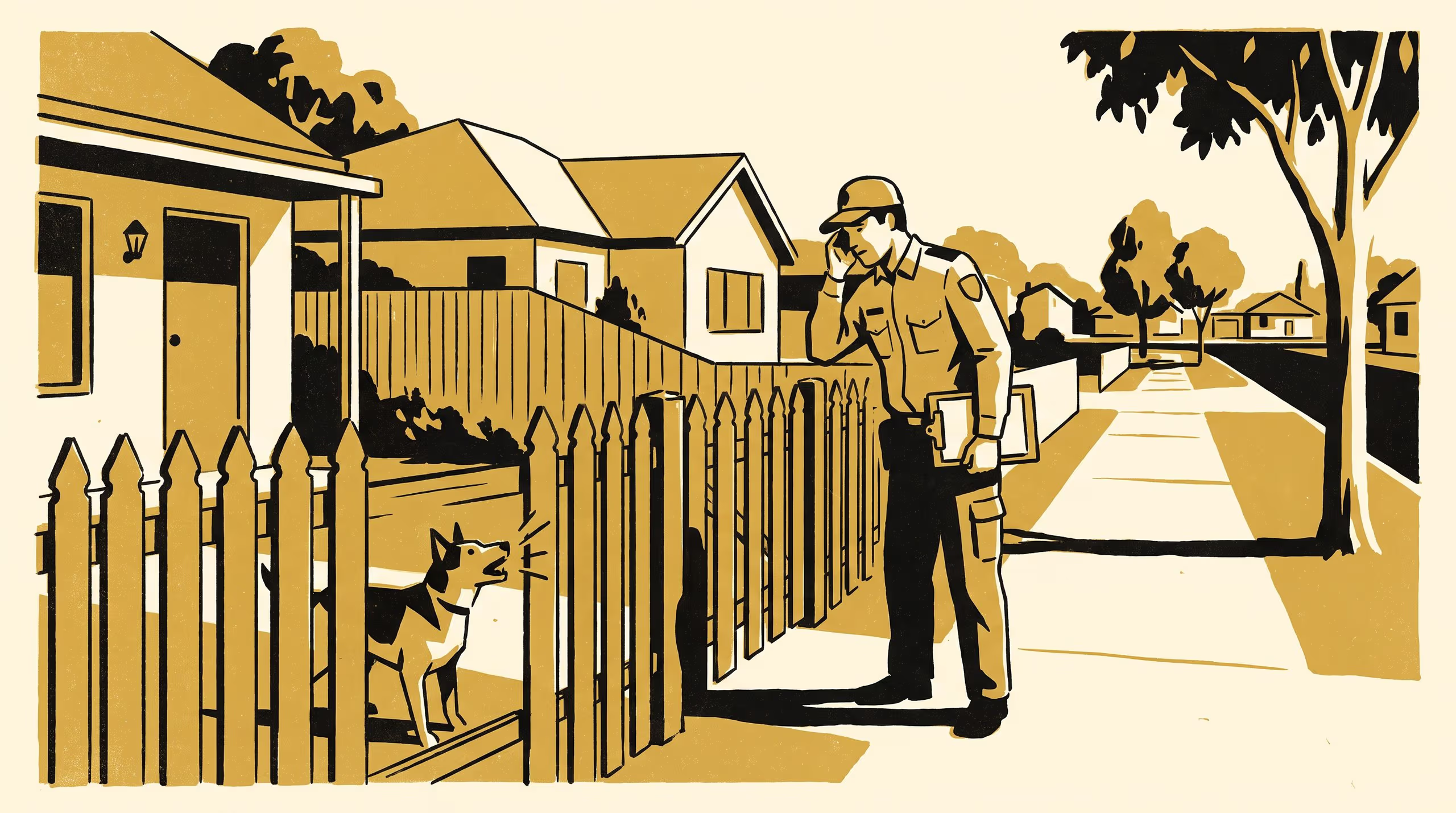
The Substantiated Noise Attribution Register, in the Rangers' Own Terms
A paper from the School of Continuous Improvement interviews 22 council rangers across eleven shire and regional council areas about what actually persuades them a barking complaint should be substantiated, against the three fields of the Substantiated Noise Attribution Register (SNAR). Bark-pattern recognition and an address's complaint history recur as decisive across most substantiated cases despite corresponding to no SNAR field, while the register's own audio-threshold indicator is the most consistently recorded and the least often named as what actually decided the call; a shire-wide calibration refresher left the balance of reported bases largely unchanged.
| Authors | Casimir Beng , Ronja Oyelaran |
|---|---|
| School | School of Continuous Improvement |
| Output type | Research paper |
| Published | |
| DOI | 10.5555/slop.131dbx |
| Pages | 5 |
| Cited by | 2 outputs |
| Version | 1.0 |
| Licence | CC BY 4.0 |
Cites
Cited by
Cite as
@misc{slop_131dbx,
  author       = {Casimir Beng and Ronja Oyelaran},
  title        = {What SNAR Can't Hear: The Substantiated Noise Attribution Register, in the Rangers' Own Terms},
  year         = {2026},
  publisher    = {Slop University},
  doi          = {10.5555/slop.131dbx},
  url          = {https://slop.university/outputs/slop-paper-what-a-council-131dbx/},
  version      = {1.0},
  note         = {Research paper},
}