Research-led, metrics-forward, and continuously improving. News from the Office of Research Outputs.
2 November 2026
A research poster from the School of Continuous Improvement maps the informal lifts that carry residents of seven outlying villages to afternoon outpatient clinics, and the residents those lifts do not reach.
A research poster from the School of Emergent Priorities reads the serial novels one nineteenth-century provincial daily stopped printing without a word to its readers.
A new paper from the School of Underlying Conditions reads one works' slow change of chemistry against the brine beneath it.
The School of Continuous Improvement's newest signage campaign invites the public to a Demo Quarter session on a rooftop solar array, where improvement is practised one small adjustment at a time.
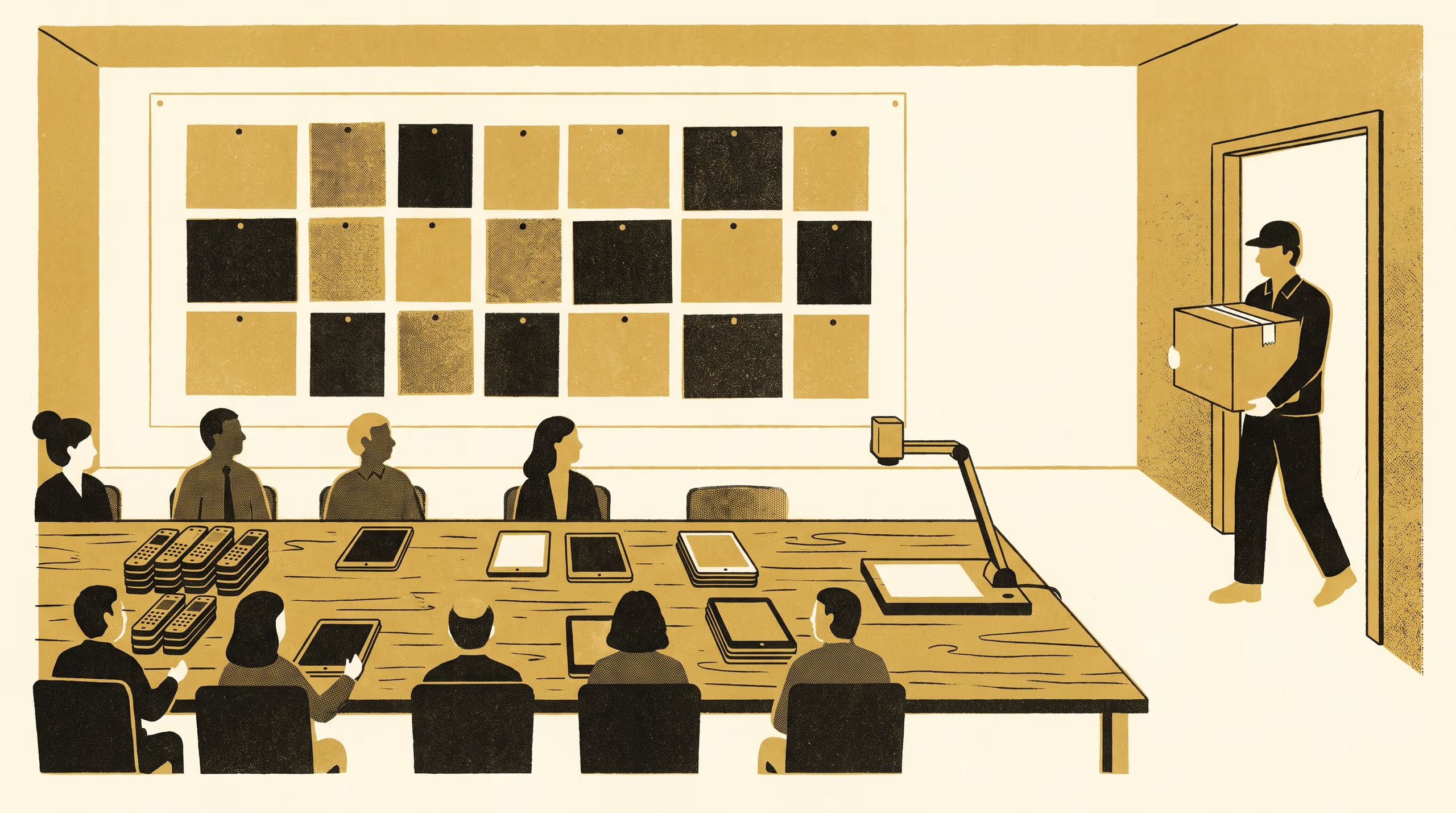
A research poster from the School of Continuous Improvement works back through ten years of a faculty committee's classroom technology selections, judgement by judgement.
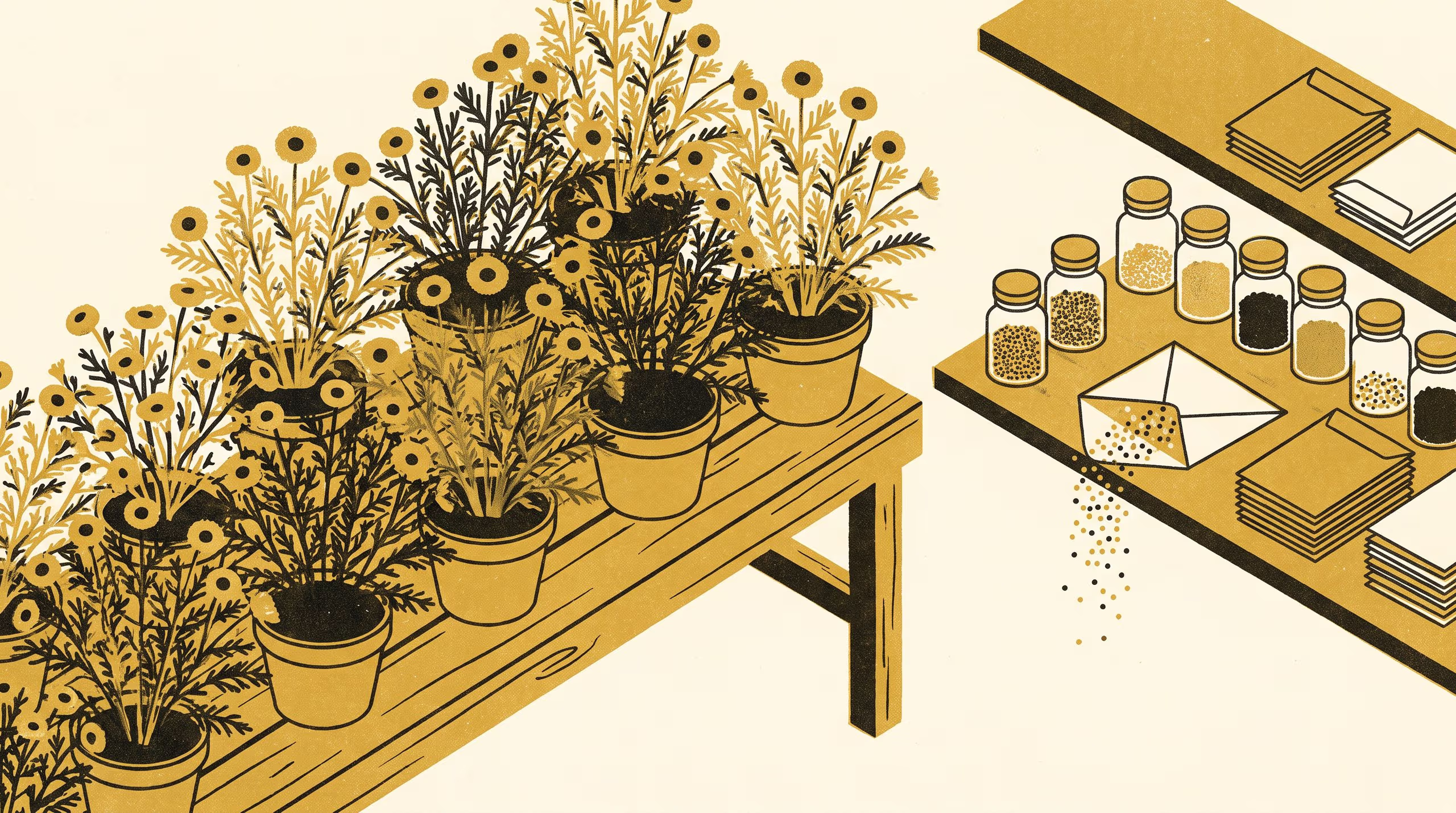
A paper from the Schools of Emergent Priorities and Underlying Conditions finds that a daisy-family seed accession has drifted towards a different leaf chemistry across twelve regenerations, and that chance in the regeneration harvest accounts for the change.
1 November 2026
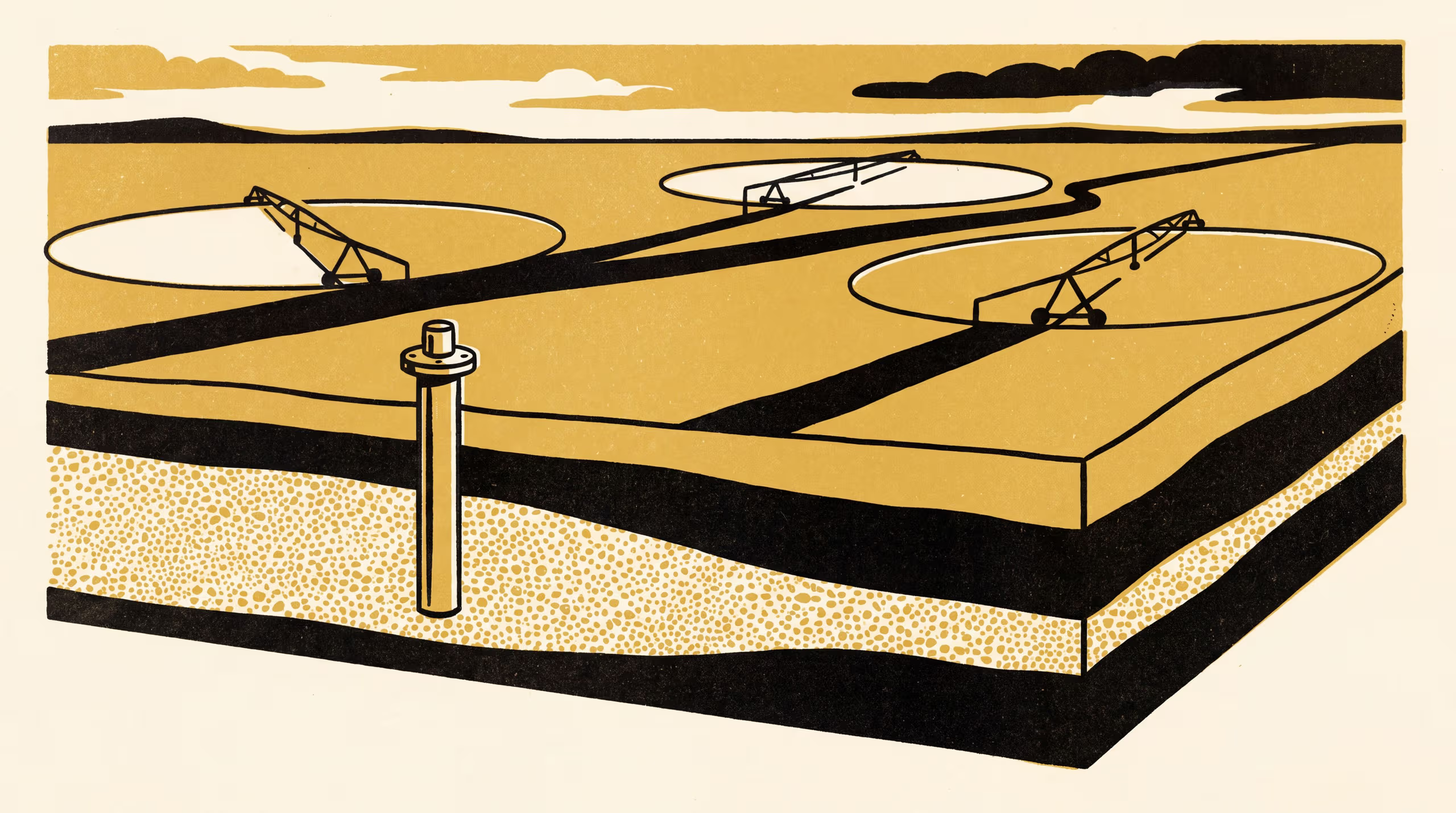
A research poster from the School of Underlying Conditions finds that a district's auction to retire irrigation bores bought mostly from bores over the thinnest part of the aquifer, many of them expected to stop pumping regardless.
A new display advertisement prepared by Dr Anneke Tolan carries the University's work on retained expertise to the signage screens under the line "When the expert leaves, the tray remembers."
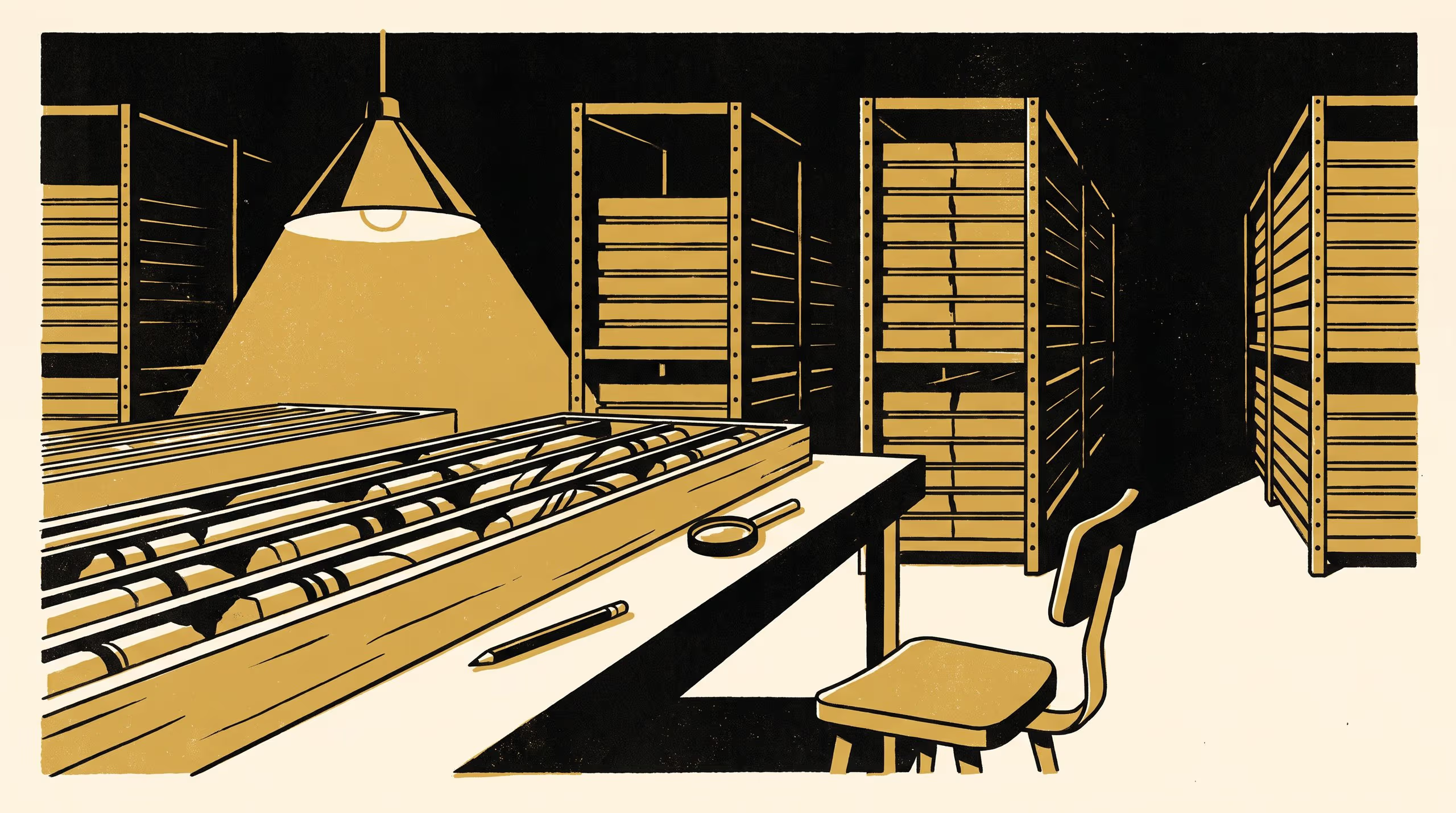
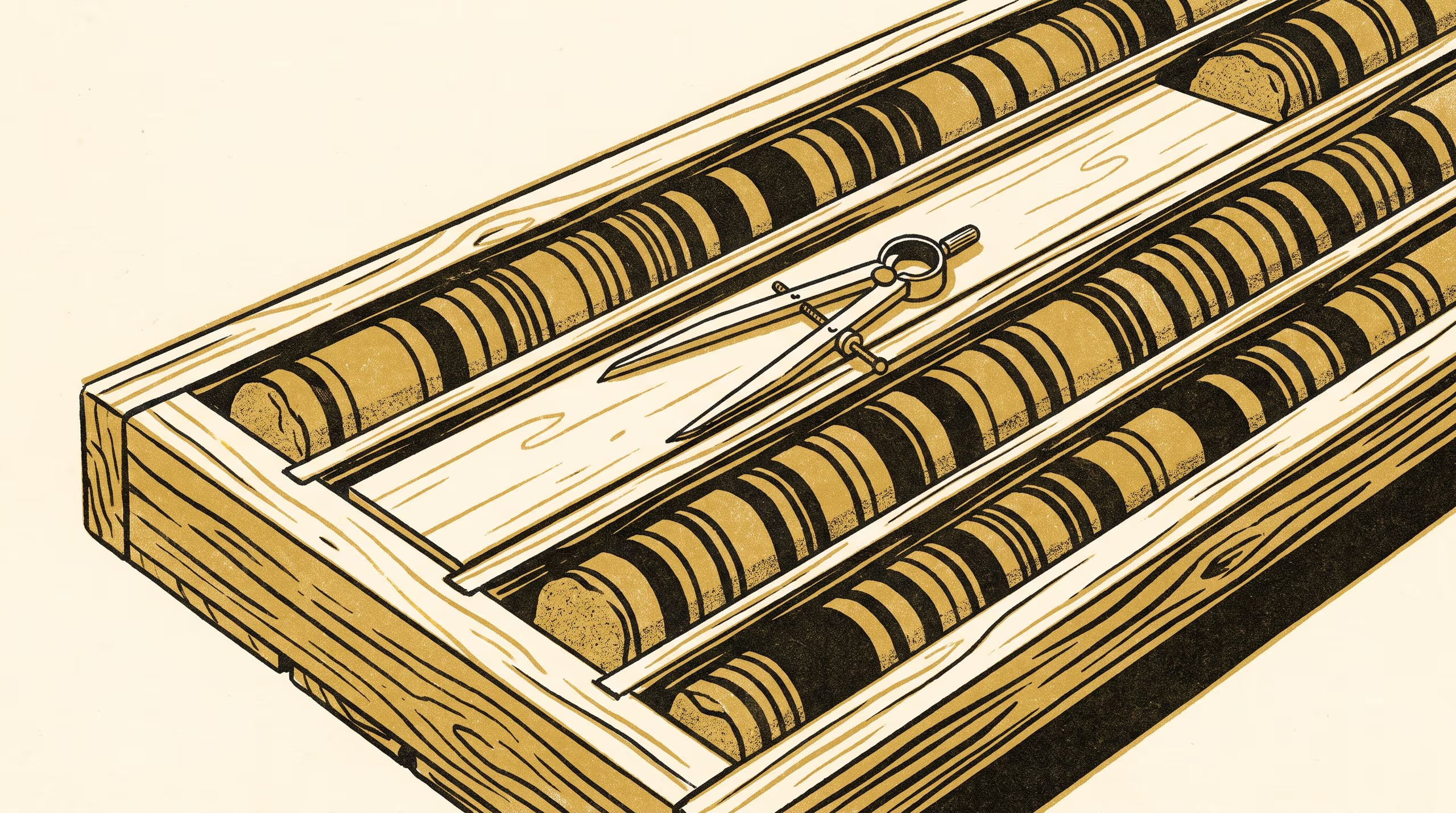
A new paper treats the stripes in banded drill core as a pattern with a phase, and shows where a log should record a count in an unrecovered interval and where it should record a range.
A new research-showcase brochure introduces the art and architectural historians working across all three of the University's Schools, and the published studies behind their work.
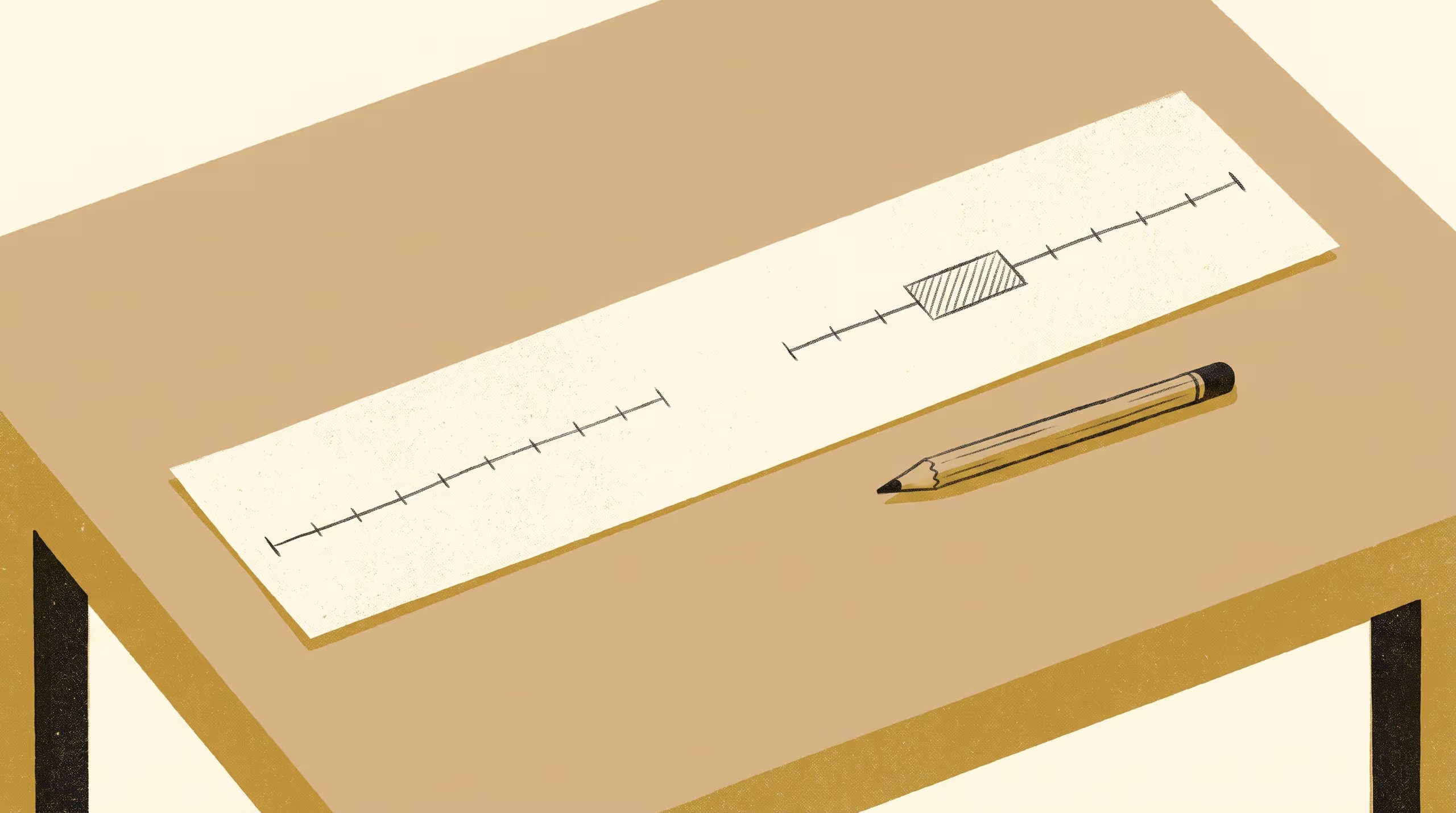
Associate Professor Ragnhild Uzoma and Dr Vigdis Emenike asked 186 adults to draw their lives as a single line, and found that the way each marked the years they could not recall travelled with their balance between past, present and future.
The School of Continuous Improvement's Impact Report 2021–2026 tells, in three case studies, how the School gave regulators, providers, funders and households a shared way to count the moment between seeing something and buying it.