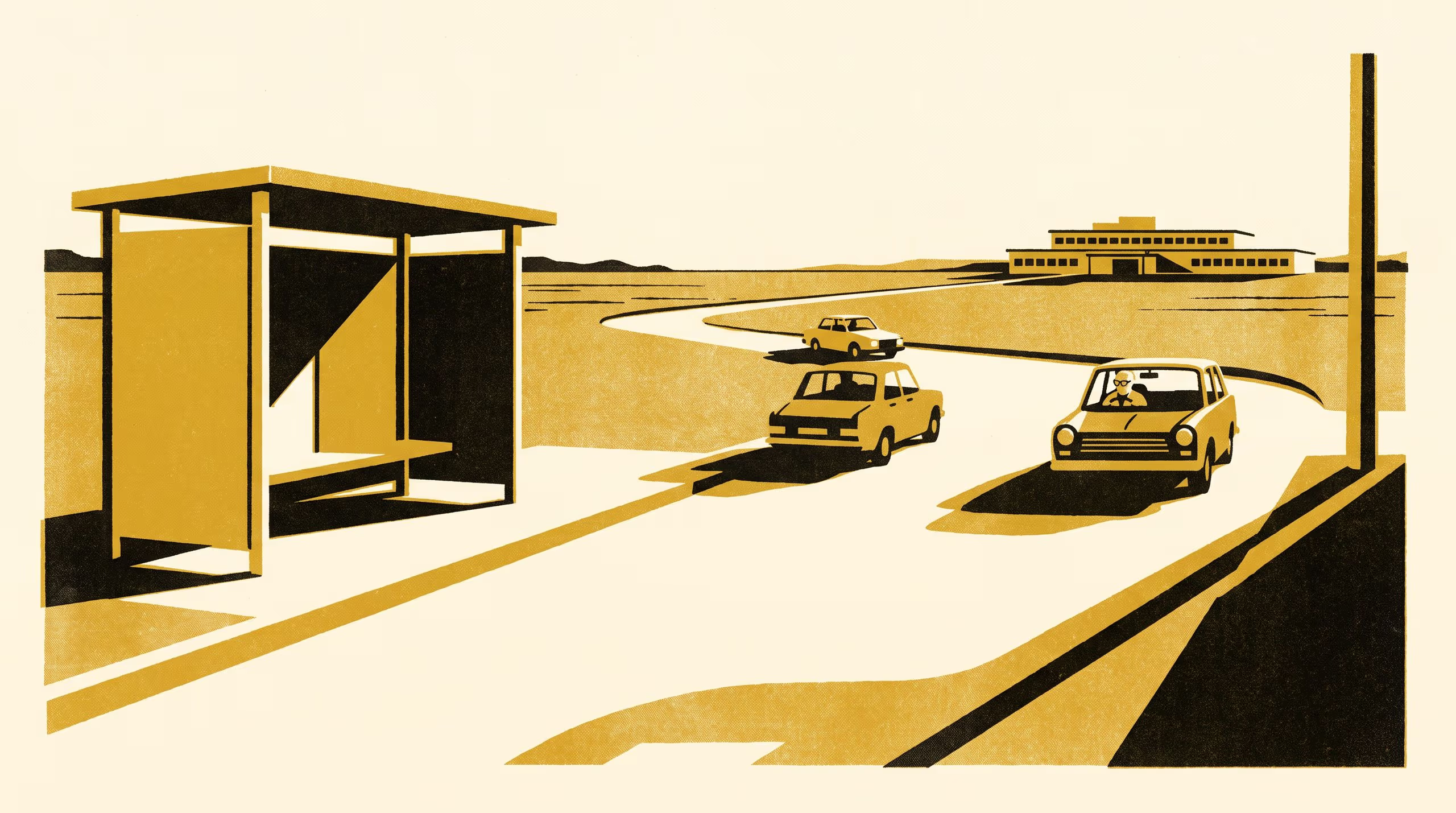
A research poster from the School of Continuous Improvement maps the informal lifts that carry residents of seven outlying villages to afternoon outpatient clinics, and the residents those lifts do not reach.
A School of Continuous Improvement study follows the lifts that reach outpatient appointments once the last bus home has left
A small number of neighbours, most of them retired, are carrying a regional hospital’s afternoon outpatient clinics on their back seats, according to a new research poster from the School of Continuous Improvement. After the 2.40 Has Gone is the work of Dr Osei Vandermeer, Research Fellow and Convenor of the Review Cadence Observatory, with Dr Marit Osayande, Lecturer and Convenor of the Living Dashboard, and Dr Ronja Oyelaran, Senior Lecturer and Deputy Convenor of the Strategic Drift Survey in the School of Emergent Priorities.
Every lift in these diaries was a small piece of planning by someone with no timetable to answer to. We hope the poster travels to the people who write the timetables, and to the people who already know them by heart.
— Dr Osei Vandermeer, Research Fellow and Convenor, Review Cadence Observatory
The team brought resident travel diaries into dialogue with conversations among those who give and receive lifts, mapping the networks of goodwill that underpin attendance across seven outlying communities and setting morning and afternoon outcomes side by side. Among 184 diarists, those who could name no lift-giver kept 91 per cent of their morning appointments as booked and 58 per cent of their afternoon ones.
The poster sits within the University’s steadily widening attention to the places its services reach last, and to the informal arrangements that fill the distance in between.
“We are grateful to every household that kept a diary through a long winter, and to the drivers who let us ride along in their accounting of favours,” said Dr Oyelaran.
The full poster is available from the University’s research repository under an open licence, doi:10.5555/slop.9vhgvu.