Research-led, metrics-forward, and continuously improving. News from the Office of Research Outputs.
31 July 2026
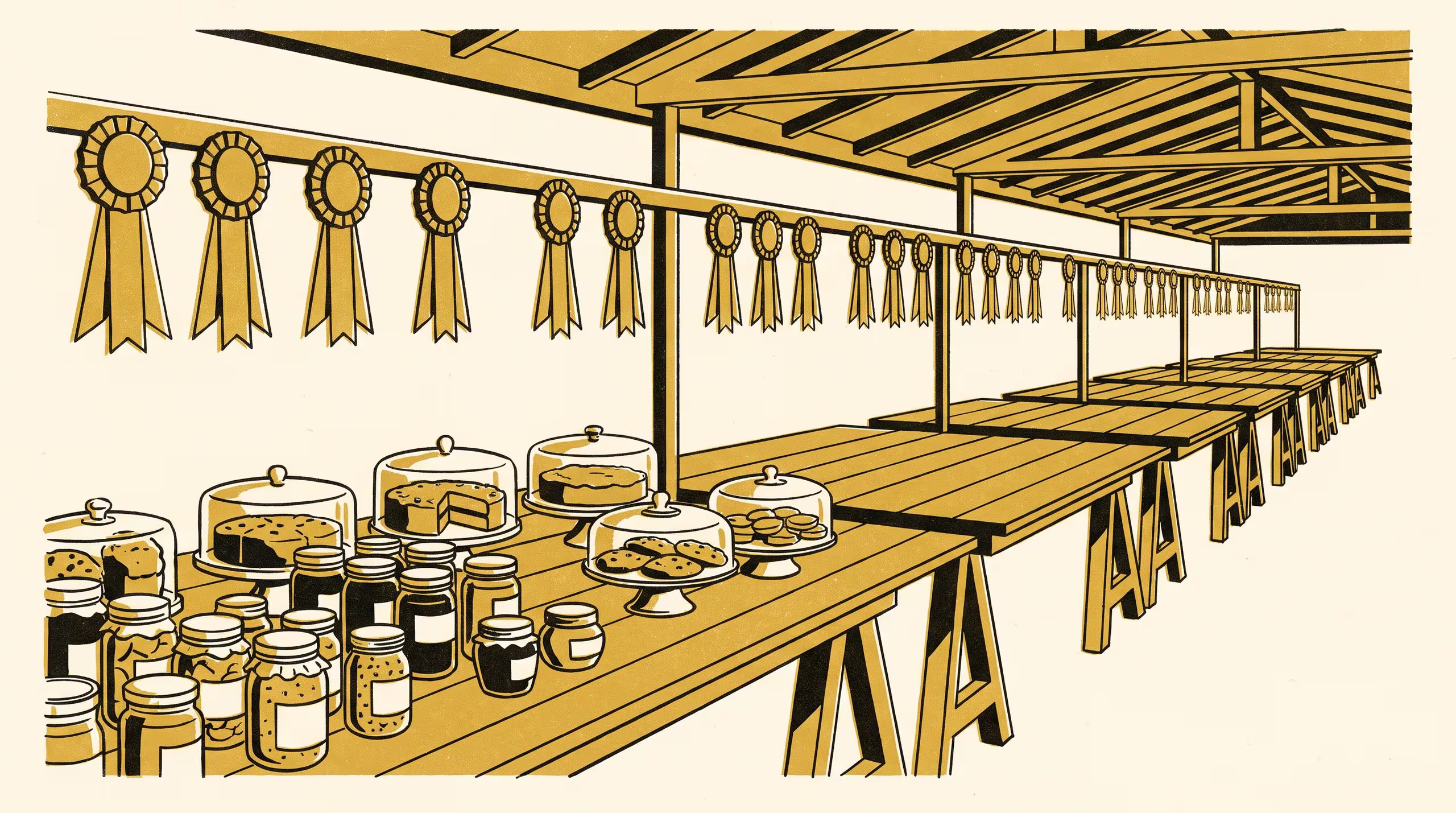
A new Slop University research poster reads thirty years of a country show society's cookery schedule and finds that a class enters by resolution and leaves only when its trophy donor does.
A new Slop University paper audits 1,164 scripted assistance requests at 19 hardware stores and finds the chain's published service-availability score computed from the one channel that carries 8 per cent of them.
A new Slop University research poster reconstructs a food relief network's annual meals provided figure from consignment records and finds one donor's collection schedule carrying 0.613 of its year to year variance, against 0.111 for the four inputs the network itself controls.
A new Slop University research poster randomises the float and the unit pricing at 58 roadside honesty-box stalls, and finds a district listing scheme's honesty index tracking whether a passing driver could make exact change.
A new Slop University research poster evaluates an appointment yield indicator across 26 blood collection centres and finds the reported figure climbing while whole blood volume does not move, as deferral relocates to a pre-booking telephone call no reporting line counts.
Four blind assessors rated the same 312 end-of-term learn-to-swim assessments for a new Slop University research poster, which finds the operator's six-stage framework separating reliably into three bands, with most recorded progression falling inside the assessors' own disagreement.
A new Slop University paper audits 1,204 supermarket delisting decisions against the planning assumption that most of a withdrawn line's sales return through a nominated replacement, and finds observed recovery at less than half that figure.
A new Slop University signage campaign compresses a published workshop time study into eight words, a drawn service bay and a code to scan.
A new Slop University paper derives a nine-type typology of community repair outcomes from 226 hours of bench observation, and finds the council diversion tally those sessions are judged by reads the weight field rather than the outcome box.
A new Slop University research poster times 1,318 logbook vehicle services element by element and finds observed elapsed time exceeding the flat-rate allowance on 78 per cent of them, with a third of attended time falling in elements the schedule does not represent at all.
A new Slop University paper releases an open dashcam corpus and reader for roadside fuel price boards, and finds boards trailing notified price cuts by a median four hours while the notification scheme's timeliness rate stays above 99 per cent.
A new Slop University paper repeats an earlier dog park gate counter study at five further sites and does not recover the dawn undercount that five councils now correct for in their off-lead-hours decision rules.