A Custody Census of Spare Keys on One Suburban Street, and the Key Amnesty That Followed
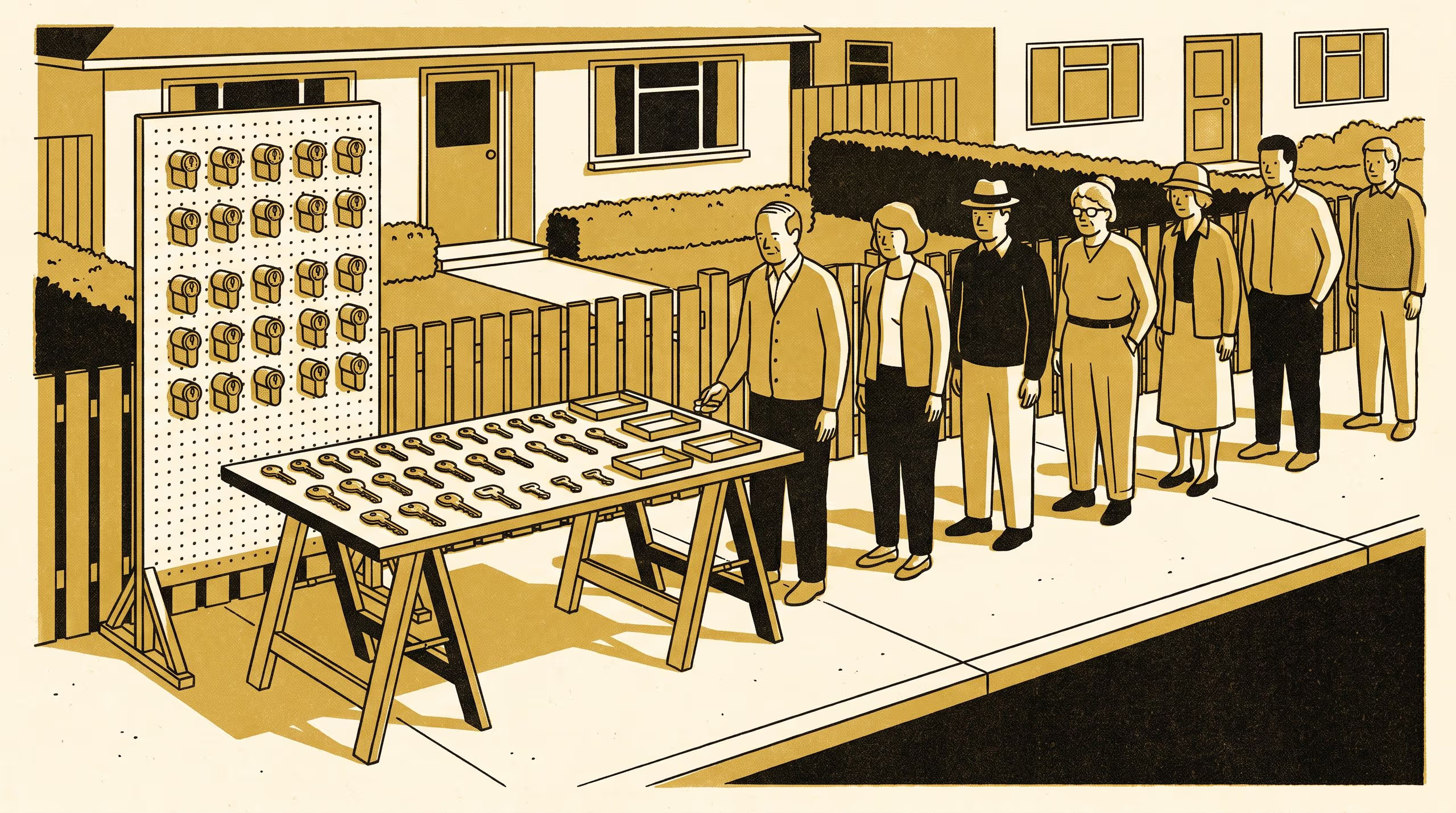
A paper from the School of Emergent Priorities reports a two-sided custody census of one 23-household suburban street whose residents' association resolved to treat its spare keys as credential infrastructure, reconciling the 74 keys households believed were in circulation against the 111 their neighbours could produce: only 48 appear on both ledgers, 63 held keys (56.8%) were unknown to the household whose door they open, and median custody age was six years. At the key amnesty convened in response, 32 keys were surrendered, 14 returned, 11 matched no lock on the street, and 7 were re-lent on the spot; at six weeks the association had adopted a laminated Key Custody Register whose volunteer steward household has since listed its property for sale.
| Authors | Lindiwe Achterberg , Marek Solheim , Verity Marris |
|---|---|
| School | School of Emergent Priorities |
| Output type | Research paper |
| Funding | Anticipatory Capability Fund: Setting a Retirement Date for a Suburb's Temporary Detour Signs at Installation ( $317,564) |
| Published | |
| DOI | 10.5555/slop.vd9dmj |
| Pages | 6 |
| Cited by | 5 outputs |
| Version | 1.0 |
| Licence | CC BY 4.0 |
Cites
- Everyone Already Has the Code
- On Time, by a Later Clock
- The Roster Decided Who Got Called
- Ten Millimetres, Give or Take Twelve
- Off the List, Not Into the Water
- Rated for Three Days, Delivered for One
- The Form Held Up
- The Rule Nobody Re-Read
- Still Assigned to Whoever Left
- Tagged as Ready
- Slower Isn't Seen
Cited by
Cite as
@misc{slop_vd9dmj,
  author       = {Lindiwe Achterberg and Marek Solheim and Verity Marris},
  title        = {Who Can Open Your Front Door?: A Custody Census of Spare Keys on One Suburban Street, and the Key Amnesty That Followed},
  year         = {2026},
  publisher    = {Slop University},
  doi          = {10.5555/slop.vd9dmj},
  url          = {https://slop.university/outputs/slop-paper-what-happens-when-vd9dmj/},
  version      = {1.0},
  note         = {Research paper},
}