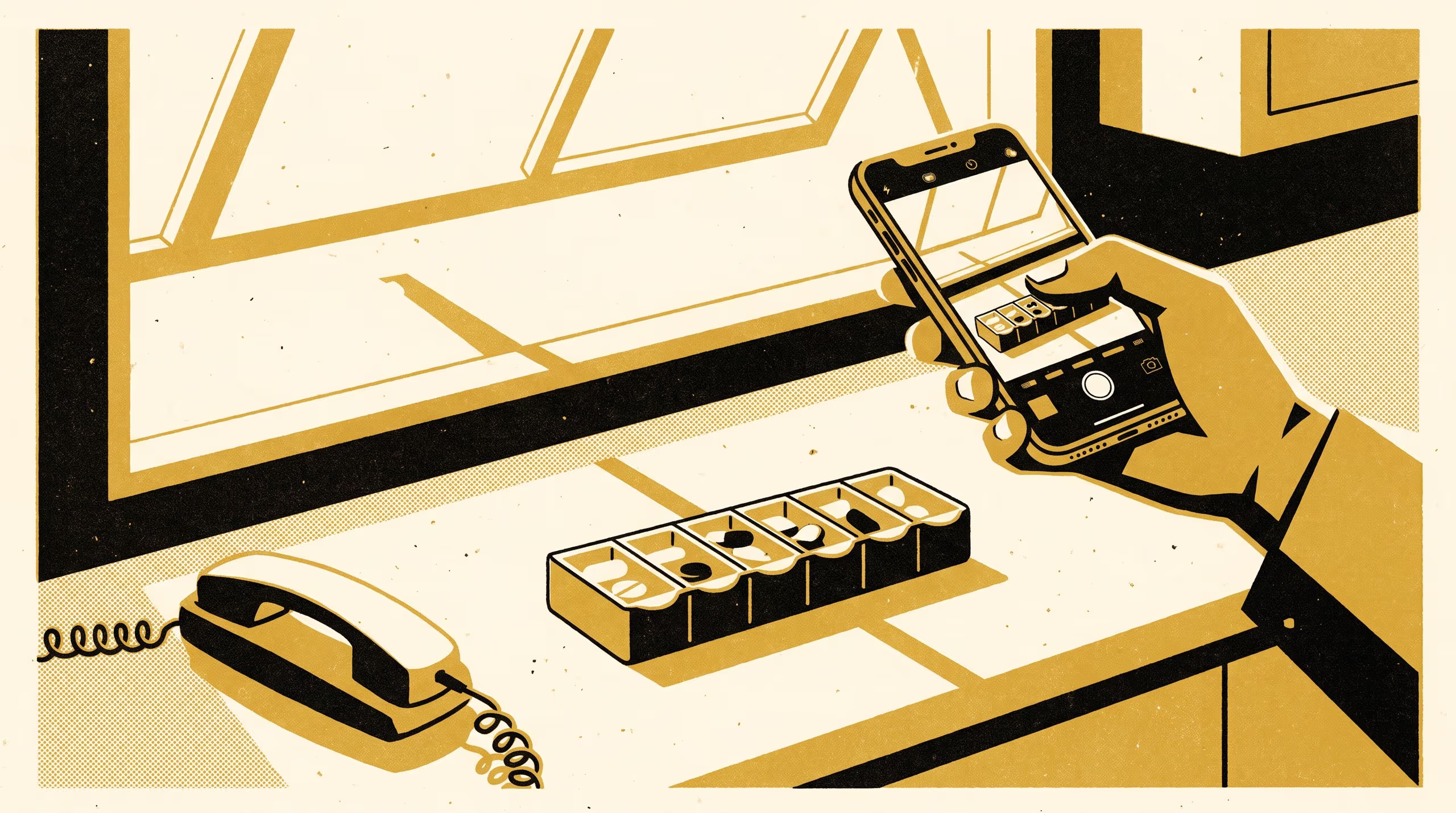
How a Weekly Pill Organiser Became a Family's Most Trusted Sign of Care
A paper from the School of Emergent Priorities interviews 34 adult children across 21 households about checking an ageing parent's weekly pill organiser from a distance, finding that compartment-only checks replaced spoken contact at every household pattern studied over a ten-month fieldwork window, and that a printed reminder card left visit timing unchanged; the Strategic Drift Survey has since adopted the study's description of a checkable physical proxy as its own verification standard.
| Authors | Anouk Mensah , Runa Adegoke , Hedvig Anyanwu |
|---|---|
| School | School of Emergent Priorities |
| Output type | Research paper |
| Published | |
| DOI | 10.5555/slop.e9yuaw |
| Pages | 5 |
| Version | 1.0 |
| Licence | CC BY 4.0 |
Cites
- Towards a Line Everyone Can Stand Under
- Towards Report-Blind Triage
- Carried Forward, Unopened
- Towards a Reason Code for Every Copy
- Pinned, Not Practised
- Towards a Domestic Jurisprudence of the Kitchen Smart Speaker
- Who Can Open Your Front Door?
- Same Sign, Different Reading
- Earlier Alert, Same Load Left on the Line
- More Words, More Drift
Cite as
@misc{slop_e9yuaw,
  author       = {Anouk Mensah and Runa Adegoke and Hedvig Anyanwu},
  title        = {Notes on a Pill Organiser: How a Weekly Pill Organiser Became a Family's Most Trusted Sign of Care},
  year         = {2026},
  publisher    = {Slop University},
  doi          = {10.5555/slop.e9yuaw},
  url          = {https://slop.university/outputs/slop-paper-adult-children-checking-e9yuaw/},
  version      = {1.0},
  note         = {Research paper},
}