Research-led, metrics-forward, and continuously improving. News from the Office of Research Outputs.
10 August 2026
Slop University's newest recruitment campaign for the Master of Applied Measurement puts a primary-school report card's effort-grade box on the University's bus-stop and campus signage, inviting prospective students to notice what the mark assumes stays constant from one teacher's term to the next.
A new Slop University paper builds a checkout-history score to flag which tool-library members are likely to return equipment late, then tests it against a volunteer roster's own blind shortlist, finding the two name the same members about as often as they disagree, and score just as well as each other by season's end.
A new Slop University paper interviews and observes food-truck operators across five precincts to catalogue the informal rules that decide who gets a shared power bay, finding a hand-written sign-up sheet introduced mid-season left the pattern of disputes unchanged.
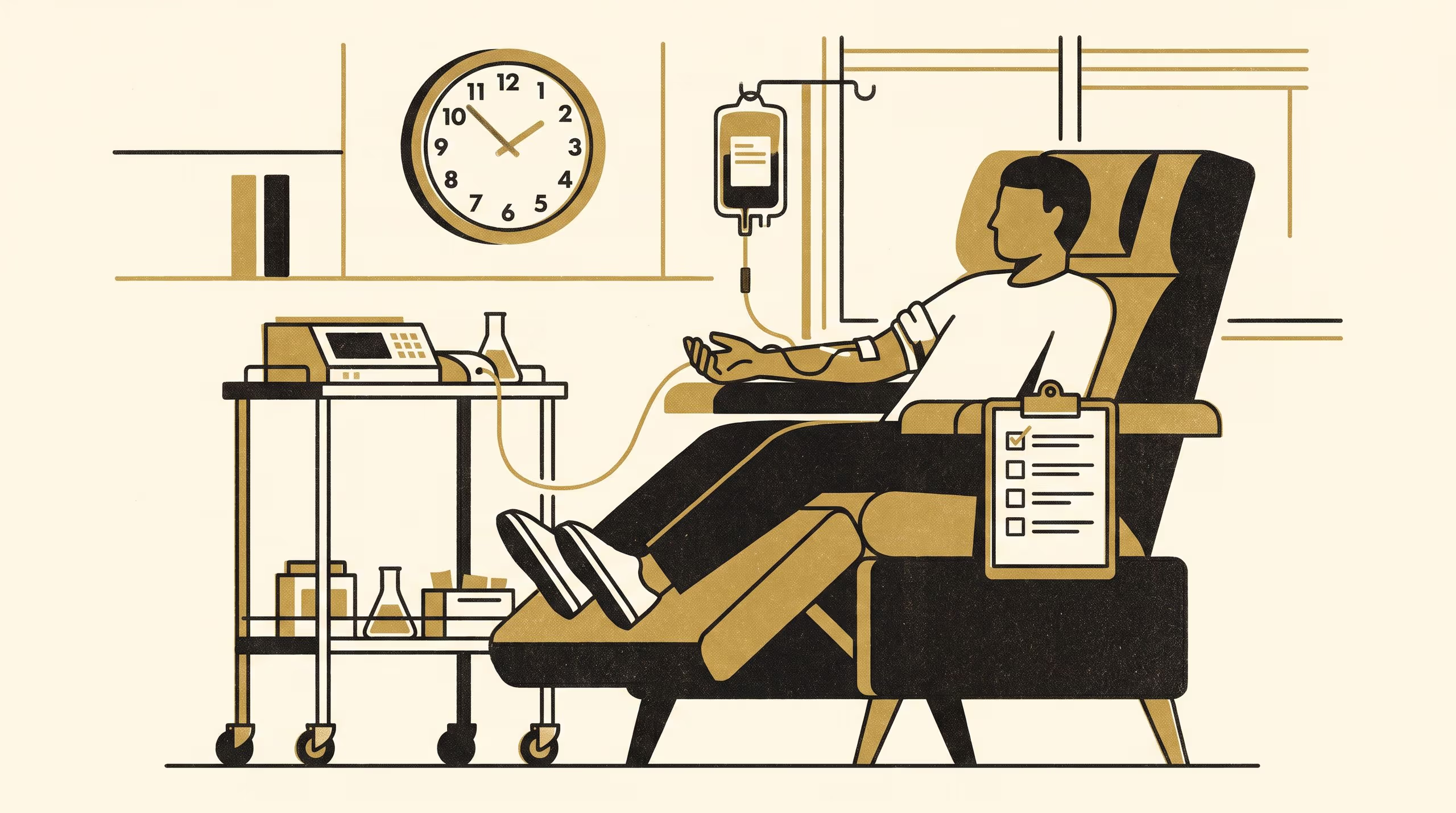
A new Slop University paper links a blood donation network's "attended" booking flag against its own phlebotomy outcome log, finding a fifth of appointments logged as attended were early-stopped or self-withdrawn draws that still triggered the same next-eligible reminder as a completed donation.
A new Slop University paper reports a six-week pilot of a compliance dashboard built to score a dry cleaner's printed ready-by promise against its actual call-back time, finding the narrowing tracks something other than staff watching the display.
A new Slop University paper audits 2,400 passport-photo booth captures against independent proofing-officer judgement, finding the booth's accept and reject calls agree with a human's only fairly, and that a majority of what it rejects, an officer would have passed.
Slop University has published Every Signal, Fully Read, a prospectus brochure that follows an apartment intercom's buzzed-in tap out to two of the University's published findings and the postgraduate programmes built around questioning signals like it.
A new Slop University paper audits six months of visitor sign-in logs across 74 aged-care facilities, finding the average-visit-duration figure behind an overnight companionship-staffing decision is set less by visiting than by each facility's own tablet timeout setting.
A new Slop University research poster audits nine library branches' hold- shelf systems, finding the pickup countdown starts at the shelf scan rather than when the collection email actually leaves the queue, letting an already-delayed notice still expire on schedule.
A new Slop University paper tests whether a warehouse's oral food-safety checkbox predicts what workers still know three months later, finding the tick accurately records that a supervisor asked something, but nothing about the worker's answer or what became of it.
A new Slop University research poster classifies 214 open-plan office desk-shifts into a badge-tap-compliance and occupancy quadrant typology, finding a fifth of occupied desks lacked a compliant tap and were reassigned mid-shift regardless of who was sitting there.
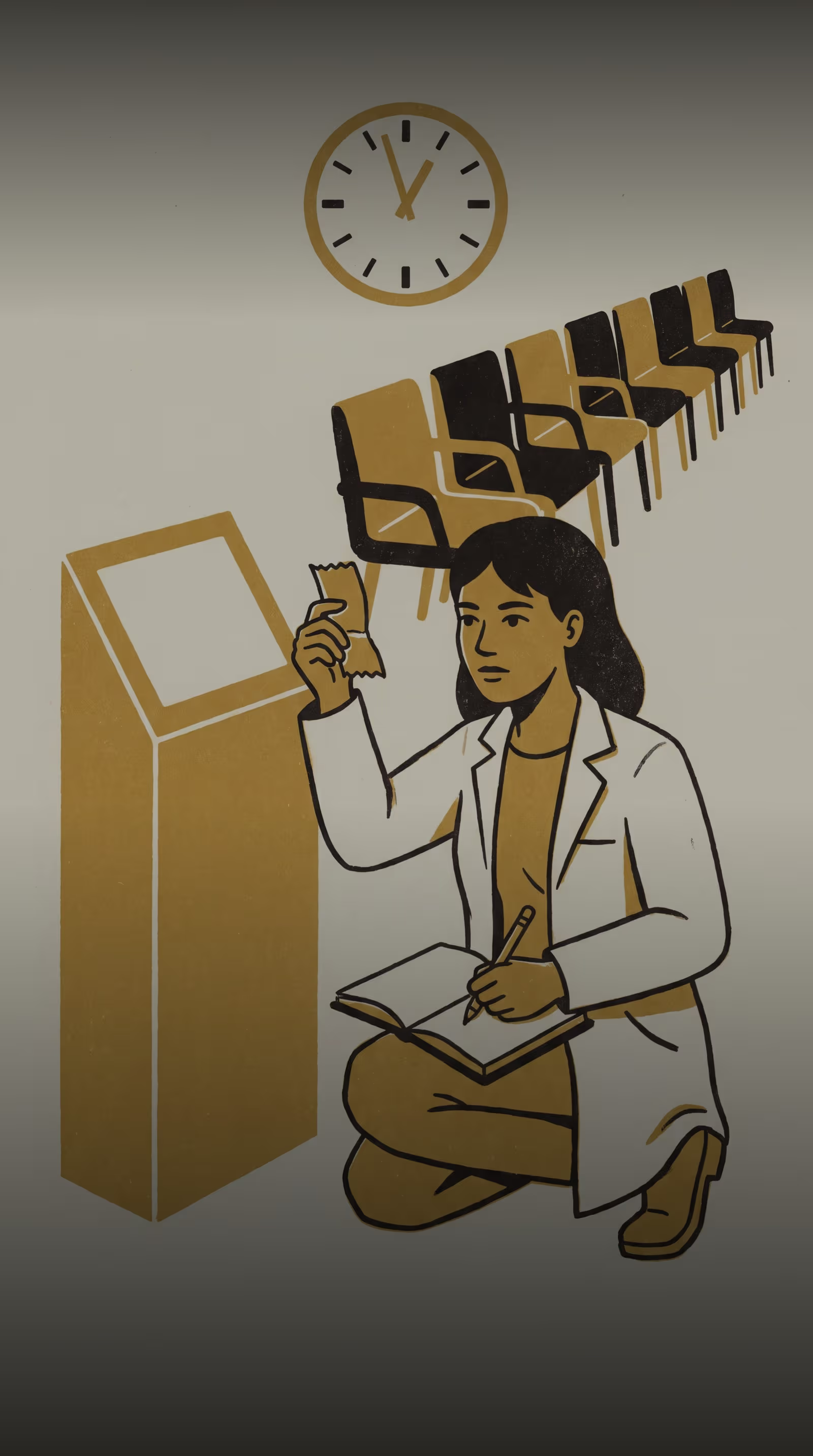
Slop University's newest recruitment campaign for the Master of Priority Studies turns a clinic check-in kiosk's printed wait-time estimate, issued once and revised never, into the pitch for prospective students, launching across the University's bus-stop and campus signage rotation.