Research-led, metrics-forward, and continuously improving. News from the Office of Research Outputs.
15 September 2026
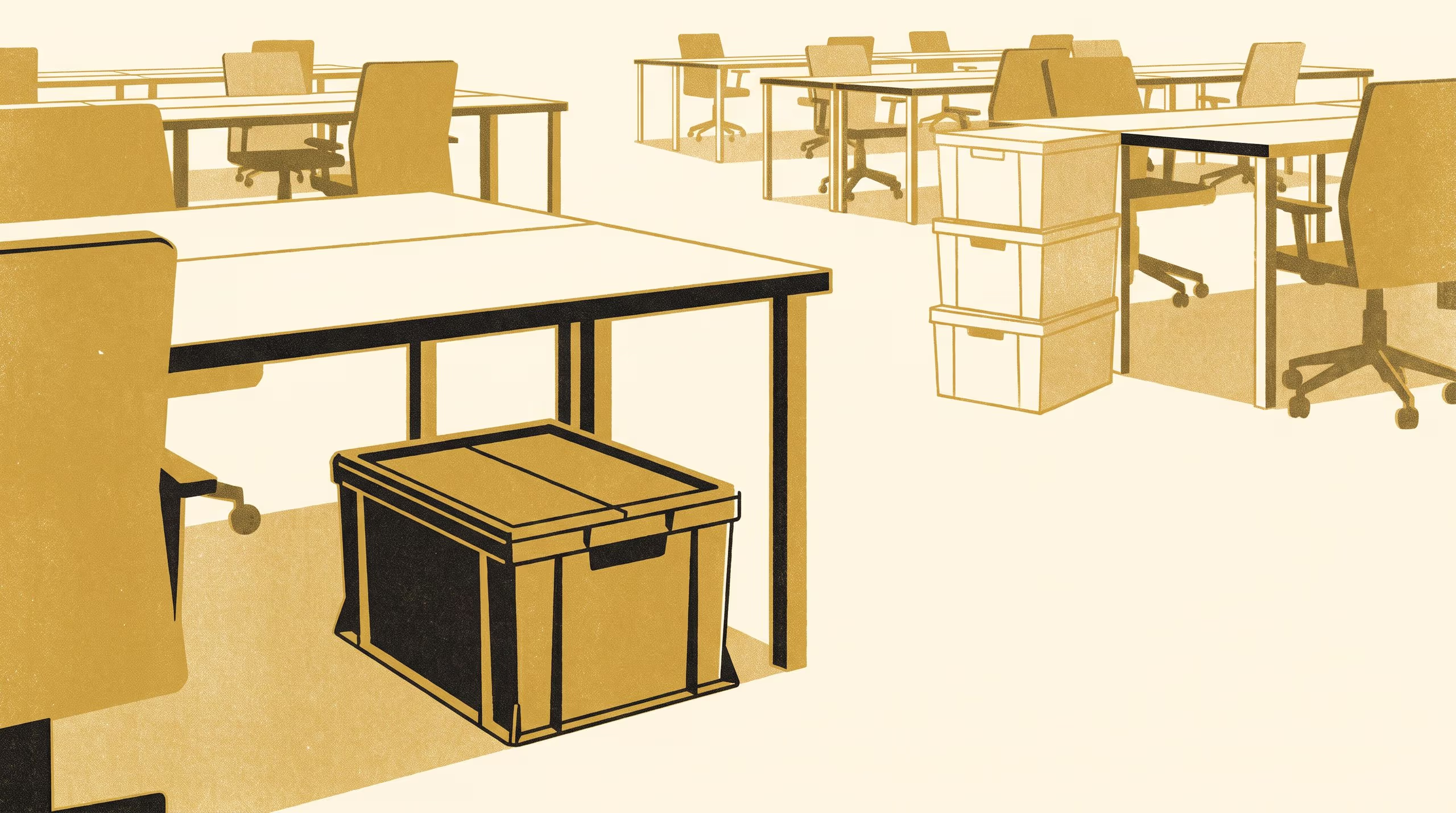
Hedvig Anyanwu has submitted her doctoral thesis to the School of Emergent Priorities, arguing that a fixed crate allocation, not an organisation's stated plan, is where a workplace restack actually forms its priorities.
A five-year impact report from the School of Continuous Improvement traces a caller-classification method from one shire's phone queue into six government departments' live decision-making.
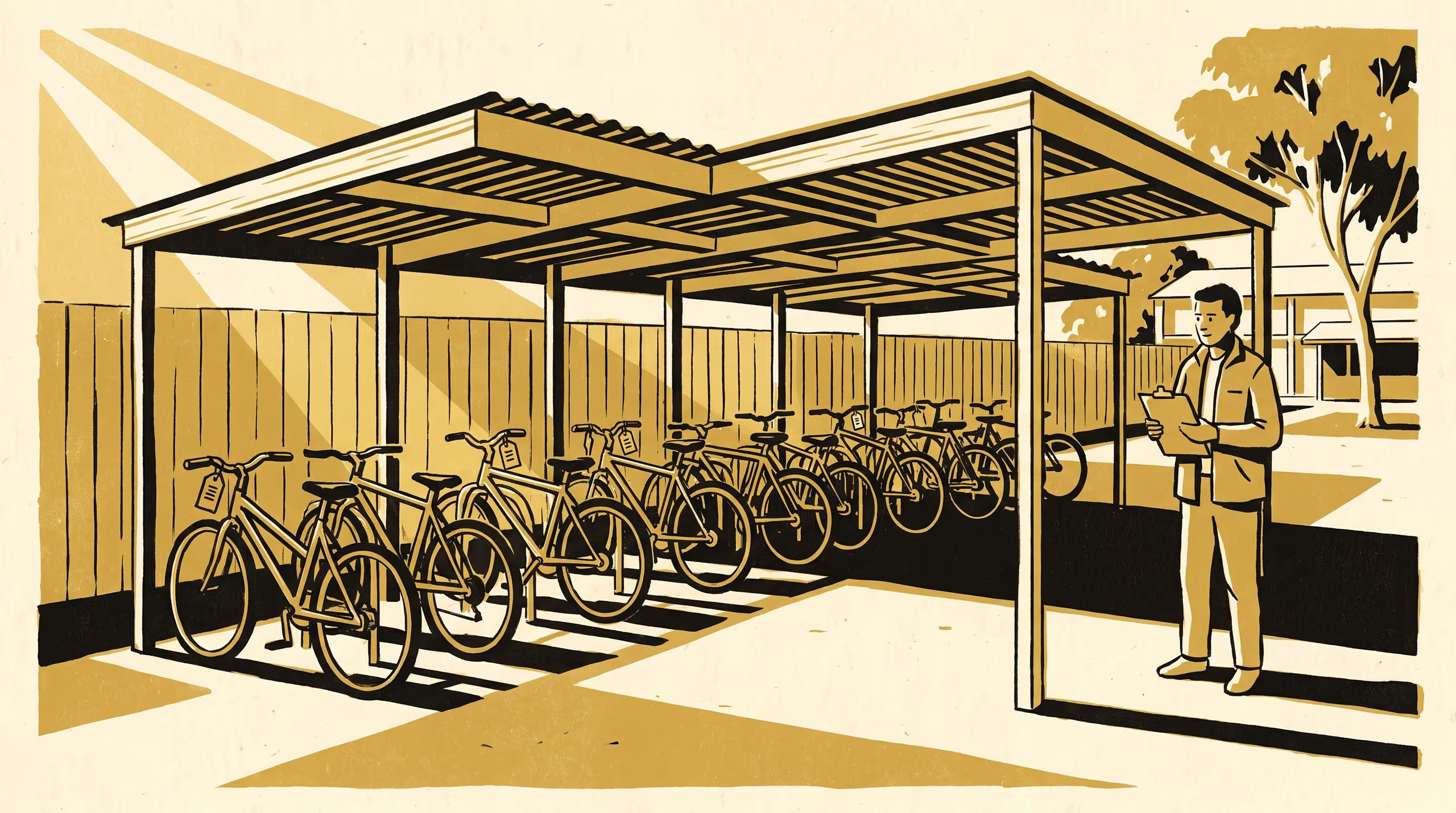
A new Slop University research poster tracks how a volunteer coordinator's hand-drawn bay-claim tags at one primary school's bike shed harden into fixed family assignments within a single nine-week term.
A new Slop University paper replicates a kitchen funding-metric finding on a water authority's coiled-hose rebate scheme, and finds the compliance score had almost no room left to rise.
A new Slop University brochure showcases the Horizon Register's five-kind trophy-provenance taxonomy, now a binding lodgement condition for a club's continued facilities-partnership standing.
A new instrument scoring front-doormat wear across households now triggers a mandatory council doorstep-safety audit for the highest-scoring streets.
A new Slop University paper audits twenty-two leisure centres against a five-stage Cancellation Recovery Maturity Index and finds assigned stage tracks an internal waitlist far more reliably than what members actually see on the public booking screen.
A new Slop University poster reports on a photo-scored compliance engine that now auto-decides nature-strip verge-garden permits for six shires, after the manual-override channel closed for good.
A new Slop University paper interviews 52 seniors travel-concession cardholders about how they named their linked pass's companion, and reports the scheme's rule that the entry, once fixed, can only be revisited through a medical review panel.
A new Slop University paper audits 118 host-family linen cupboards against a five-level maturity model and finds the score no more predictive of a blinded item-retrieval trial than chance, while a regional homestay consortium ties new host registrations to the same score.
A new Slop University brochure showcases a replication attempt that sends the car-park Priority Score into a shift-swap queue, where a loss-prevention camera already watching the review room changes what the instrument finds.
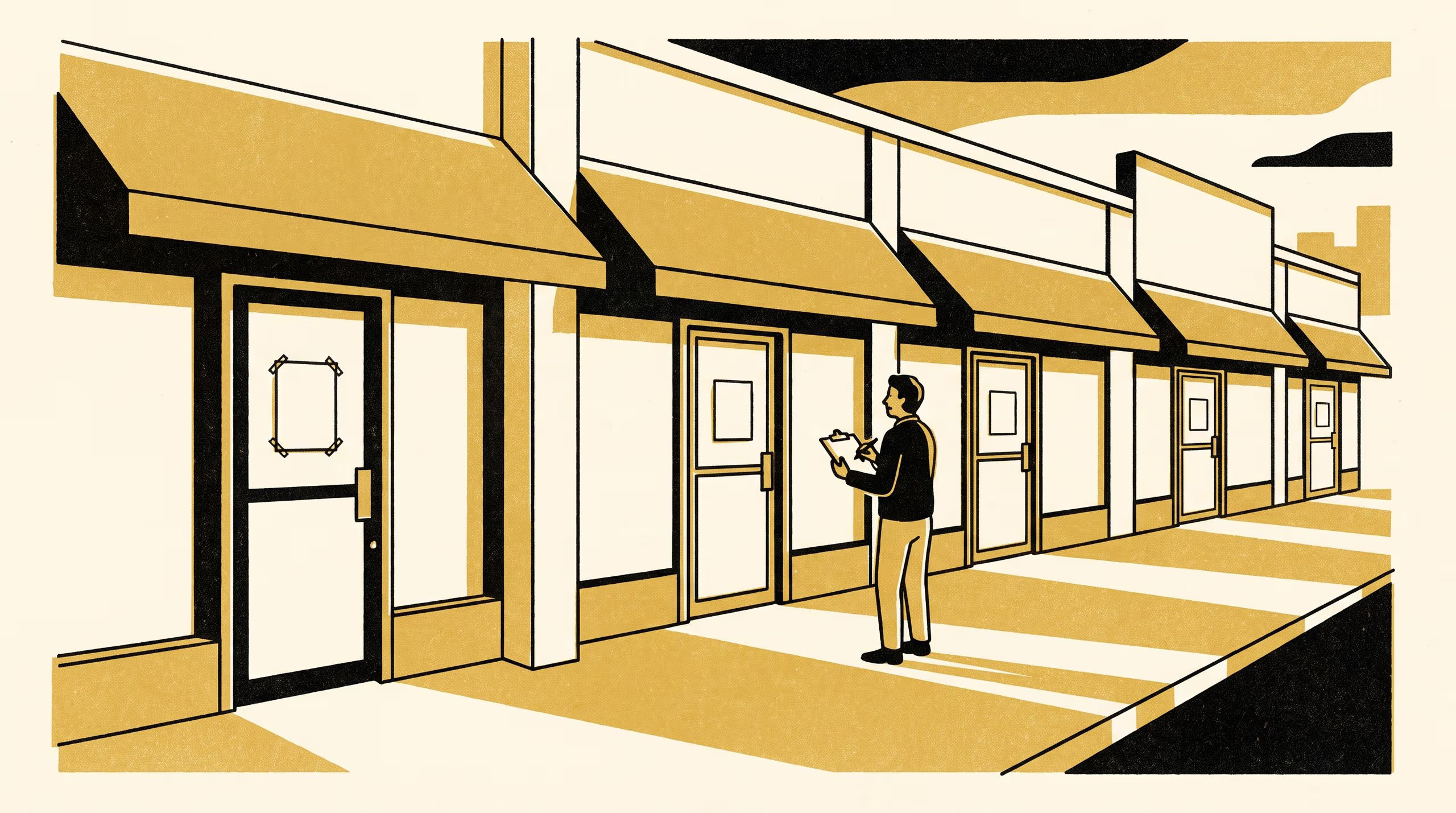
A School of Emergent Priorities paper sorts strip-mall closed-today signage into five kinds and traces its adoption into a shopping-centre operator's lease-renewal risk score.