Research-led, metrics-forward, and continuously improving. News from the Office of Research Outputs.
18 September 2026
A new Slop University research poster traces how a food-truck row's split-tab payment quadrant, adopted to speed group orders through checkout, now decides unilaterally who gets bumped to the back of the queue.
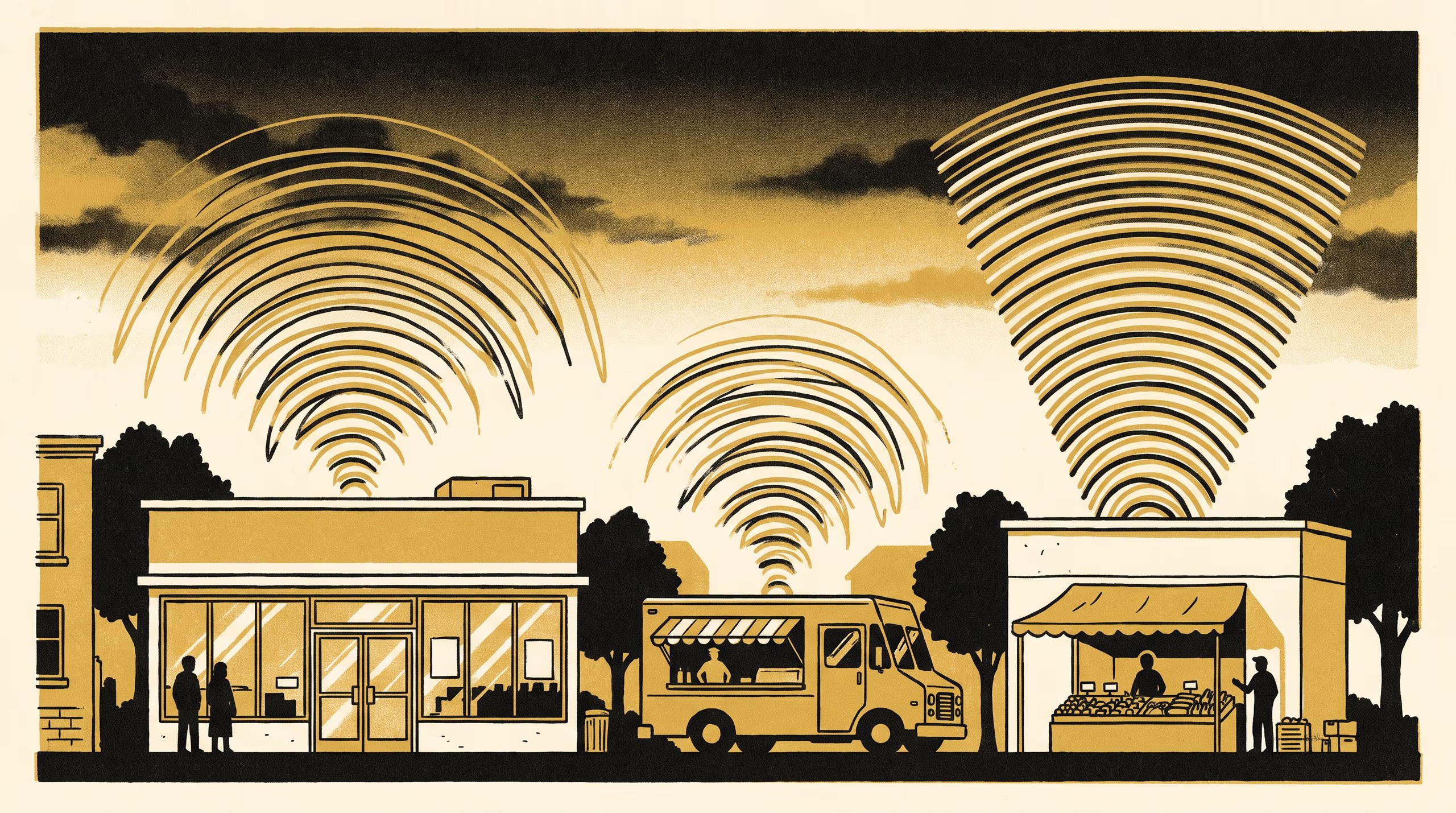
A new Slop University paper interviews strip-mall traders about adapting to MERIT, a recommendation-inclusion floor that becomes a trader's permanent minimum the moment their visibility rate first clears it.
A new Slop University marketing campaign features Dr Solveig Adeyemi's survey of what never gets reported in the group chat, the neighbourhood forum, and the star rating, and the register the School of Continuous Improvement now wants built from it.
A new Slop University paper finds a franchise chain's shift-swap scoring model tracks staff tenure rather than the reciprocity it was built to measure.
A new Slop University paper tests a rideshare app's ten-minute cancellation-fee cutoff against independently logged driver idle time, and finds the line carries no information the University's own travel office didn't already borrow anyway.
A new Slop University paper describes the Redemption Likelihood Index, a pawnshop scoring tool now written into shelf-allocation policy, and the redemption gap that opened once placement began following it.
Slop University's new Strategic Plan commits every service queue on campus to an independent audit for wording bias, after an interview study found a shared photocopier's fault queue answering formal complaints faster than plain ones.
A new Slop University research poster examines what happened when one library printer began sorting jobs the way a language model routes queries, and what its users did once they could see the line.
17 September 2026
A new Slop University brochure introduces GHOST, the maturity model scoring how unpredictable a council's school-zone speed-camera schedule really is, and the certification several councils have already tied to it.
Slop University publishes a brochure introducing the committee that reads a family's departures from a grandmother's recipe card as a signal for whether its reunions will continue.
A new Slop University paper describes the Streetlight Priority Index, a scoring pipeline a shire has adopted as the sole criterion for its streetlight capital-works budget, and what the resulting reclassification does to the shire's own resolution-rate figure.
A new Slop University paper uses a community shed's three-day tool-loan grace period as a natural experiment, finding a modest late fee linked to markedly longer gaps before a member's next visit.