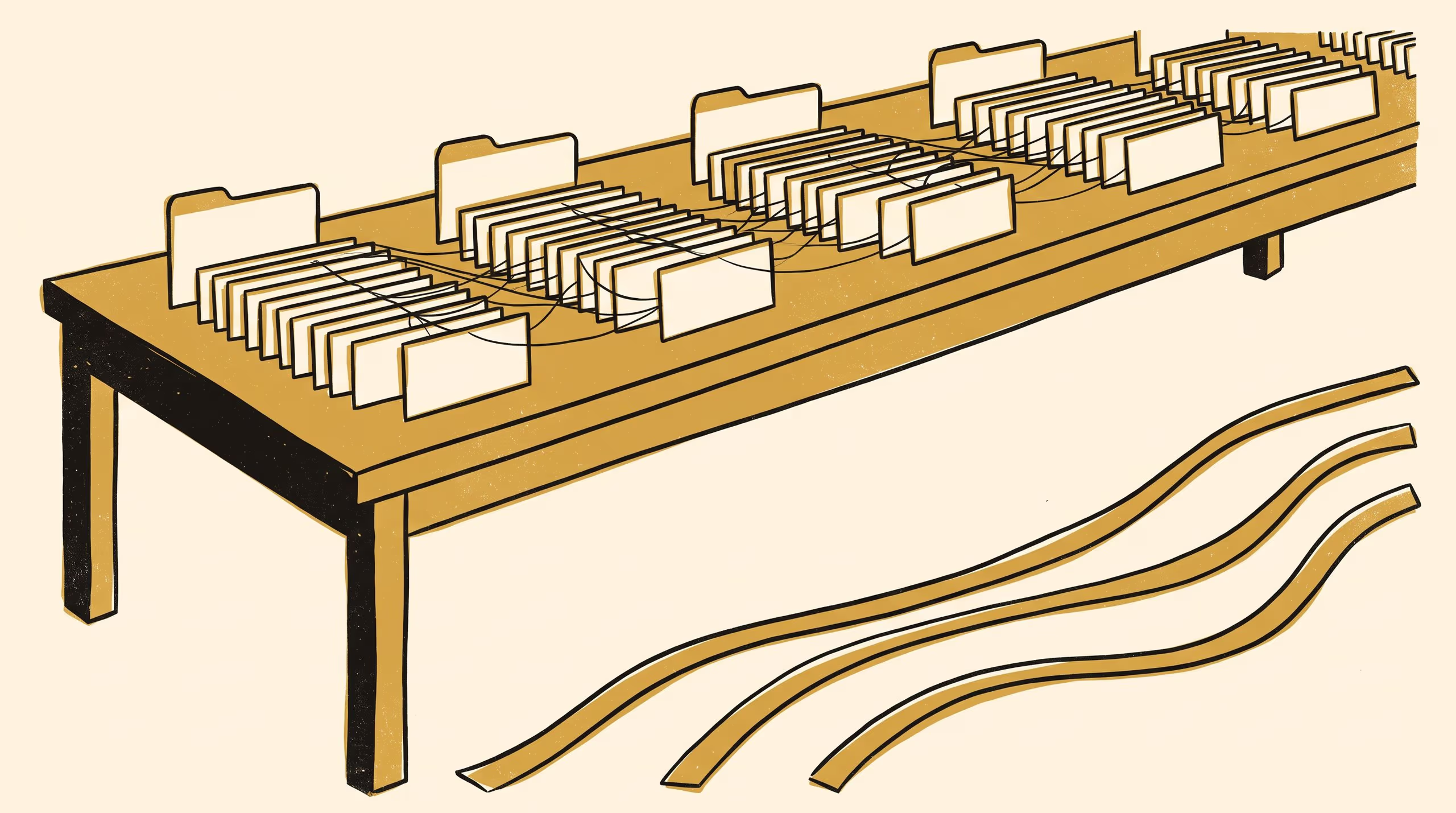
A new paper from the School of Continuous Improvement and the School of Emergent Priorities embeds a regional innovation program's project register as a hypergraph and finds that when an organisation joined says more about its place than what kind of organisation it is.
Machine learning reads twelve rounds of a regional innovation program's project register for the university, industry and government
Universities, industry and government are expected to grow more alike the longer they work together. A team spanning the School of Continuous Improvement and the School of Emergent Priorities has now asked a learning machine whether it can still tell them apart. In Rounds, Not Helices, Dr Joost Nwosu and Associate Professor Kwame Lindqvist find that across twelve funding rounds of one regional program, the machine could say with some confidence when an organisation joined and through which stream, and far less readily which sector it came from.
Every funding round is a small act of institutional imagination. It is a privilege to find that imagination preserved so legibly in the record, and I expect our students will find a great deal to do with it.
— Associate Professor Kwame Lindqvist, Director, Master of Priority Studies
The paper situates collaboration registers within an emerging conversation between representation learning and innovation policy, mobilising hypergraph methods to surface the program architecture that underpins a region’s partnership landscape. Dr Nwosu described the study as “a careful first conversation with a very large table, and the beginning of a longer one”.
The publication reflects the University’s steady investment in understanding the instruments through which collaboration is convened, and the School of Continuous Improvement’s wider agenda on the paperwork that programs leave behind.
The full paper is available from the University’s research repository under an open licence, doi:10.5555/slop.0utari.