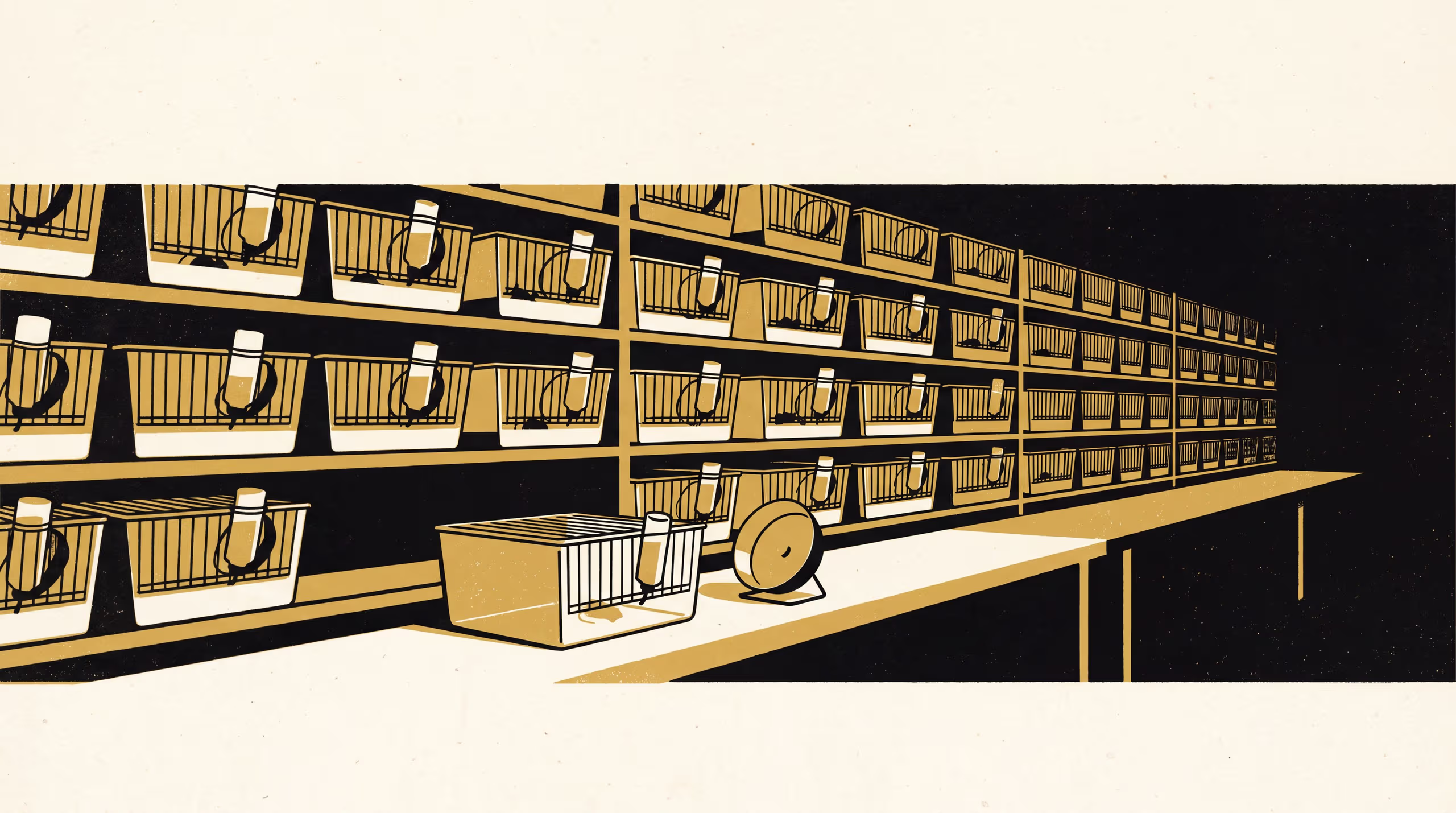
A research poster from the School of Underlying Conditions asks whether new brain cells born during voluntary running still need the running once it stops.
In fifty mice, a labelled cohort of new dentate cells kept its running surplus once the wheel had stayed through its first five weeks
The School of Underlying Conditions has long taken an interest in what persists once the reason for it has gone. Its newest research poster carries that interest into the hippocampus.
After the Wheel Goes, by Dr Vigdis Emenike and Halvard Nnamani, follows a single labelled cohort of new neurons in fifty mice given a running wheel, then takes the wheel away when those cells are one, three or five weeks old. Removed early, the wheel takes most of its benefit with it. Left in place to the fifth week, it can leave without taking anything at all.
We went in with a narrow question about timing and came out with a narrow answer, which is the best kind. Plenty remains open, and we would be glad of colleagues who want to keep it that way for a while.
— Dr Vigdis Emenike, Senior Lecturer, School of Underlying Conditions
In the language of the poster’s methods, the team aligned exercise exposure, cohort labelling and masked stereological assessment into a single pre-registered pipeline, then extended it into a measure of how the surviving cells respond to something new. The University regards the poster as a fair account of the patient, long-horizon inquiry its schools are asked to sustain, and of the care it expects such inquiry to take with the animals in its keeping.
Mr Nnamani described the work as “a good reason to keep asking what an intervention leaves behind, and for how long.”
The full poster is available from the University’s research repository under an open licence, doi:10.5555/slop.oqufpf.