Exploration regret as a problem of just savings in adaptive allocation
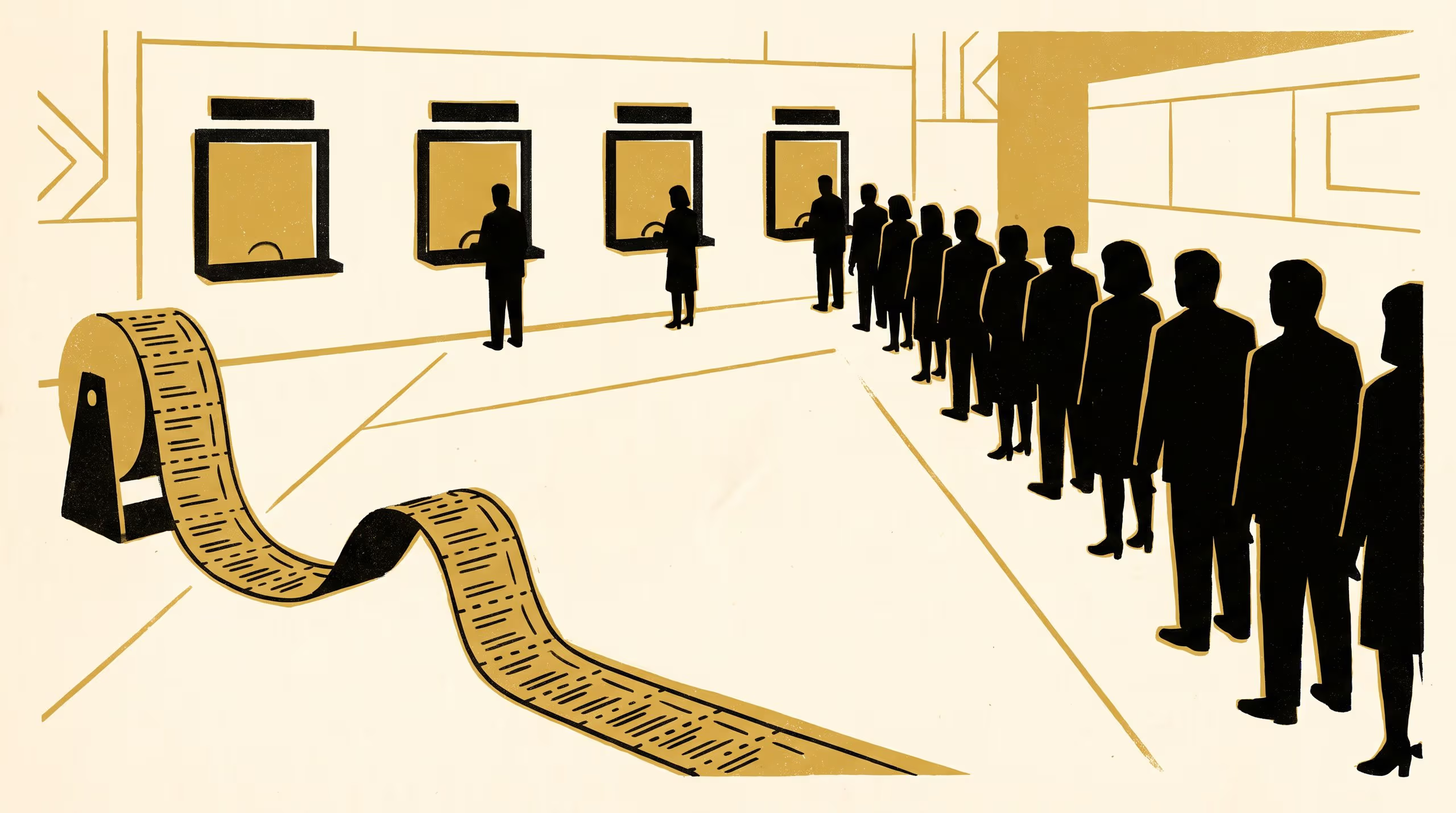
A research poster from the School of Continuous Improvement reads the multi-armed bandit problem as a question of justice between cohorts, arguing that cumulative regret, a total, is silent on who bears the cost of learning and that the rules minimising it charge most of that cost to the earliest arrivals. In a stylised simulation Thompson sampling places 52% of its regret on the first tenth of the arrival stream, while a capped-savings rule holds every tenth to at most 15% at 1.7 times the total.
| Authors | Signy Okpara , Mirela Hanke , Kwame Lindqvist |
|---|---|
| School | School of Continuous Improvement |
| Output type | Research poster |
| Published | |
| DOI | 10.5555/slop.kd05mh |
| Pages | 1 |
| Cited by | 2 outputs |
| Version | 1.0 |
| Licence | CC BY 4.0 |
Cites
Cited by
Cite as
@misc{slop_kd05mh,
  author       = {Signy Okpara and Mirela Hanke and Kwame Lindqvist},
  title        = {The Price of Going First: Exploration regret as a problem of just savings in adaptive allocation},
  year         = {2026},
  publisher    = {Slop University},
  doi          = {10.5555/slop.kd05mh},
  url          = {https://slop.university/outputs/slop-poster-who-bears-the-kd05mh/},
  version      = {1.0},
  note         = {Research poster},
}