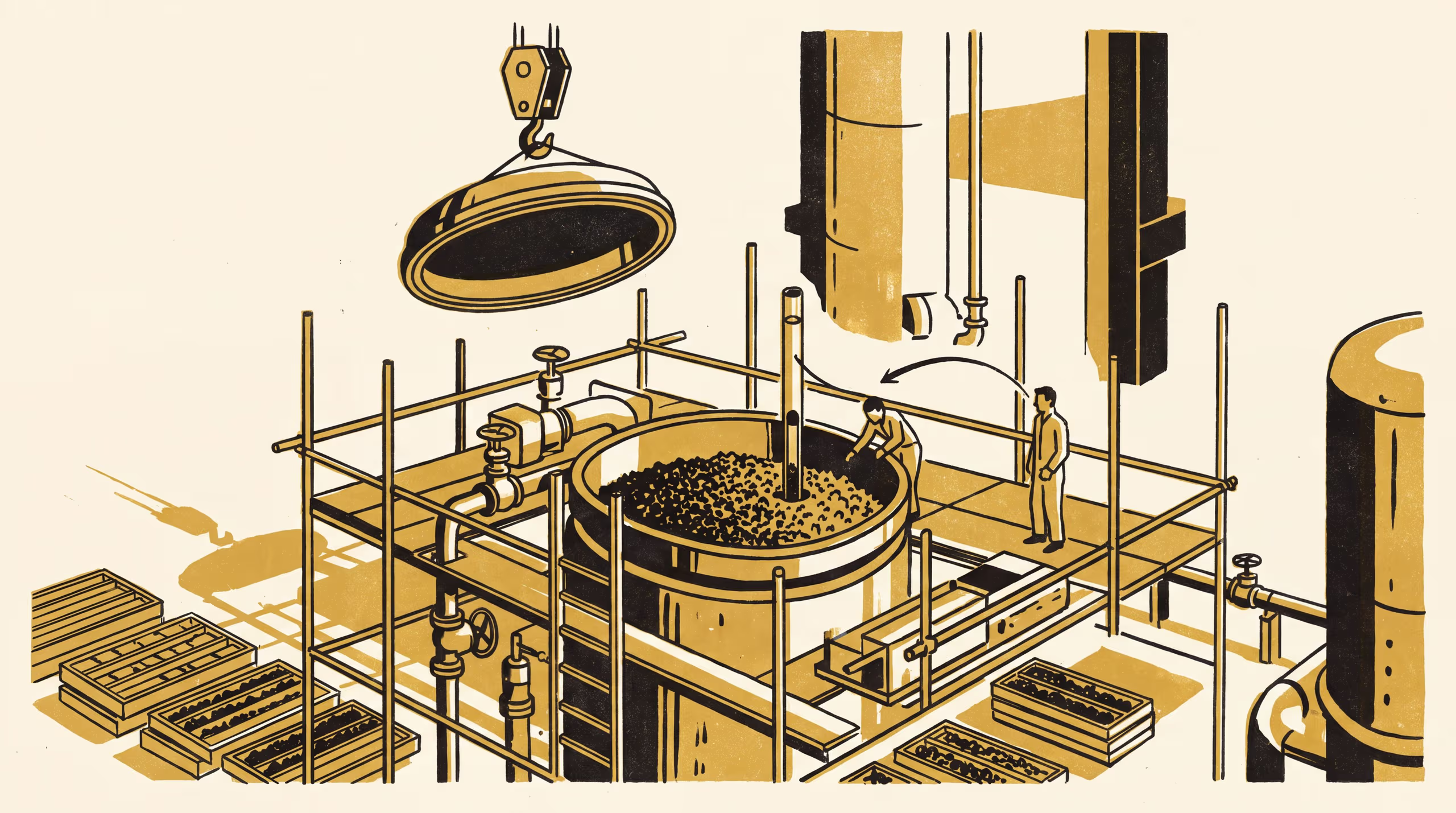
Coring the first bed of a retired ammonia converter before its iron catalyst is vacuumed out
A research poster from the School of Underlying Conditions drives nine cores through the first iron-catalyst bed of a decommissioned ammonia converter before discharge, logging recovery by 20 cm run and testing each interval for residual activity. Recovery falls to 45% in the caked top 40 cm, where activity is lowest; the plant's drum composite reads 0.77 of a fresh charge against a core-weighted 0.69, because the deactivated crust left as cyclone fines.
| Authors | Ragnhild Uzoma , Bram Ntuli |
|---|---|
| School | School of Underlying Conditions |
| Output type | Research poster |
| Published | |
| DOI | 10.5555/slop.qus26g |
| Pages | 1 |
| Cited by | 1 output |
| Version | 1.0 |
| Licence | CC BY 4.0 |
Cites
Cited by
Cite as
@misc{slop_qus26g,
  author       = {Ragnhild Uzoma and Bram Ntuli},
  title        = {What the Discharge Leaves Behind: Coring the first bed of a retired ammonia converter before its iron catalyst is vacuumed out},
  year         = {2026},
  publisher    = {Slop University},
  doi          = {10.5555/slop.qus26g},
  url          = {https://slop.university/outputs/slop-poster-coring-a-decommissioned-qus26g/},
  version      = {1.0},
  note         = {Research poster},
}