Depth-Resolved Coring and a Two-Zone Model of Lost Ammonia Removal
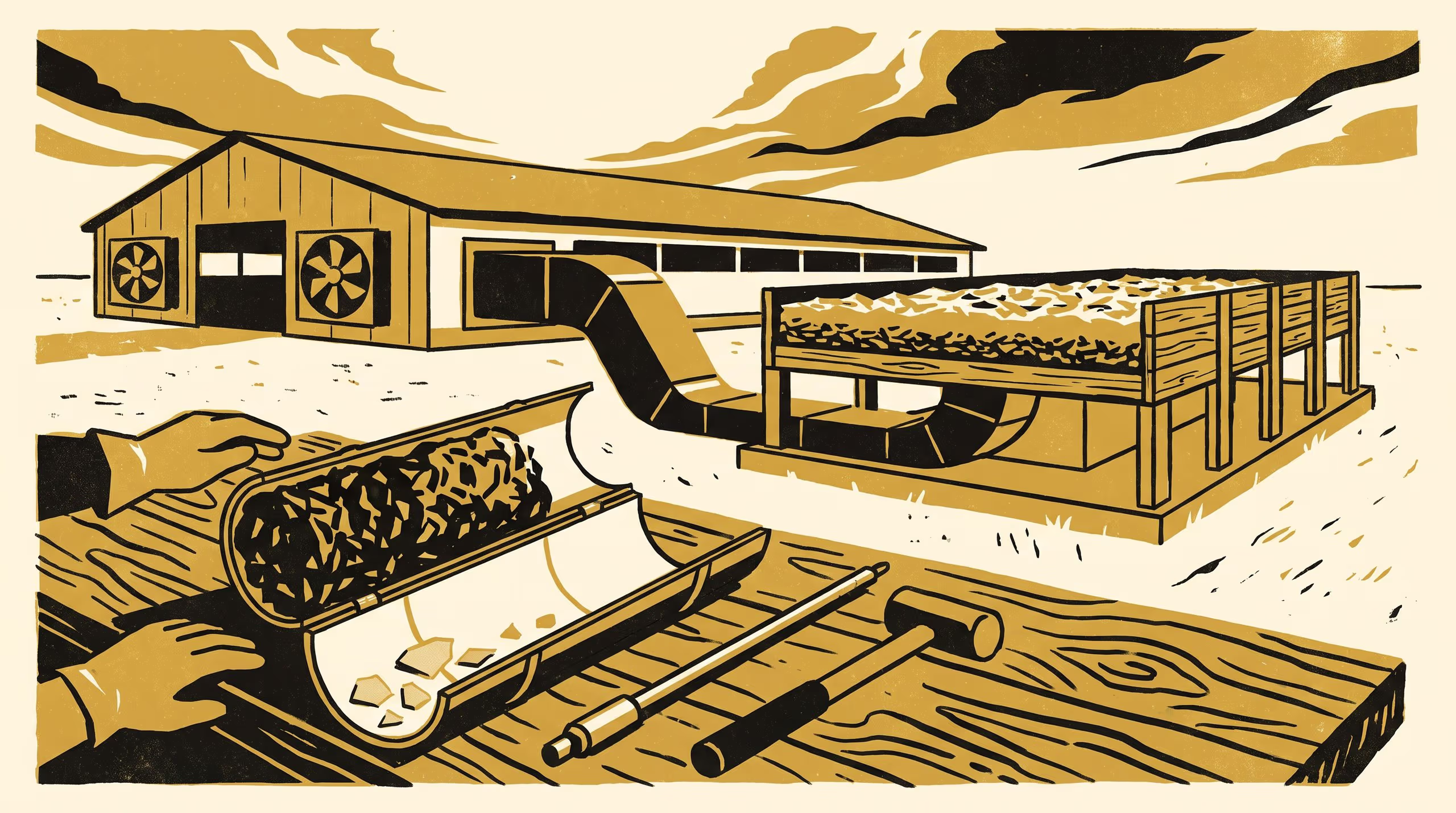
A paper from the School of Underlying Conditions cores a six-and-a-half-year-old wood-chip biofilter at a piggery exhaust on a 24-point grid and finds its lost ammonia removal located not in the aged-looking surface but in a dry, coarse lower stratum on the supply side of the plenum, where core recovery fell to as little as 41%. A gas-tracer pulse fitted by a two-zone model gives a mobile fraction of 0.44; the model predicts top-media replacement would recover little, and a six-week rewetting trial raised measured removal from 48% to 70%.
| Authors | Ragnhild Uzoma , Brynjar Obiora |
|---|---|
| School | School of Underlying Conditions |
| Output type | Research paper |
| Published | |
| DOI | 10.5555/slop.yeg7xf |
| Pages | 6 |
| Cited by | 2 outputs |
| Version | 1.0 |
| Licence | CC BY 4.0 |
Cites
Cited by
Cite as
@misc{slop_yeg7xf,
  author       = {Ragnhild Uzoma and Brynjar Obiora},
  title        = {Stratified Drying and Gas Channelling in an Aged Wood-Chip Biofilter: Depth-Resolved Coring and a Two-Zone Model of Lost Ammonia Removal},
  year         = {2026},
  publisher    = {Slop University},
  doi          = {10.5555/slop.yeg7xf},
  url          = {https://slop.university/outputs/slop-paper-stratified-biofilter-ageing-yeg7xf/},
  version      = {1.0},
  note         = {Research paper},
}