How Secondary Students Redraw the Water Table After a Term of Dipping Their Own Schoolyard Bore
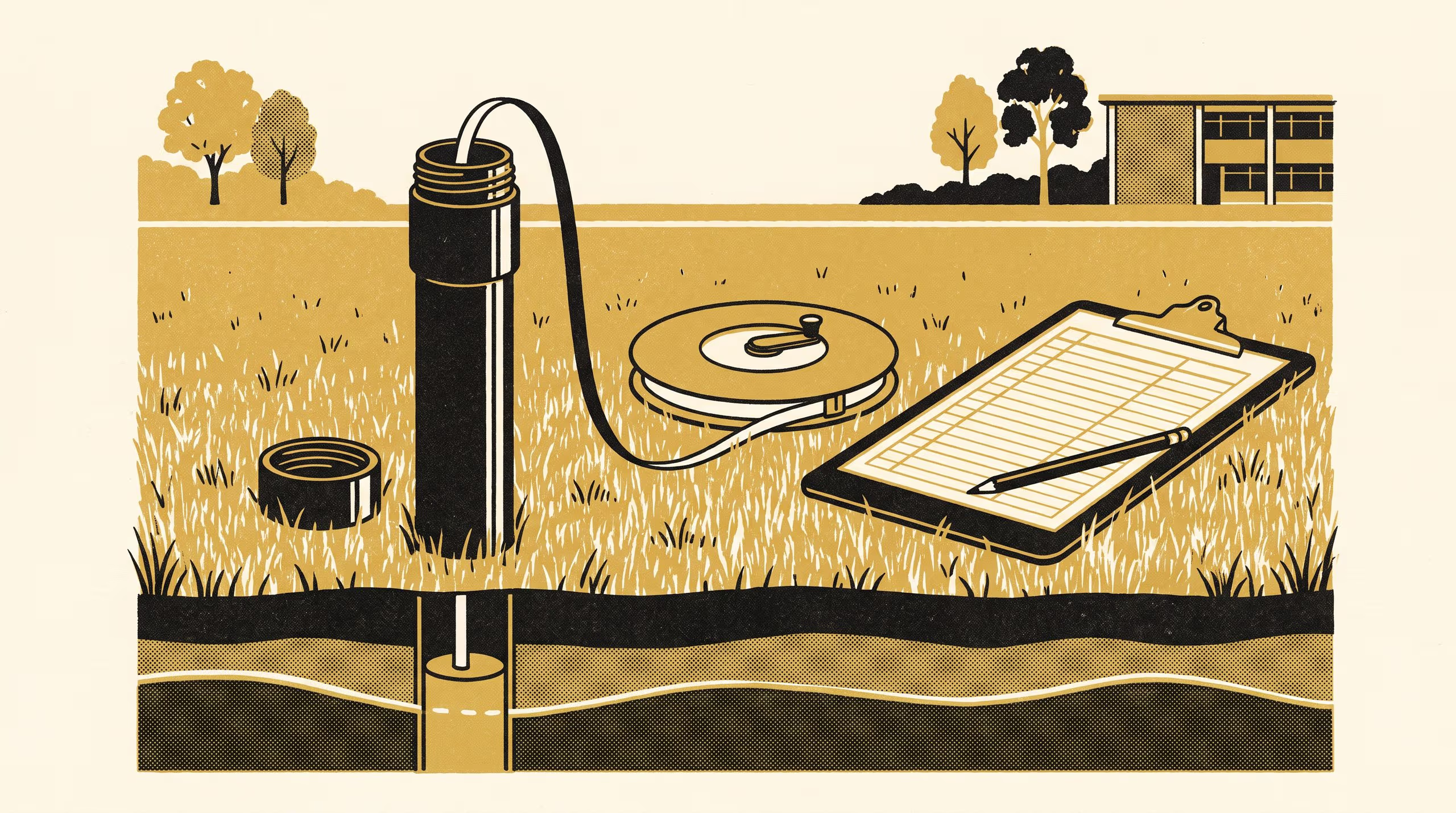
A paper from the School of Underlying Conditions compares the cross-sections 78 Year 9 students drew of the ground beneath their school oval before and after a term of weekly readings from a long-unused monitoring bore at its edge. Lake and cavern models of groundwater fell from 45% to 14% of drawings, while the most common new feature was a water table drawn across the whole section and labelled with the class's last reading; the authors argue that the smaller groups who drew the water table as a band, or only near the bore, drew what a hydrogeologist would.
| Authors | Vigdis Emenike , Torun Ezeigwe |
|---|---|
| School | School of Underlying Conditions |
| Output type | Research paper |
| Published | |
| DOI | 10.5555/slop.4lukp2 |
| Pages | 6 |
| Cited by | 7 outputs |
| Version | 1.0 |
| Licence | CC BY 4.0 |
Cites
Cited by
Cite as
@misc{slop_4lukp2,
  author       = {Vigdis Emenike and Torun Ezeigwe},
  title        = {The Lake Under the Oval: How Secondary Students Redraw the Water Table After a Term of Dipping Their Own Schoolyard Bore},
  year         = {2026},
  publisher    = {Slop University},
  doi          = {10.5555/slop.4lukp2},
  url          = {https://slop.university/outputs/slop-paper-schoolyard-bore-dipping-4lukp2/},
  version      = {1.0},
  note         = {Research paper},
}