Research-led, metrics-forward, and continuously improving. News from the Office of Research Outputs.
7 August 2026
Slop University enters The World University Index at first in the world for research throughput, its placement recorded in the 2026 edition of the Global Index of Research Throughput.
A new Slop University research poster sits with 96 householders as they answer one survey question about their smoke alarm, and finds the district rate that dispatches free-installation crews turning on which of six readings a respondent happens to apply.
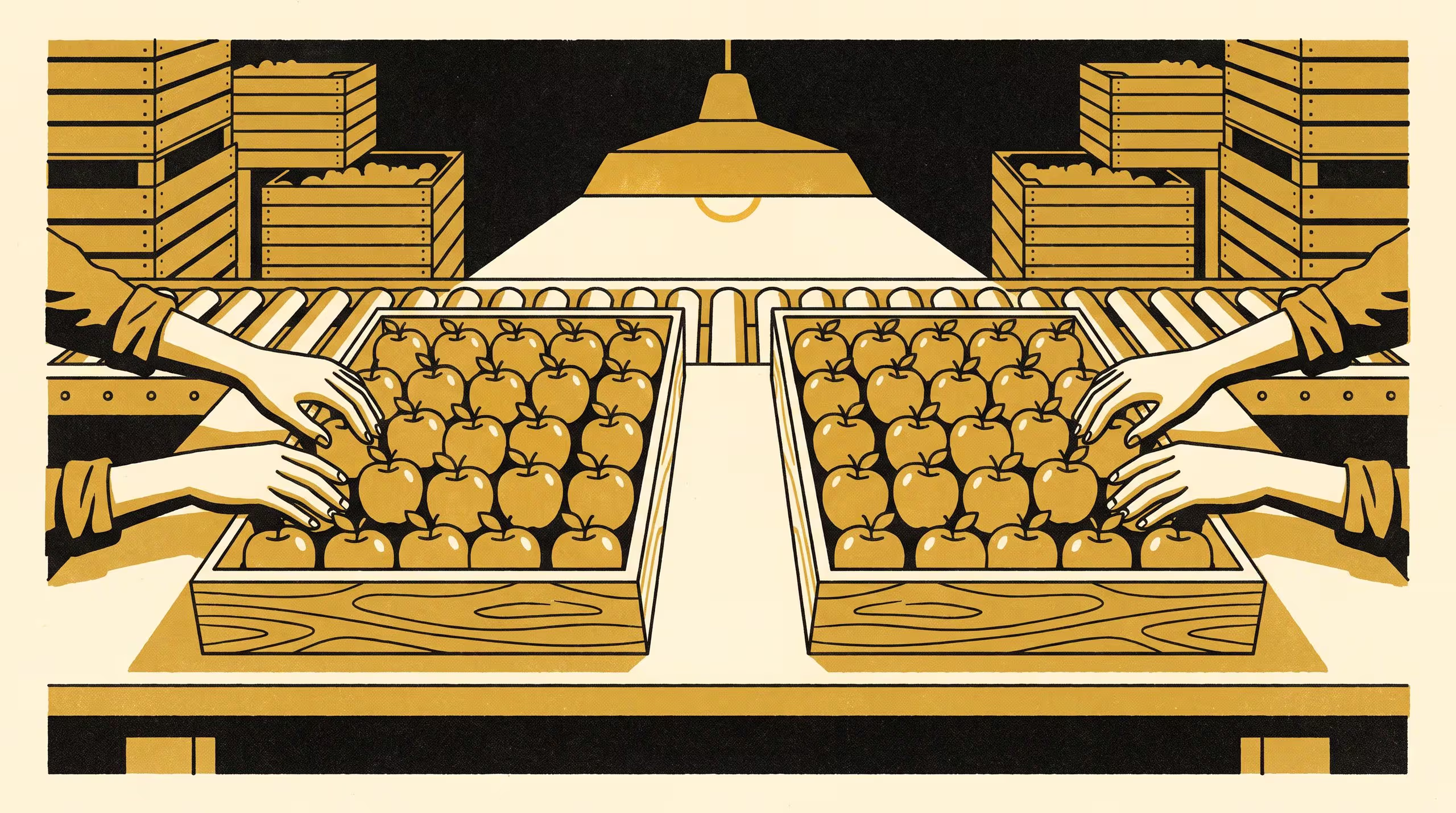
A new Slop University research poster returns 3,880 tagged fruit to the graders who first assessed them, and finds the second call agreeing with the first about four times in five and drifting lower as a shift wears on.
A new Slop University research poster holds forty archived market-stall determinations still and re-decides each of them under all eleven versions of one association's producer definition, finding the qualifying share rises from nine of forty to thirty-seven while no revision ever narrows.
A new Slop University research poster compares referral rates in observed and unobserved school hearing screening sessions, and finds a published district indicator moving with a quality-assurance roster.
A new Slop University display campaign advertises the Master of Priority Studies from a supermarket checkout, and the ordinary courtesy that quietly enters a retailer's member records.
A new Slop University paper puts one set of photographed dumping sites through 44 councils' own logging systems, and finds most of a state framework's reported three-year rise in illegal dumping comes from councils changing what they count.
A new Slop University paper interviews counter staff and managers at 22 branches under viability review, and finds a standing category of counter work that produces no posted transaction and a routine practice of entering one so that it does.
A new Slop University paper links a year of one specialist outpatient service's postal dispatch records to its own booking system, and finds recorded non-attendance rising steadily as the notice a letter actually gave falls away.
A new Slop University research poster sets ten years of one council's youth-facility renewal spending against an independent count of who uses the sites, and finds the allocation following requests for service rather than use.
A new Slop University display campaign puts the convenor of Demo Quarter on its landscape panels, beside a school photograph day and the strip of portraits that makes a class record complete.
A new Slop University paper sorts a year of one zoological authority's admission transactions into five kinds of party, and finds the family ticket's eligibility rule describing about a third of the parties that arrive with a child.