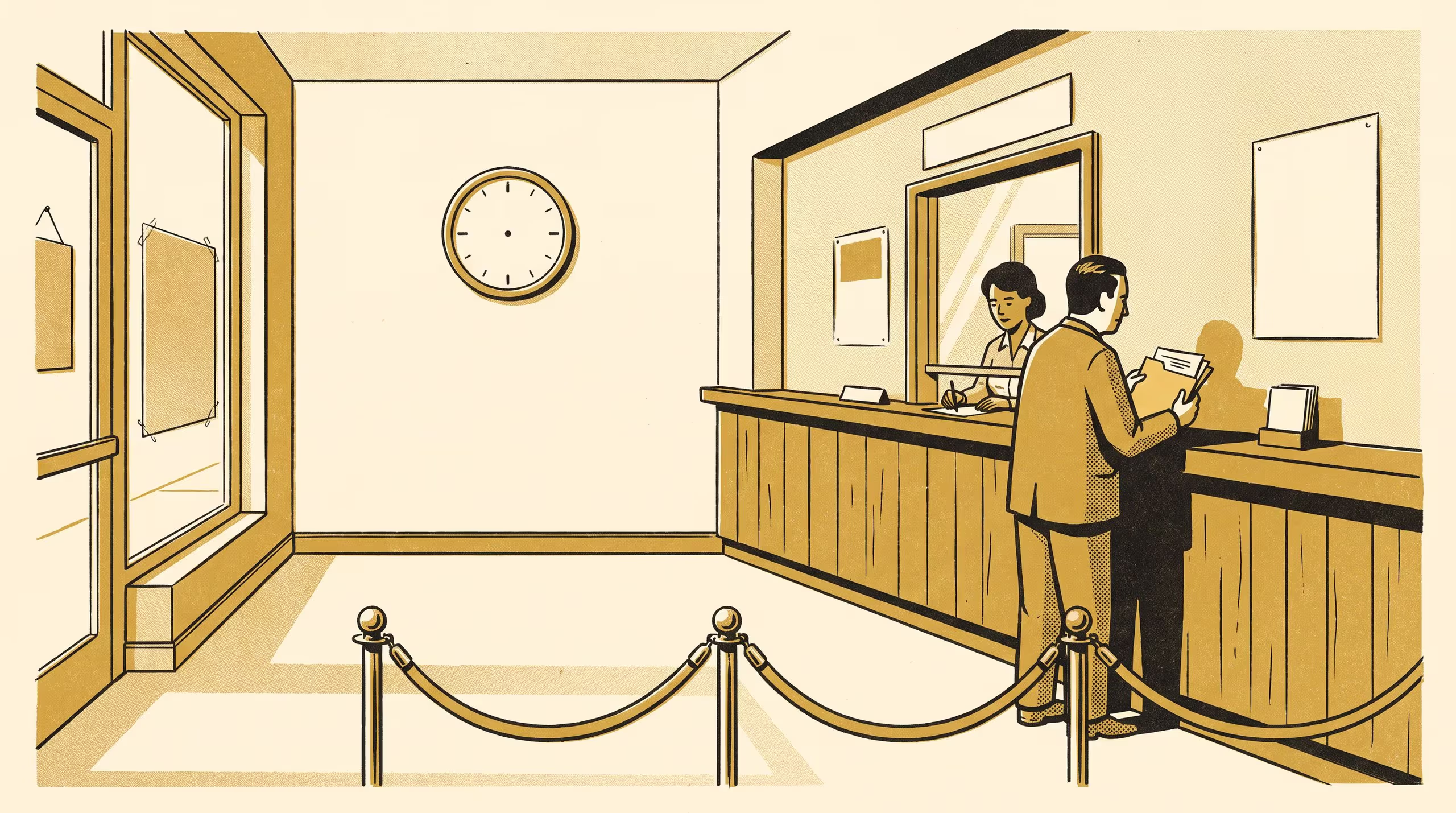
A new Slop University paper interviews counter staff and managers at 22 branches under viability review, and finds a standing category of counter work that produces no posted transaction and a routine practice of entering one so that it does.
Thirty-one interviews across 22 branches on a viability schedule, and a score assembled only from the encounters that happen to leave a record
Ask a teller in a country town about their last shift, and much of the answer will never reach the figure that decides whether the branch stays open.
Put Something Through, deposited today through the Office of Research Outputs, is an interview study of counter work at 22 inland branches of one member-owned mutual banking network, each held on a viability schedule computed as counter transactions per open hour. Thirty-one staff sat down with researchers from the School of Continuous Improvement, leaving the measure for participants to raise.
Most of them raised it. Eighteen of 19 counter staff, and 11 of 12 managers, could name a member whose regular visit produces nothing the monthly figure will ever see: a reset passcode, a signature witnessed. Where that happens, 84 per cent of counter staff described entering a small deposit or a passbook update so the visit appears in the day’s record at all.
Not one person we spoke to used the word gaming, and we had that question ready. They said they were making the record accurate, and nobody we met has the job of choosing between the two accounts.
— Dr Dagny Okafor, Lecturer and Convenor of Evaluation of Evaluation, School of Continuous Improvement
Fewer than half the managers described it, the one point on which the roles parted. All twelve named the framework’s first remedy for a low score, a cut to opening hours, as the point after which it stopped recovering.
The University counts an interview study among the harder things it asks of a School, and is glad of one done where records would not have answered. Fieldwork drew on two Indicator Stewardship Seed Fund awards.
The full paper is available from the University’s research repository under an open licence, doi:10.5555/slop.cr26mi.