Research-led, metrics-forward, and continuously improving. News from the Office of Research Outputs.
28 July 2026
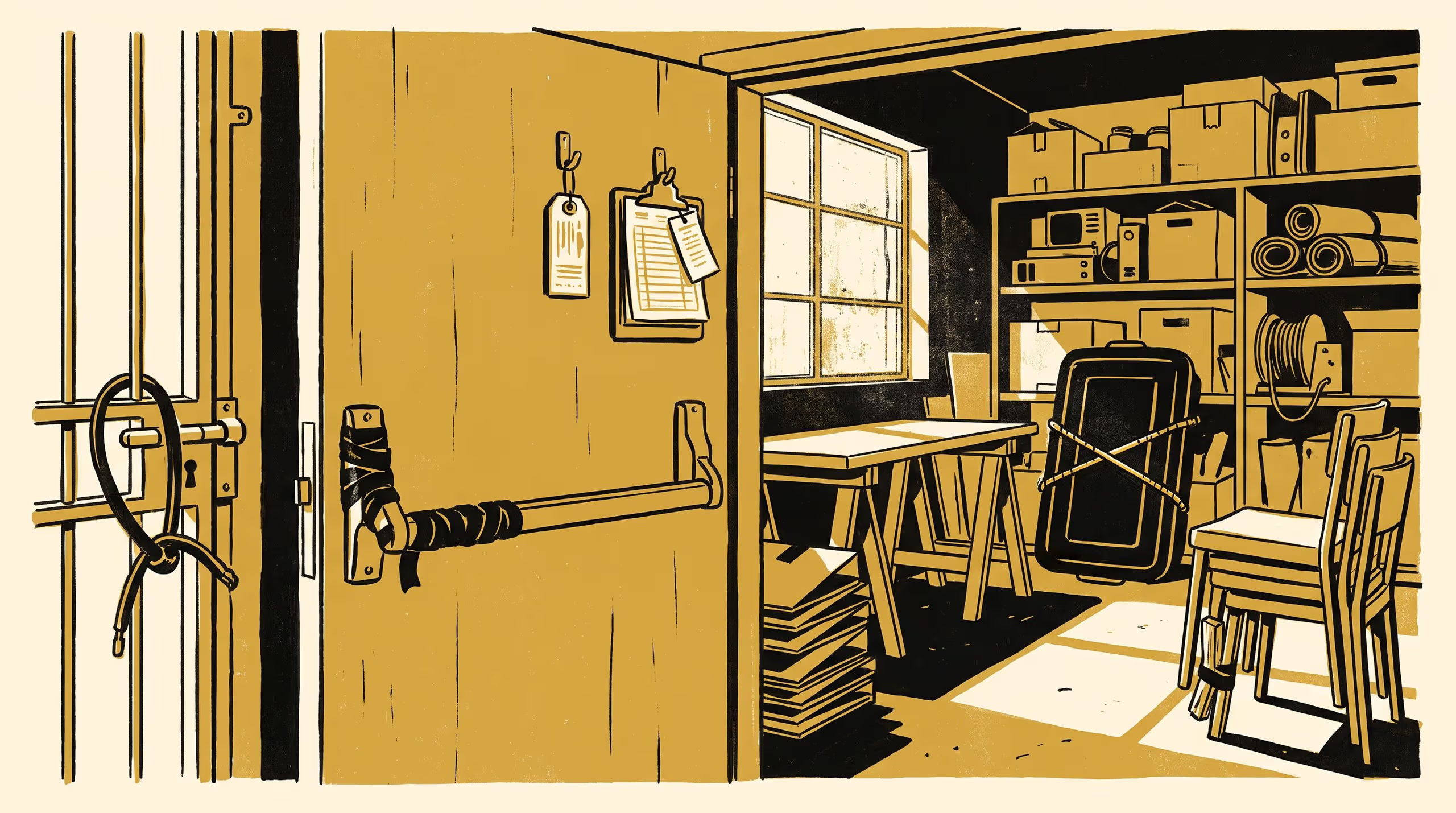
A new Slop University paper builds a seven-class taxonomy of improvised repair from 1,462 instances photographed across 214 shared community facilities, then follows it into one portfolio's maintenance system, where median time to closure fell from 34 days to six.
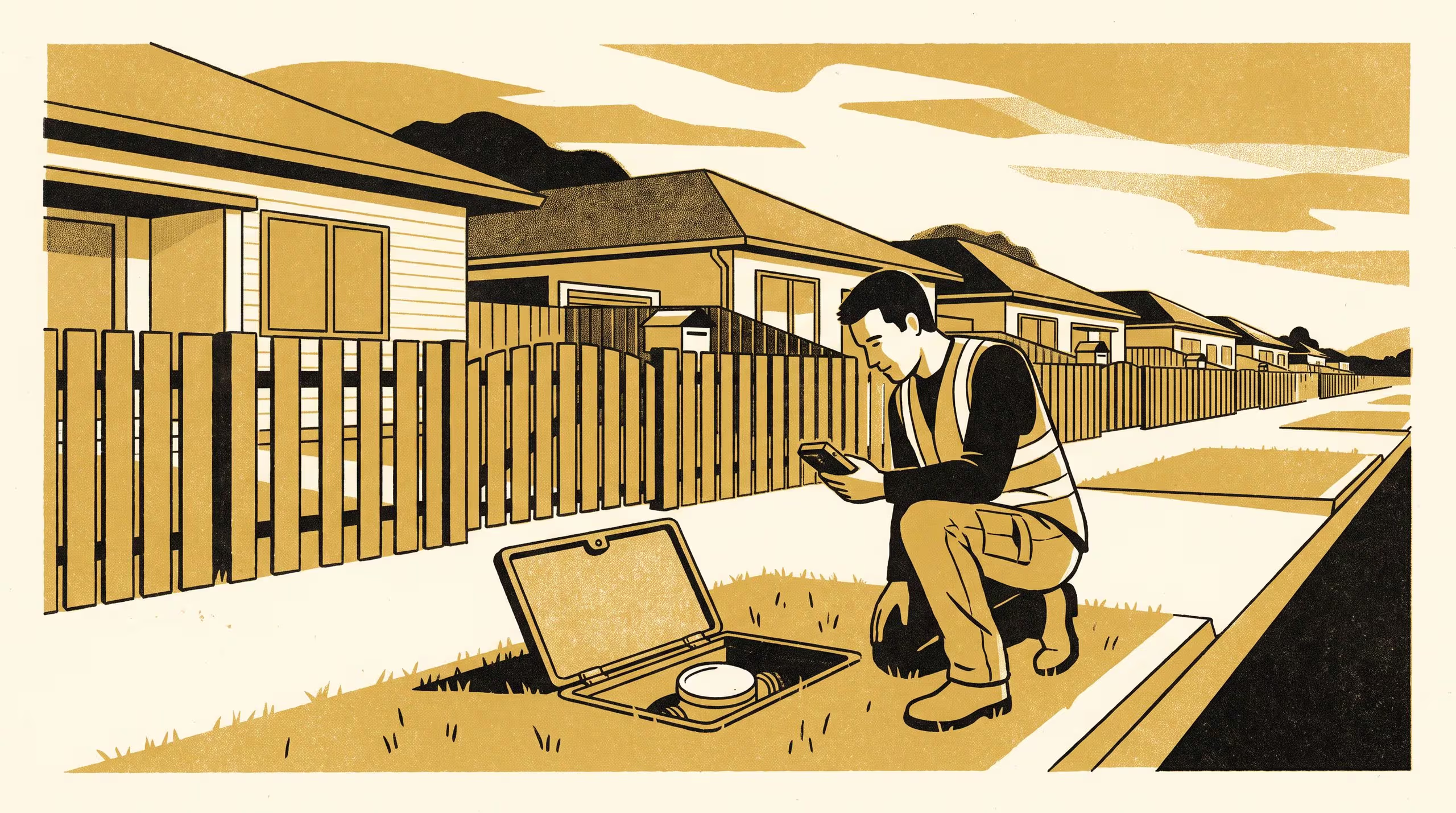
A new Slop University paper evaluates a water retailer's automated address-normalisation release against the meters it affected rather than the records it cleaned, finding orphaned reads rising by 5.02 per 1,000 connections per quarter while the retailer's record-integrity indicator improved.
A new Slop University paper reports a pre-registered stepped-wedge trial of quarterly rooftop-solar washing at forty community sports clubs, finding an effect of 0.11 percentage points against equivalence bounds fixed before the first wash.
A new Slop University research poster reports a pre-registered cluster-randomised trial of plain-language development notices across nine wards, finding sizeable gains in recall and comprehension alongside a difference of 0.02 submissions per notified property.
A new Slop University paper validates a two-form instrument for vehicle service intake, finding modest agreement between customer and adviser and 36 per cent of the customer's account reaching no field on the job card at all.
A new Slop University research poster back-translates the six community-language versions of a council's community-hall hire conditions, finding 43 of 186 clause-instances diverge from the source and that the divergence tracks which hirers are later pulled up.
A new Slop University signage campaign reduces a published finding about flat-pack assembly to a seven-word headline, a citation and a QR code, running in matched light and dark renderings on the University's portrait display panels.
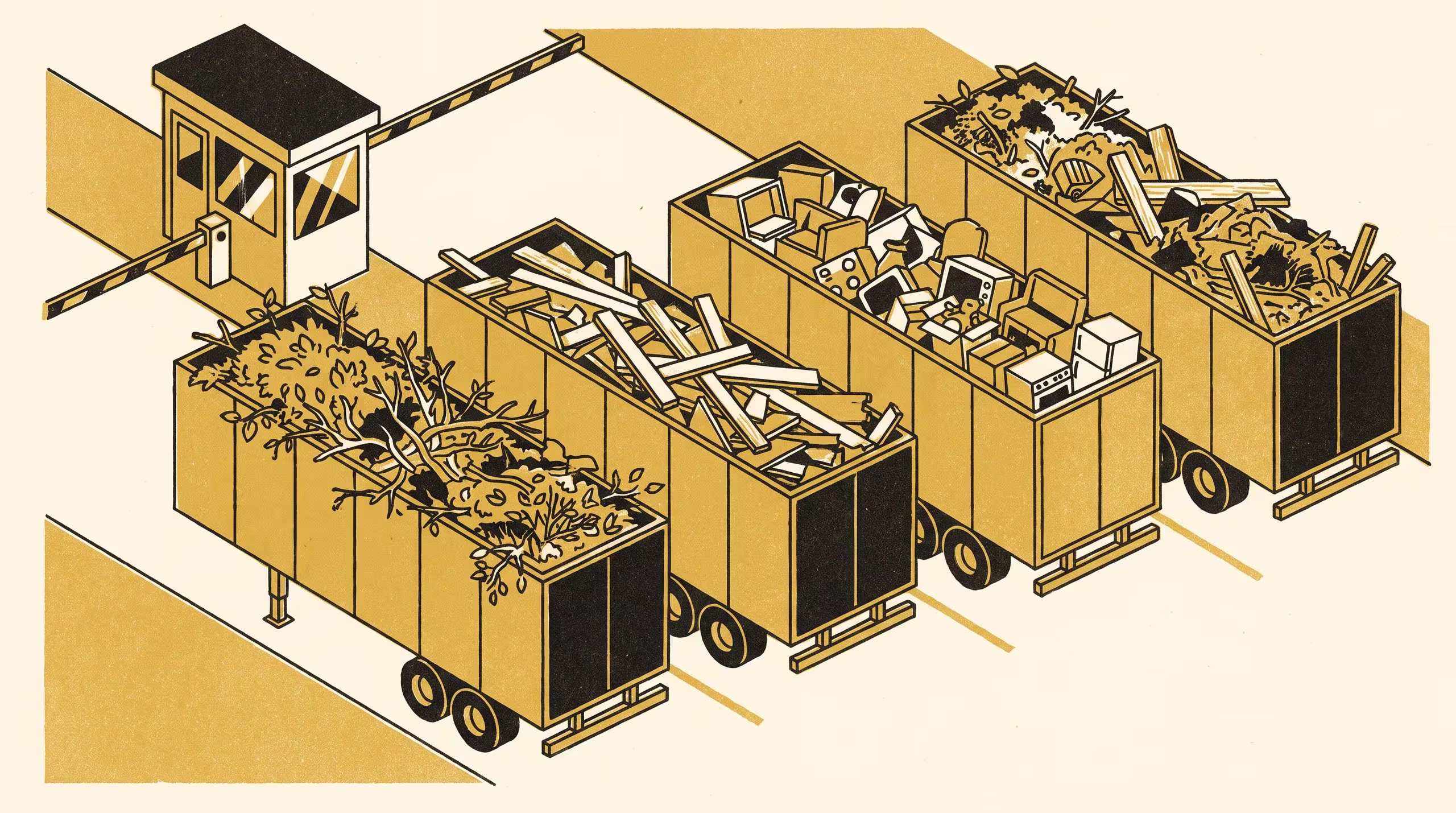
A new Slop University research poster runs a randomised vignette experiment with 148 waste transfer station gate attendants, finding a stacked load carrying one non-green item called green waste 71.4 per cent of the time at a clear gate and 38.2 per cent when the same load arrives heaped with six vehicles waiting.
Slop University has published What Actually Ran, a case-for-support brochure that opens on a community centre's term catalogue, whose evening classes are printed in full and then half do not run, and follows that distance into three strands of the University's research programme.
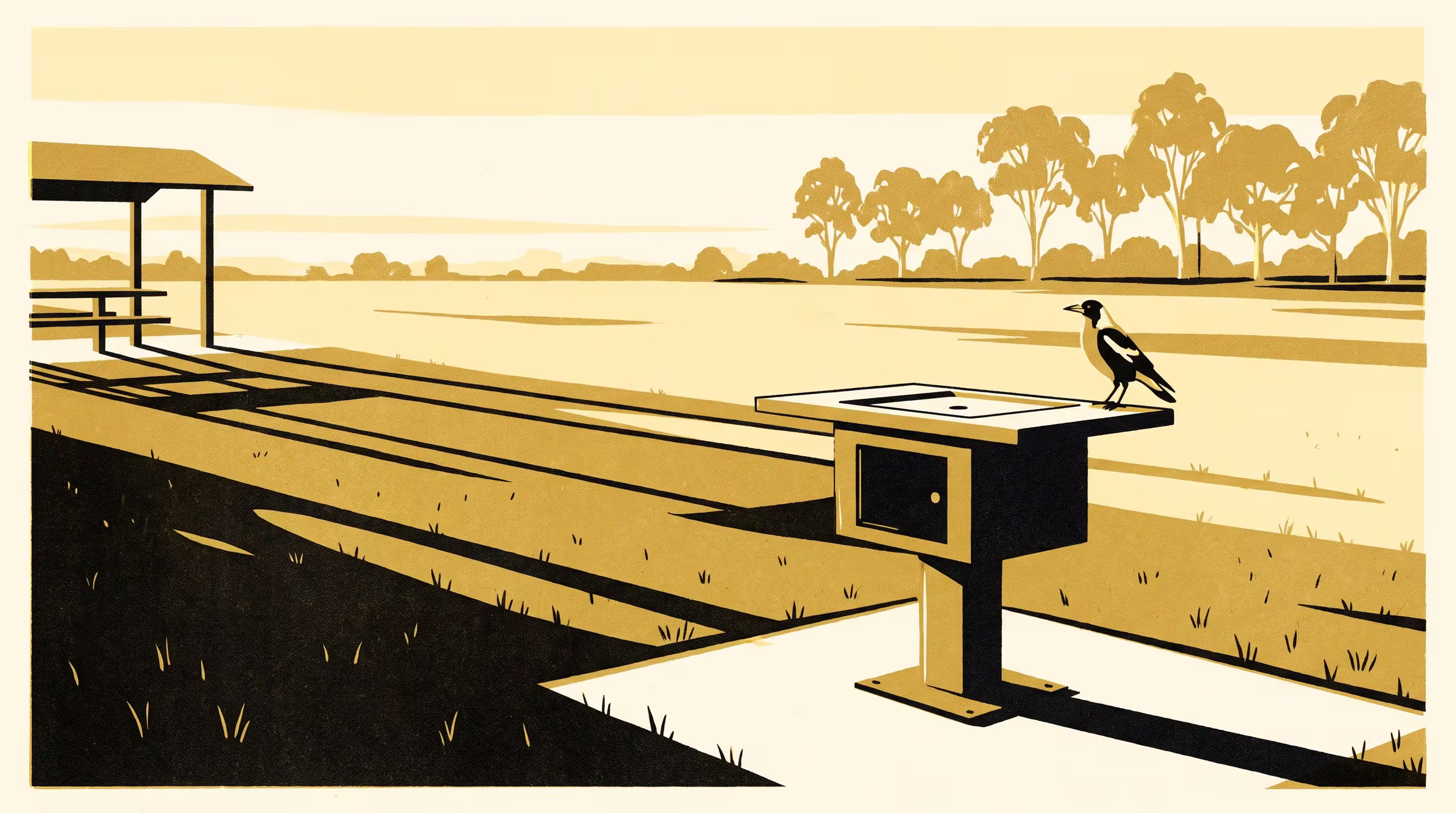
A new Slop University research poster audits 248 public barbecue units without notice, finding 82 cold at inspection and an adjusted odds of being cold six times higher in the least-used quintile, on a counter that increments only when a unit completes a heat cycle.
A new Slop University research poster follows 96 verge shortcuts sealed under a council path-formalisation warrant, finding 71 per cent carry a successor worn line within twelve months at a median of 18 weeks, with the qualifying wear score showing no association with that timing.
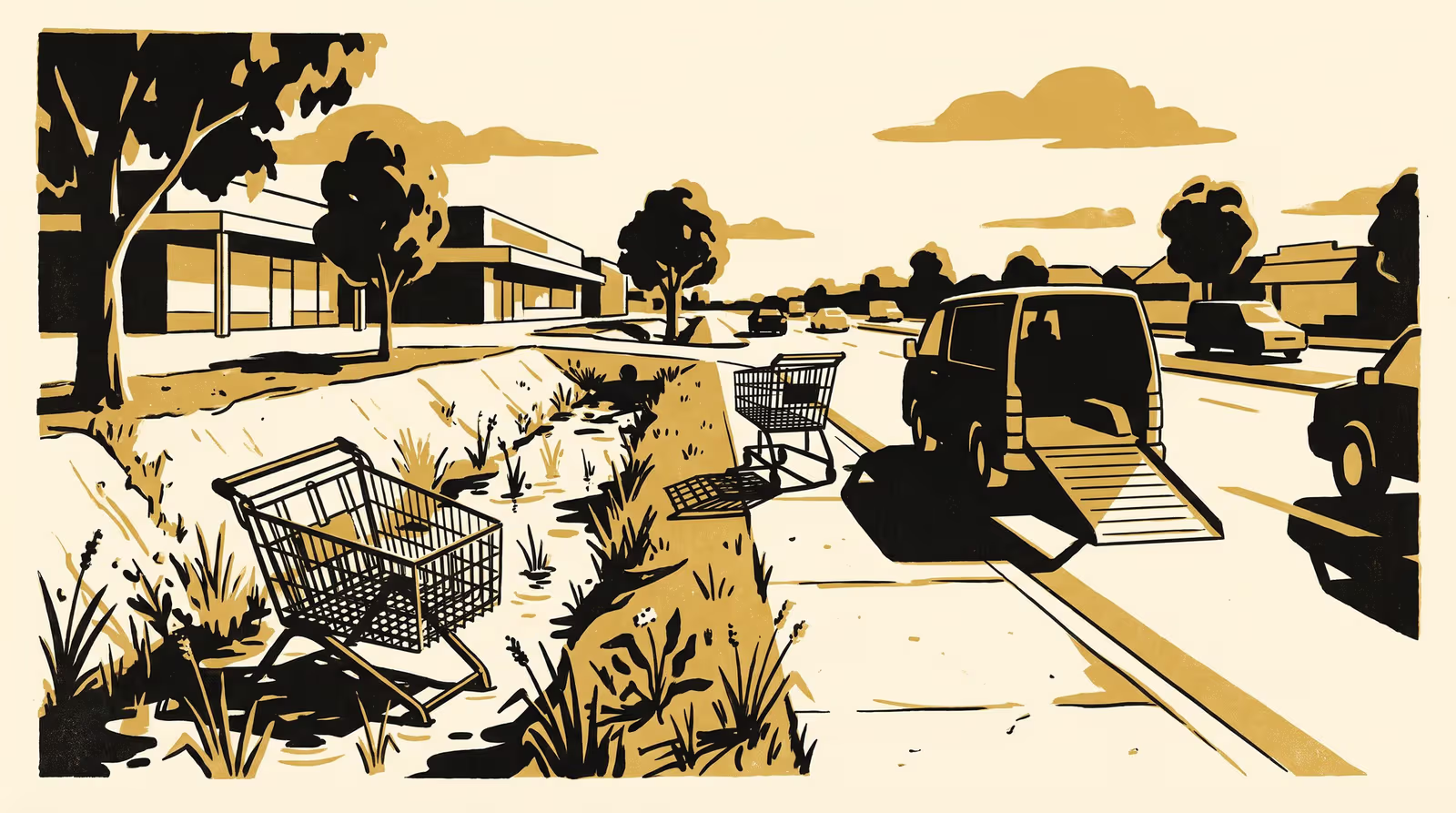
A new Slop University paper reports an eighteen-week deployment of a dispatch service that ranks stray supermarket trolleys by how readily each is seen from the road, cutting exposure-weighted collection time from 58.4 hours to 9.0 while the share of reports still open at study close rose from 0.4 to 6.1 per cent.