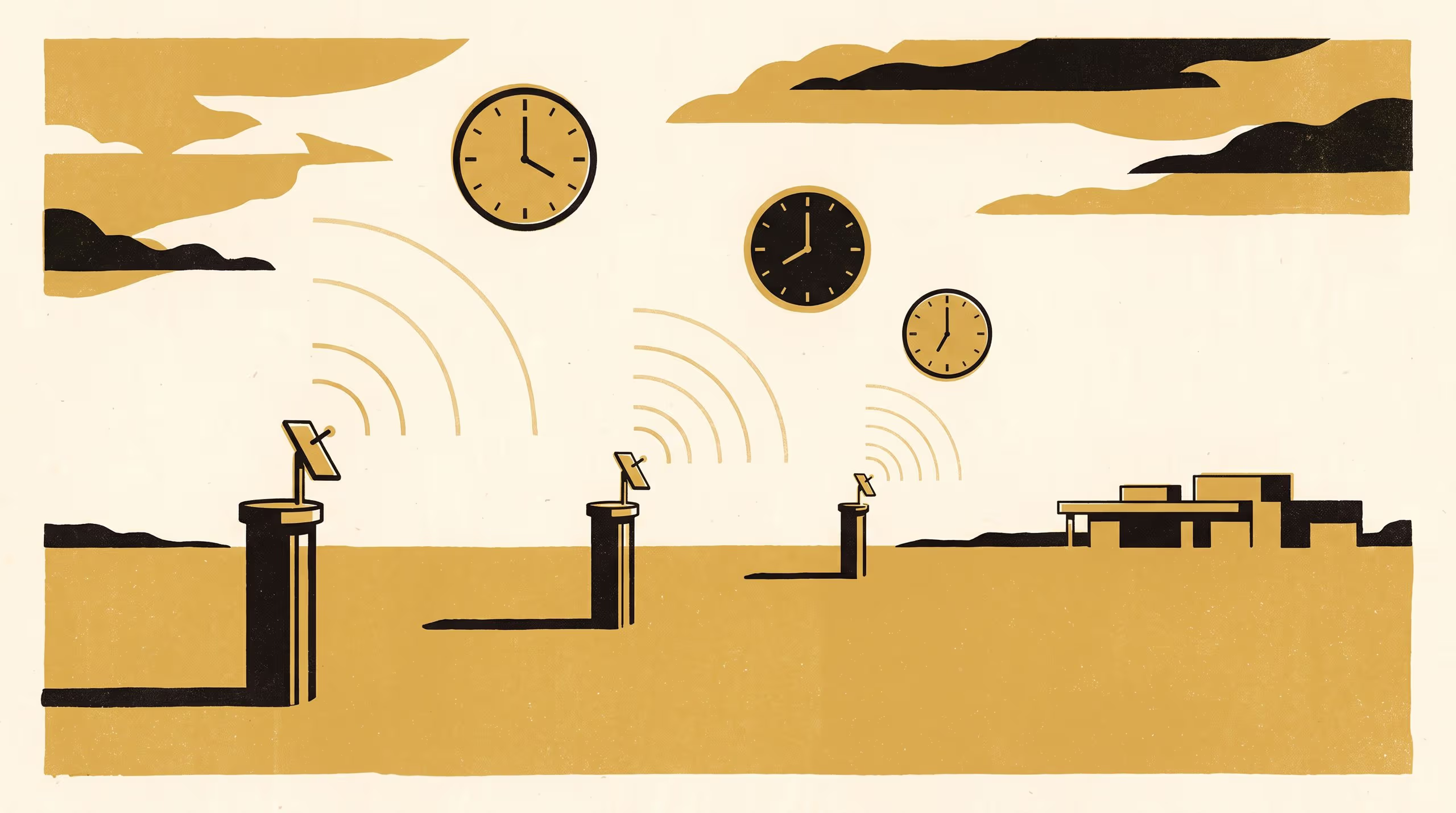
A research poster from the School of Underlying Conditions traces 212 tensed requirements in bore-telemetry software specifications to the tests that verify them, and finds the tests, not the requirements, deciding which moment "current" refers to.
In groundwater monitoring specifications, the word is settled by whoever writes the acceptance test
The School of Underlying Conditions has long asked what a single water-level reading is expected to say about the ground around it. The System Shall Display the Current Level, a new research poster, carries that question up out of the bore and into the software that brings the reading to a screen.
The work is led by Dr Vigdis Emenike, Senior Lecturer, with Ms Ylva Onyekwere, Doctoral Candidate in the School of Emergent Priorities.
Every specification we read was written by someone who knew exactly what they meant on the day. The poster is, in its way, a tribute to that confidence and to the care of everyone who came after it.
— Ms Ylva Onyekwere, Doctoral Candidate, School of Emergent Priorities
Bringing a philosophical account of time into dialogue with established requirements-engineering practice, the team followed words such as “current”, “latest” and “real-time” from 23 specifications through to the acceptance tests that verify them. Of 212 such requirements, only 3 say which moment their “now” is measured from. The tests are less reticent: each settles on one, whether the moment the logger sampled, the moment the server took delivery, or another along the way.
Dr Emenike described the study as a beginning. “There are other words still waiting their turn. We thought it fair to start with the one everybody had agreed on.”
The University is pleased to see a question first asked at the top of a bore followed all the way to the display.
The full poster is available from the University’s research repository under an open licence, doi:10.5555/slop.5gjtou.