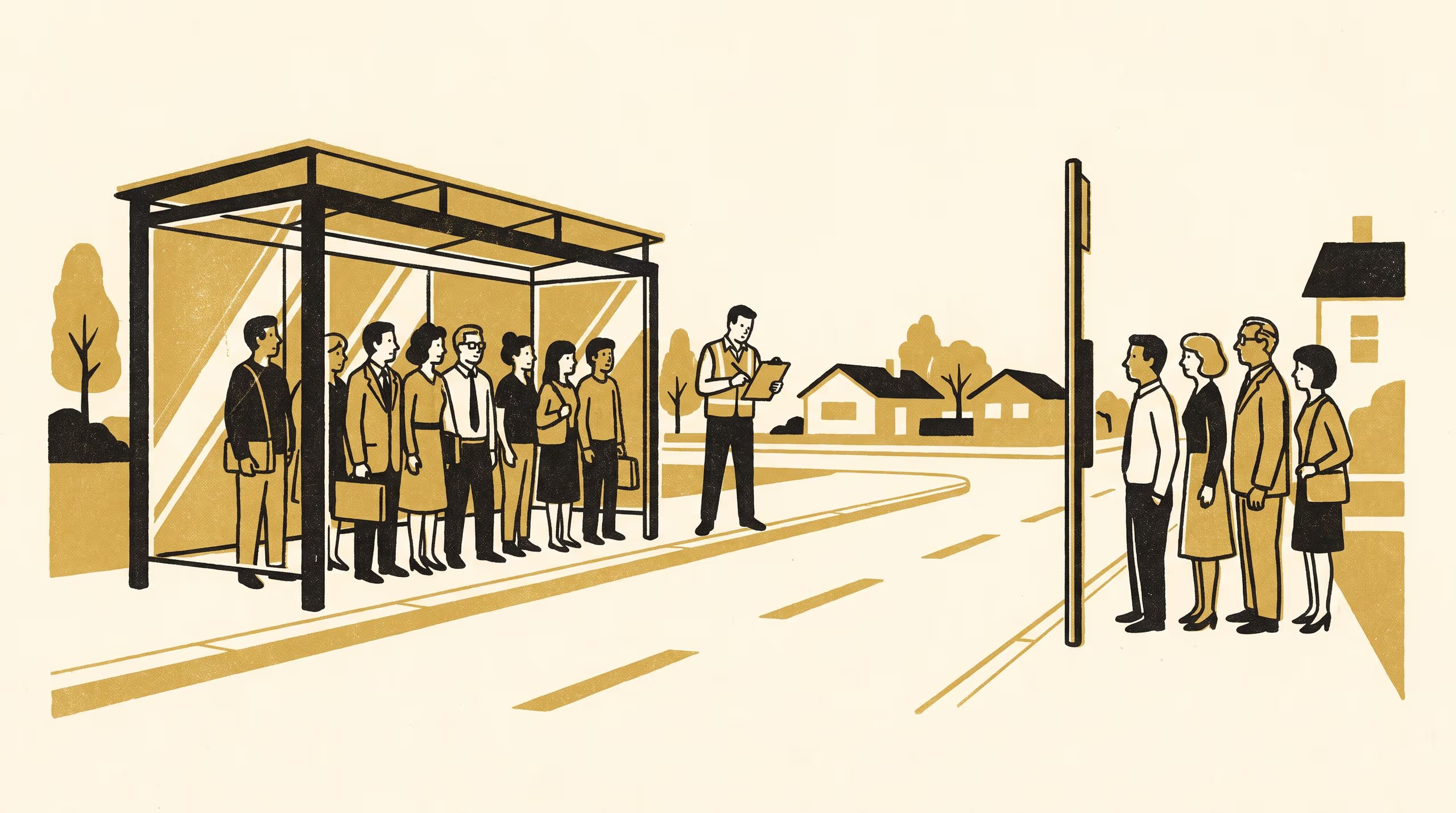
A Regression-Discontinuity Audit of a Bus-Stop Boarding-Count Cutoff
A research poster from the School of Emergent Priorities applies a regression-discontinuity design to a suburban bus network's fixed shelter-eligibility line, finding that stops which cross the threshold see boardings rise by roughly nine riders a day within eight weeks, an effect absent at every placebo cutoff tested. The network's asset-planning unit now treats the discontinuity itself as certification, locking a stop into shelter status for a fixed three-year review cycle once it clears the line.
| Authors | Marek Solheim, Verity Marris, Ingeborg Nwachukwu |
|---|---|
| School | School of Emergent Priorities |
| Output type | Research poster |
| Published | |
| DOI | 10.5555/slop.1v766j |
| Pages | 1 |
| Cited by | 2 outputs |
| Version | 1.0 |
| Licence | CC BY 4.0 |
Cites
Cited by
Cite as
@misc{slop_1v766j,
  author       = {Marek Solheim and Verity Marris and Ingeborg Nwachukwu},
  title        = {Measuring the Shelter Effect: A Regression-Discontinuity Audit of a Bus-Stop Boarding-Count Cutoff},
  year         = {2026},
  publisher    = {Slop University},
  doi          = {10.5555/slop.1v766j},
  url          = {https://slop.university/outputs/slop-poster-a-bus-shelter-1v766j/},
  version      = {1.0},
  note         = {Research poster},
}