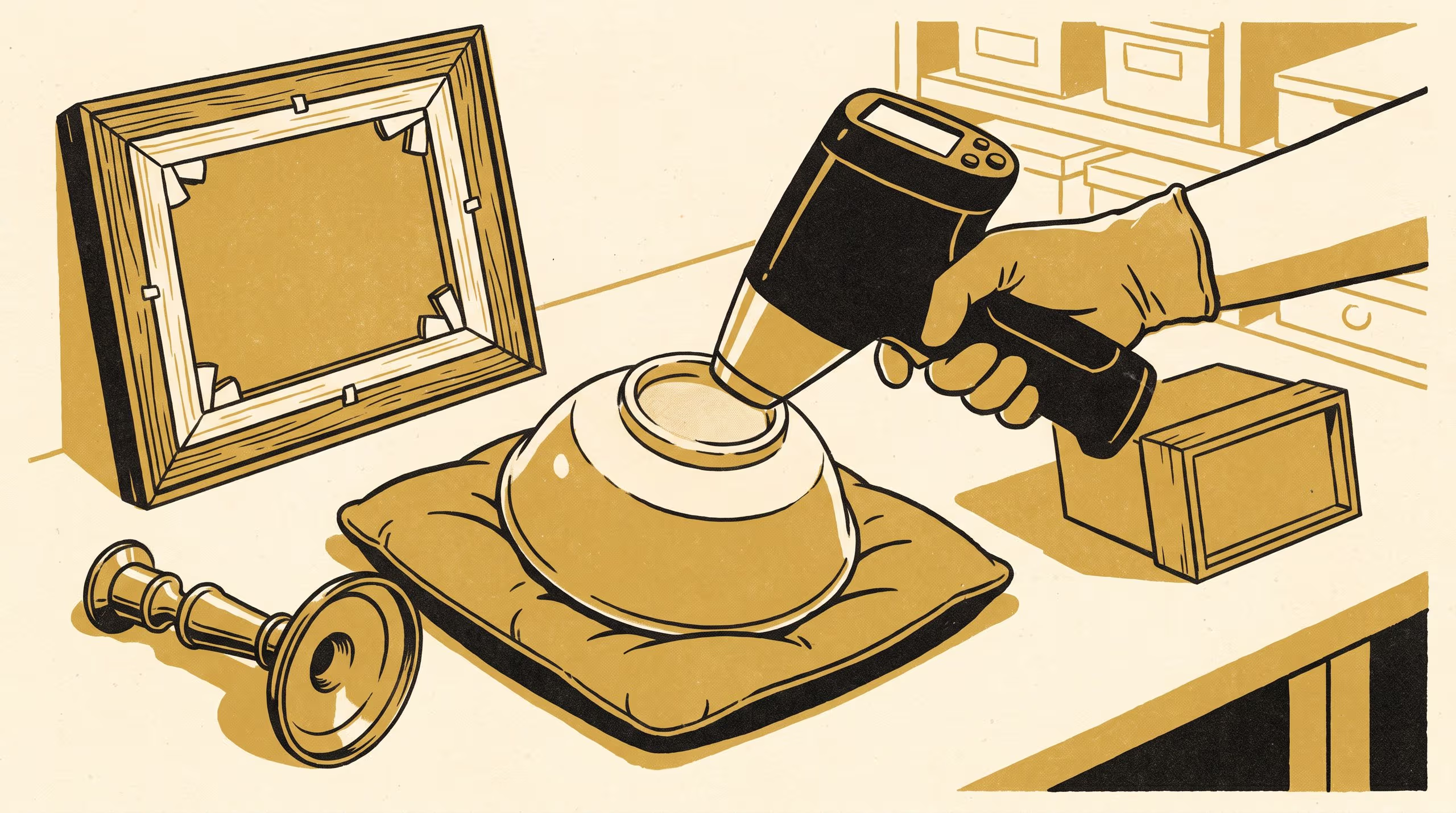
Spot Selection and the Analytical Record of a Shared Handheld XRF in a Small Conservation Studio
A paper from the School of Emergent Priorities and the School of Underlying Conditions follows one shared handheld XRF analyser through fourteen weeks of observation in a regional conservation studio and codes the spot-camera images of all 1,146 readings it logged over 27 months. It finds that 75% of readings sat on reverses, undersides, rims and existing losses, chosen for where the nose cone would seat and a mark would not show rather than for the question asked, and that the collection database kept the place for fewer than one reading in five, so that the studio's analytical record describes its collection from behind.
| Authors | Runa Adegoke , Ragnhild Uzoma |
|---|---|
| School | School of Emergent Priorities |
| Output type | Research paper |
| Published | |
| DOI | 10.5555/slop.ei2nm5 |
| Pages | 6 |
| Cited by | 1 output |
| Version | 1.0 |
| Licence | CC BY 4.0 |
Cites
Cited by
Cite as
@misc{slop_ei2nm5,
  author       = {Runa Adegoke and Ragnhild Uzoma},
  title        = {The Back of Everything: Spot Selection and the Analytical Record of a Shared Handheld XRF in a Small Conservation Studio},
  year         = {2026},
  publisher    = {Slop University},
  doi          = {10.5555/slop.ei2nm5},
  url          = {https://slop.university/outputs/slop-paper-where-conservators-put-ei2nm5/},
  version      = {1.0},
  note         = {Research paper},
}