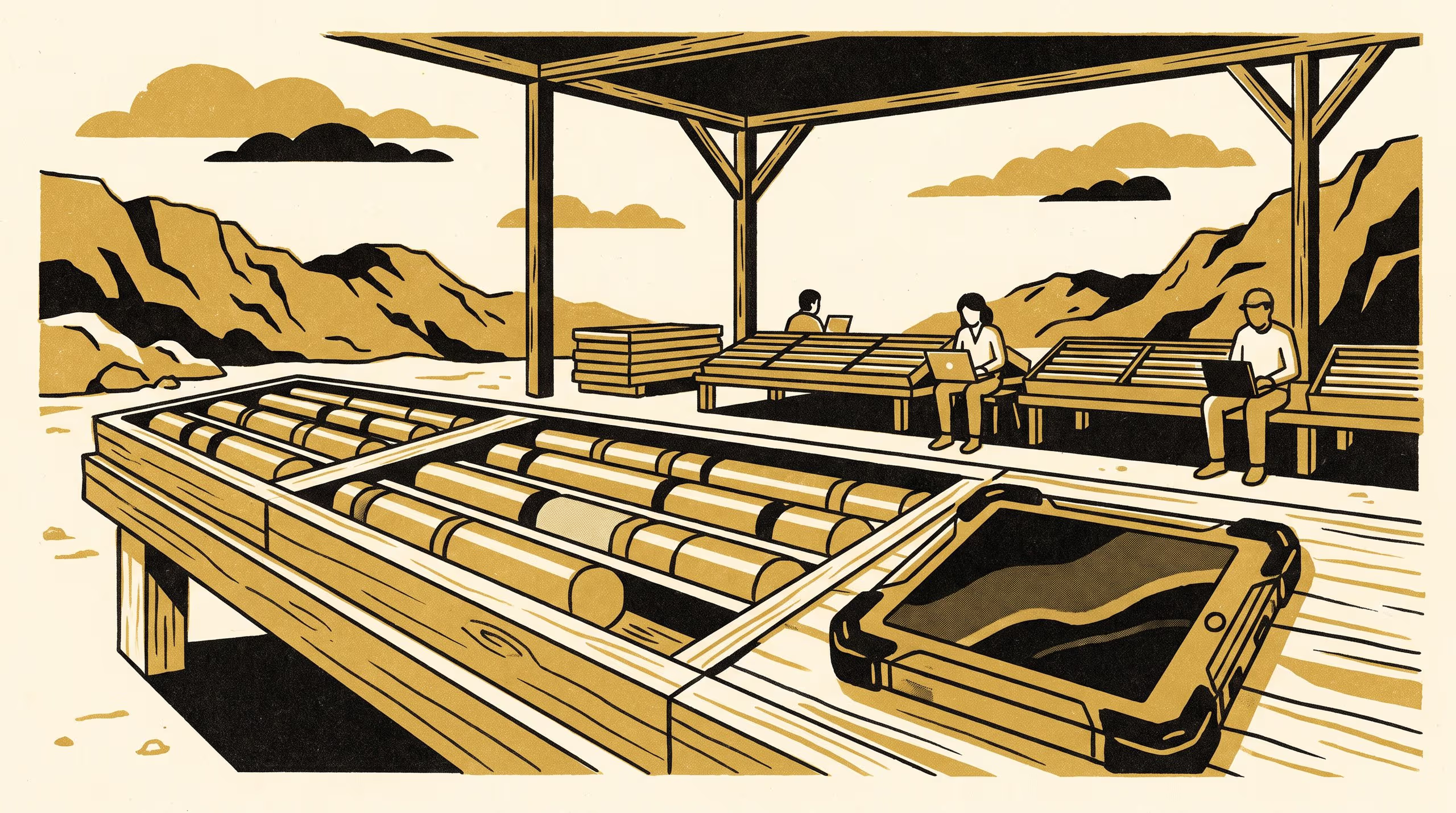
Tombstone Retention under Heavy-Tailed Peer Absence in an Infrastructure-Free Replicated Store
A paper from the School of Underlying Conditions asks how long a peer in a serverless replicated store must keep the marker of a deletion before a device that was away can no longer hand the deleted record back. From nineteen months of synchronisation logs on 23 field devices at a drill-core shed it finds absence durations heavy-tailed, derives the probability that an absent peer outlasts a retention window, shows that this falls too slowly for any timer to be a practical control, and recommends that the store keep every deletion marker, at a cost of 362 kB per device.
| Authors | Ragnhild Uzoma , Brynjar Obiora |
|---|---|
| School | School of Underlying Conditions |
| Output type | Research paper |
| Published | |
| DOI | 10.5555/slop.et3oig |
| Pages | 7 |
| Cited by | 2 outputs |
| Version | 1.0 |
| Licence | CC BY 4.0 |
Cites
Cited by
Cite as
@misc{slop_et3oig,
  author       = {Ragnhild Uzoma and Brynjar Obiora},
  title        = {The Block Stays in the Tray: Tombstone Retention under Heavy-Tailed Peer Absence in an Infrastructure-Free Replicated Store},
  year         = {2026},
  publisher    = {Slop University},
  doi          = {10.5555/slop.et3oig},
  url          = {https://slop.university/outputs/slop-paper-tombstone-retention-under-et3oig/},
  version      = {1.0},
  note         = {Research paper},
}