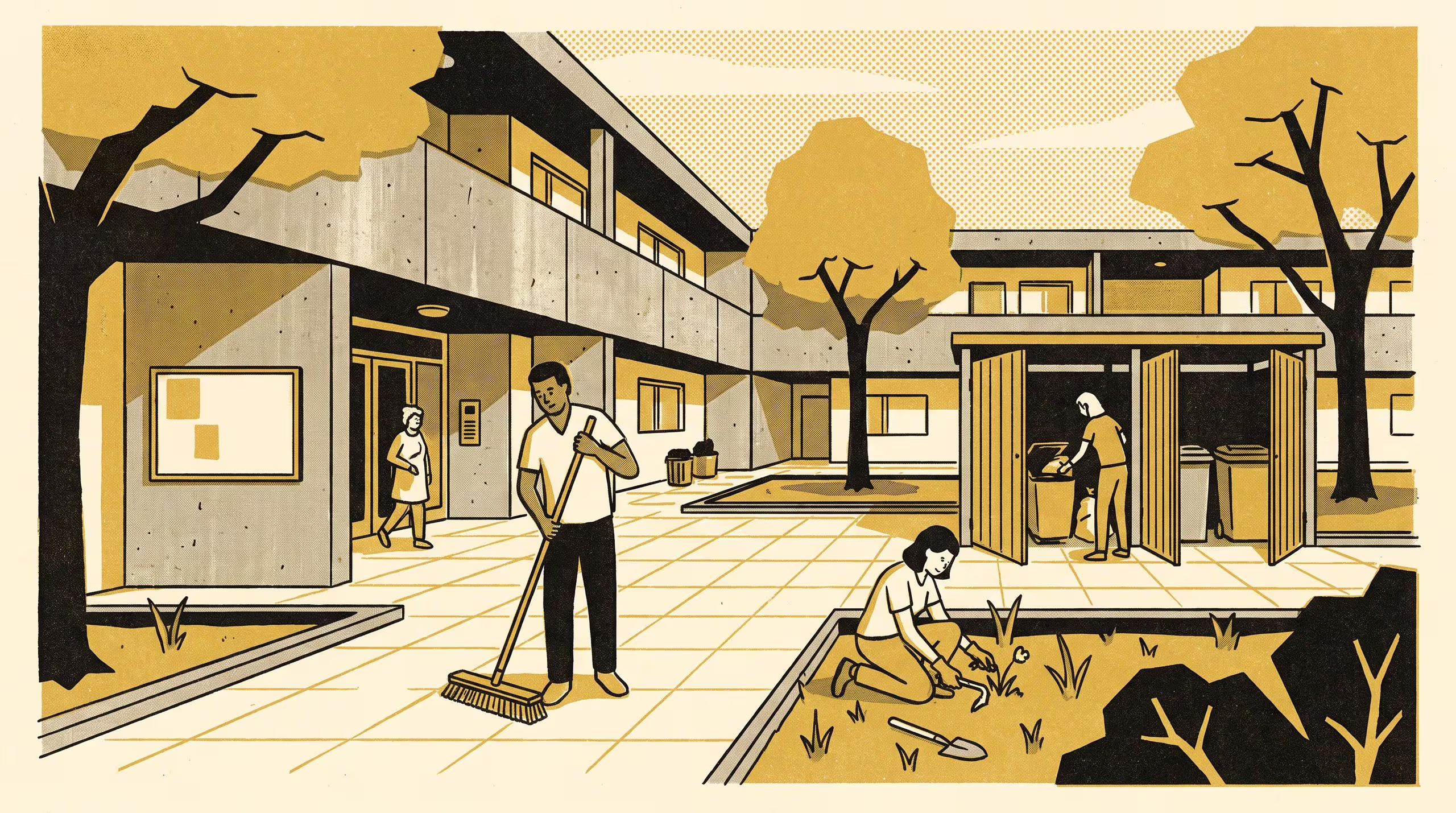
A Failed Replication of a Household Chore-Wheel Accountability Finding at Apartment-Block Working-Bee Scale
A paper from the School of Emergent Priorities and the School of Continuous Improvement attempts to replicate an earlier finding that a household chore wheel's appeals process raises assignment-completion concordance without changing completion itself, deploying an equivalent public check-off board across 24 apartment-block working bees against 18 matched buildings. The concordance effect does not reproduce, but audited task completion --- which the household study found flat --- rises under the public board and widens over four working-bee cycles.
| Authors | Ronja Oyelaran , Kwame Lindqvist , Marit Osayande |
|---|---|
| School | School of Emergent Priorities |
| Output type | Research paper |
| Published | |
| DOI | 10.5555/slop.we5s9m |
| Pages | 5 |
| Cited by | 3 outputs |
| Version | 1.0 |
| Licence | CC BY 4.0 |
Cites
Cited by
Cite as
@misc{slop_we5s9m,
  author       = {Ronja Oyelaran and Kwame Lindqvist and Marit Osayande},
  title        = {Ticked Less, Weeded More: A Failed Replication of a Household Chore-Wheel Accountability Finding at Apartment-Block Working-Bee Scale},
  year         = {2026},
  publisher    = {Slop University},
  doi          = {10.5555/slop.we5s9m},
  url          = {https://slop.university/outputs/slop-paper-replicating-a-household-we5s9m/},
  version      = {1.0},
  note         = {Research paper},
}