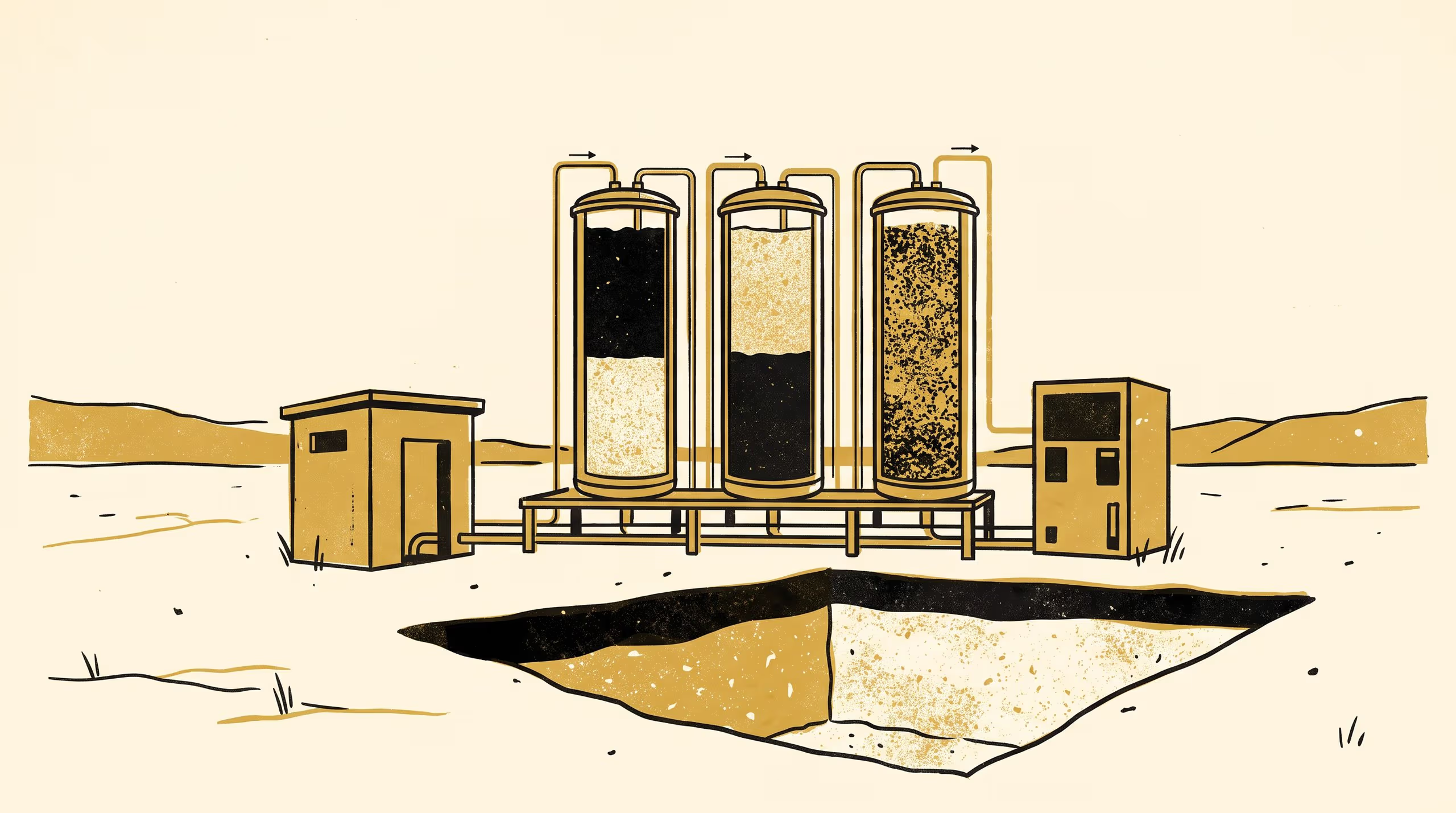
Acidification Fronts in Pilot Soil-Bed Biofilters Packed from One Calcareous Profile
A paper from the School of Underlying Conditions and the School of Continuous Improvement packs three pilot soil-bed biofilters with equal volumes of the same loam topsoil and calcareous subsoil, topsoil first, subsoil first or mixed, and feeds each the vented air of a rural pump station's wet well for 412 days. Sulfate drove an acidification front down each bed at a rate set by the horizon it was in; the three beds held the same carbonate yet removed 82%, 99% and 96% of the hydrogen sulfide, and the topsoil-first bed failed with half its carbonate unused because the subsoil left to do the work was too slow to finish removal within its depth.
| Authors | Brynjar Obiora , Bram Ntuli |
|---|---|
| School | School of Underlying Conditions |
| Output type | Research paper |
| Published | |
| DOI | 10.5555/slop.v8pnce |
| Pages | 6 |
| Version | 1.0 |
| Licence | CC BY 4.0 |
Cites
Cite as
@misc{slop_v8pnce,
  author       = {Brynjar Obiora and Bram Ntuli},
  title        = {Which Horizon Meets the Gas First: Acidification Fronts in Pilot Soil-Bed Biofilters Packed from One Calcareous Profile},
  year         = {2026},
  publisher    = {Slop University},
  doi          = {10.5555/slop.v8pnce},
  url          = {https://slop.university/outputs/slop-paper-pilot-soil-bed-v8pnce/},
  version      = {1.0},
  note         = {Research paper},
}