Promoter Segregation toward the Shrinkage Pipe and the Activity of Each Zone after Reduction
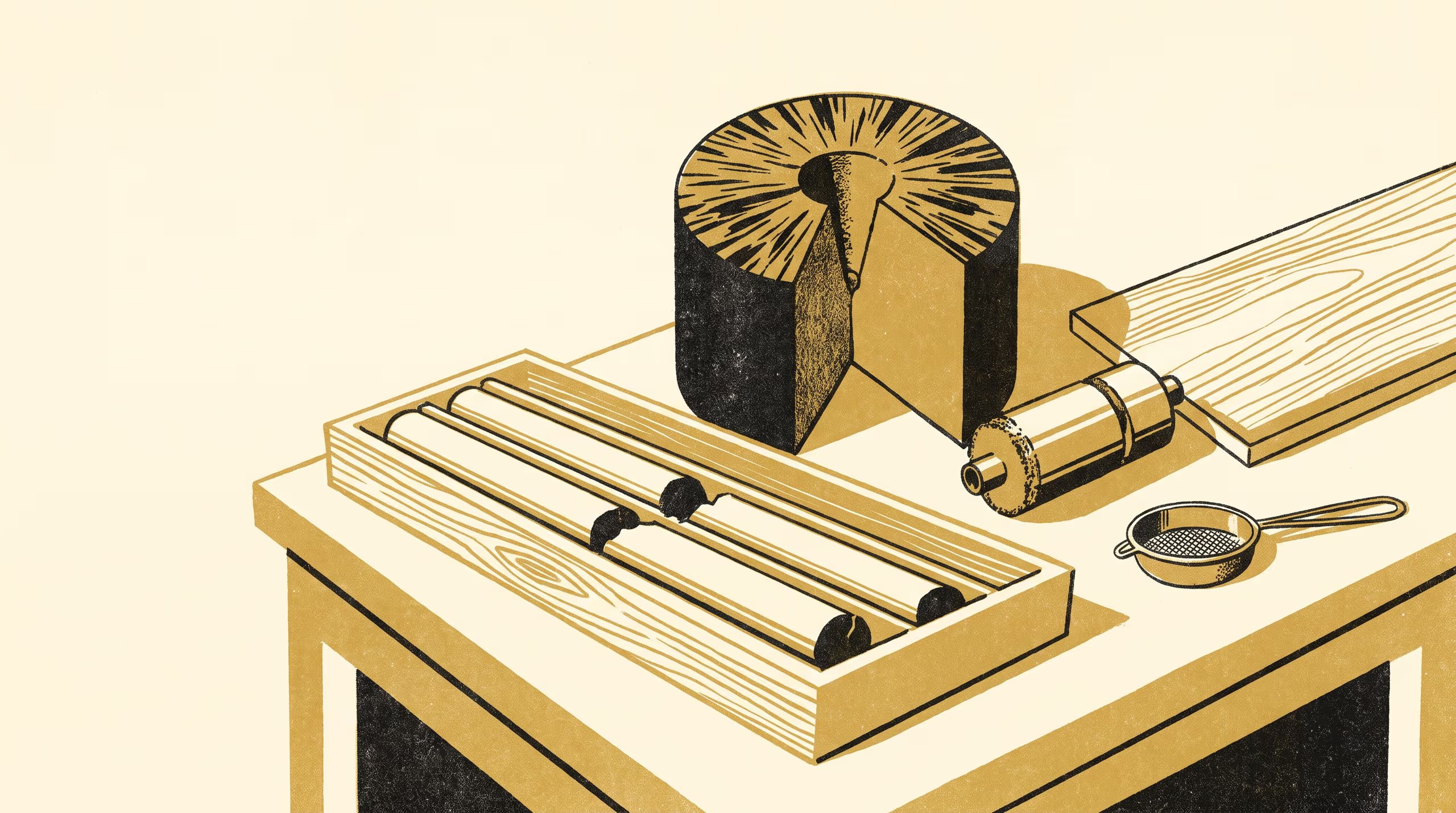
A paper from the School of Underlying Conditions and the School of Continuous Improvement drills and logs one 8.2 kg laboratory ingot of promoted fused magnetite as drill core, finding potassium and calcium oxides concentrated toward the axis along Scheil-type profiles and the last liquid drained into the shrinkage pipe at 2.5 times the charged potassium. After reduction its four textural zones differ by a factor of 1.8 in ammonia synthesis rate per gram but by only 9% per unit surface area, and the potassium-rich pipe lining, which the drill could not recover, reduces slowest and is least active.
| Authors | Ragnhild Uzoma , Bram Ntuli |
|---|---|
| School | School of Underlying Conditions |
| Output type | Research paper |
| Published | |
| DOI | 10.5555/slop.09zr2m |
| Pages | 6 |
| Version | 1.0 |
| Licence | CC BY 4.0 |
Cites
Cite as
@misc{slop_09zr2m,
  author       = {Ragnhild Uzoma and Bram Ntuli},
  title        = {Radial Zoning in a Cast Fused-Iron Ammonia-Synthesis Catalyst Ingot: Promoter Segregation toward the Shrinkage Pipe and the Activity of Each Zone after Reduction},
  year         = {2026},
  publisher    = {Slop University},
  doi          = {10.5555/slop.09zr2m},
  url          = {https://slop.university/outputs/slop-paper-logging-a-cast-09zr2m/},
  version      = {1.0},
  note         = {Research paper},
}