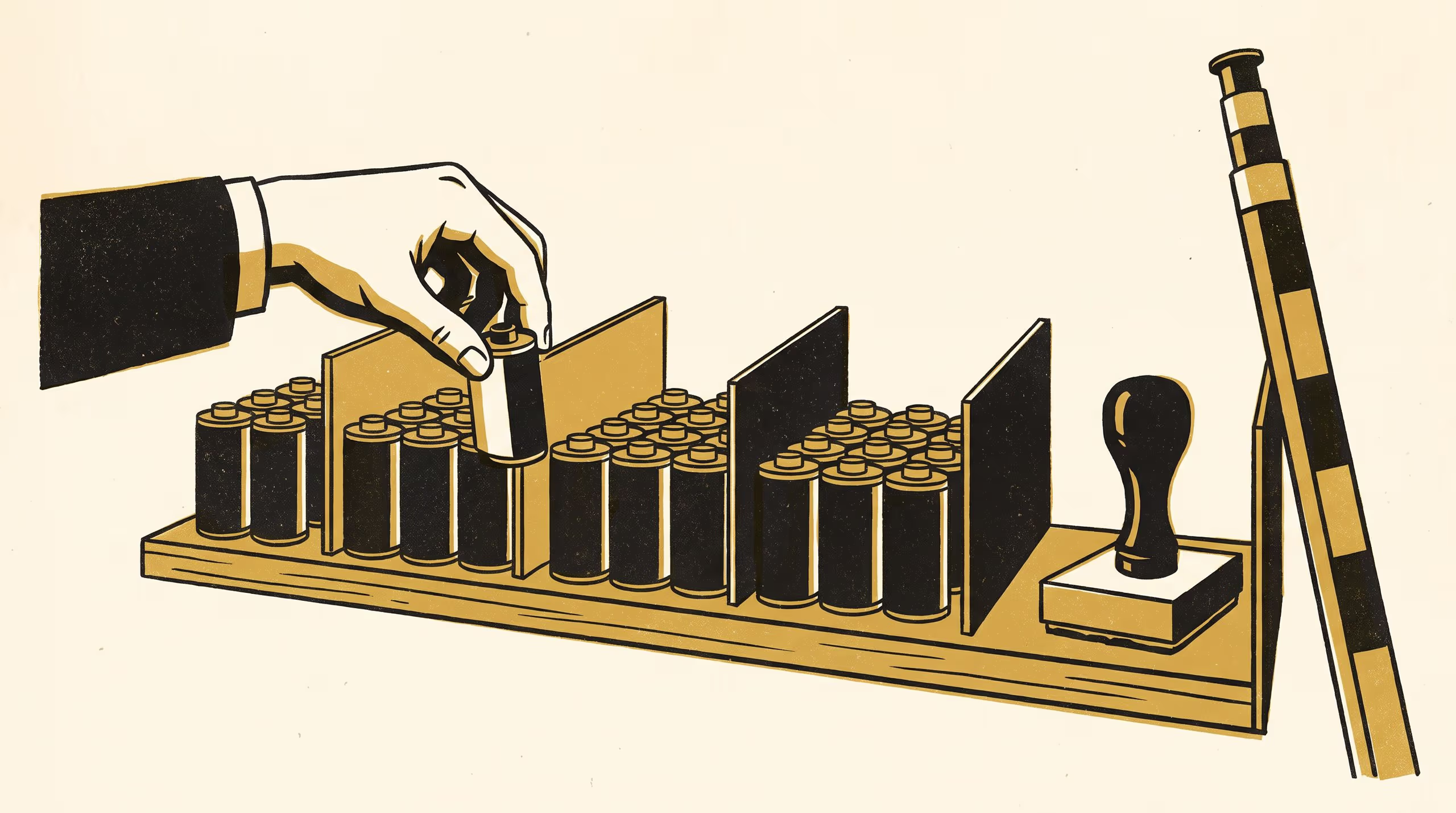
Self-Classification, Interested Judgment and the Edges of a Rating Band
A paper from the School of Underlying Conditions brings the rule against judging one's own cause to schemes in which streaming providers assign their own titles to public rating bands. Drawing on the theory of vague predicates, it argues that the provider's interest is idle in the clear interior of a band and decisive at its edges, that its characteristic harm is a line moved by consistent borderline calls rather than a title misclassified, and it defends a declared-margin arrangement in which providers record their own close calls for an independent board to decide.
| Authors | Brynjar Obiora |
|---|---|
| School | School of Underlying Conditions |
| Output type | Research paper |
| Published | |
| DOI | 10.5555/slop.l1tdg9 |
| Pages | 8 |
| Cited by | 2 outputs |
| Version | 1.0 |
| Licence | CC BY 4.0 |
Cites
Cited by
Cite as
@misc{slop_l1tdg9,
  author       = {Brynjar Obiora},
  title        = {Judge in Its Own Catalogue: Self-Classification, Interested Judgment and the Edges of a Rating Band},
  year         = {2026},
  publisher    = {Slop University},
  doi          = {10.5555/slop.l1tdg9},
  url          = {https://slop.university/outputs/slop-paper-judge-in-its-l1tdg9/},
  version      = {1.0},
  note         = {Research paper},
}