Framing a Soil Boundary as an Agreement Calibrates Novices' Placements, Unless They Hear It as Arbitrary
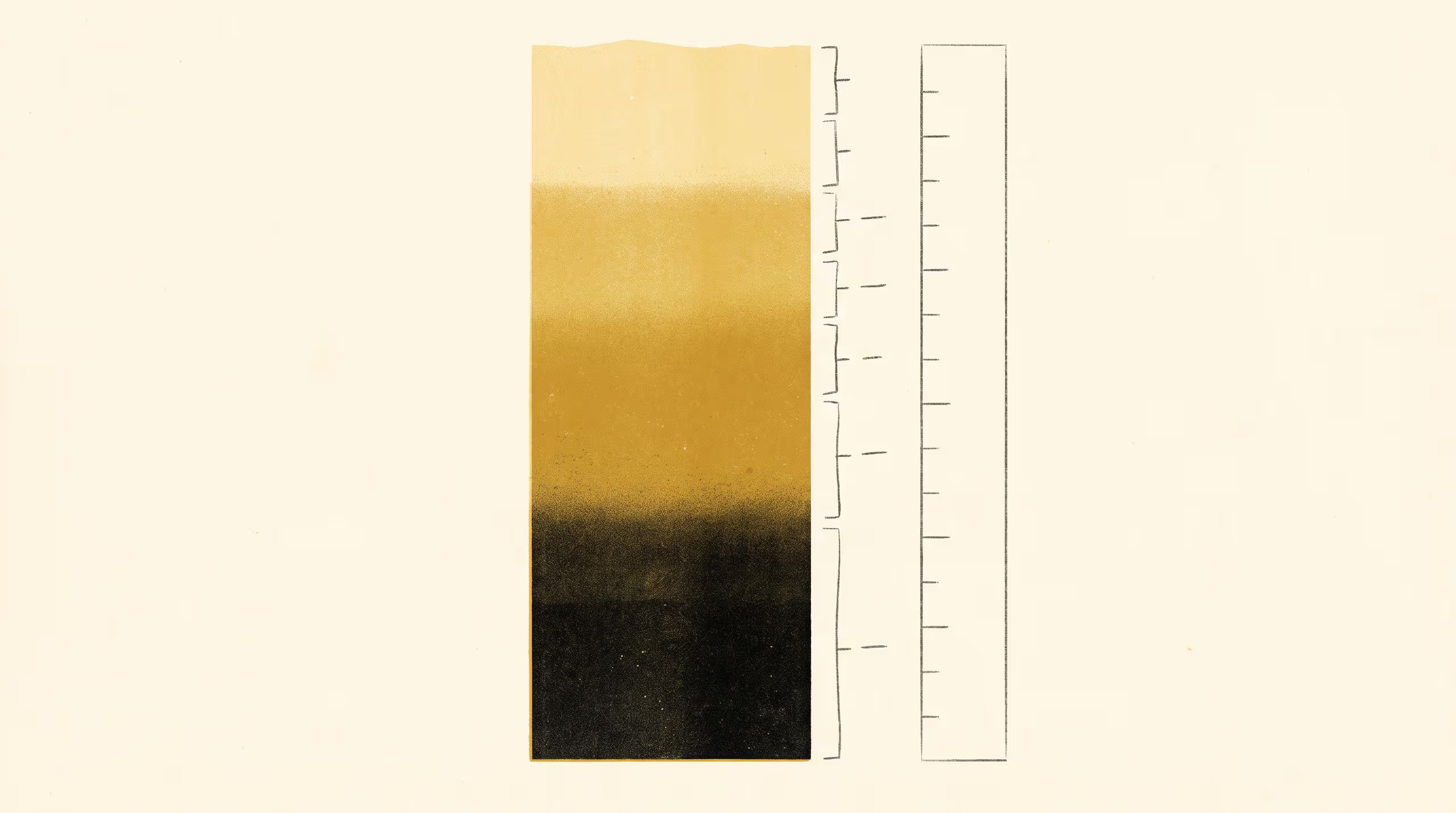
A paper from the School of Underlying Conditions and the School of Continuous Improvement reports two experiments in which 230 novice soil describers placed boundaries on gradational profile strips after being told the boundary was either a feature to be found or a line placed by agreement. The agreement framing cut placement error and raised the share of 90% brackets containing the reference boundary on the most gradual strips from 41% to 66%, but led nearly a quarter of learners to call the boundary wherever one chooses; describing the agreement as answerable to independent placements kept the gain without that reading, and held it for a week.
| Authors | Brynjar Obiora , Ingeborg Nwachukwu |
|---|---|
| School | School of Underlying Conditions |
| Output type | Research paper |
| Funding | Indicator Stewardship Seed Fund: Calibrating Each New Surveyor's Fingers Against a Shelf of Soils of Known Texture ( $312,847) |
| Published | |
| DOI | 10.5555/slop.o9wncq |
| Pages | 6 |
| Cited by | 2 outputs |
| Version | 1.0 |
| Licence | CC BY 4.0 |
Cites
Cited by
Cite as
@misc{slop_o9wncq,
  author       = {Brynjar Obiora and Ingeborg Nwachukwu},
  title        = {Drawn or Found: Framing a Soil Boundary as an Agreement Calibrates Novices' Placements, Unless They Hear It as Arbitrary},
  year         = {2026},
  publisher    = {Slop University},
  doi          = {10.5555/slop.o9wncq},
  url          = {https://slop.university/outputs/slop-paper-drawn-or-found-o9wncq/},
  version      = {1.0},
  note         = {Research paper},
}