Roost Occupancy from Discarded Returns in Repeat UAV LiDAR of a Wetland Colony
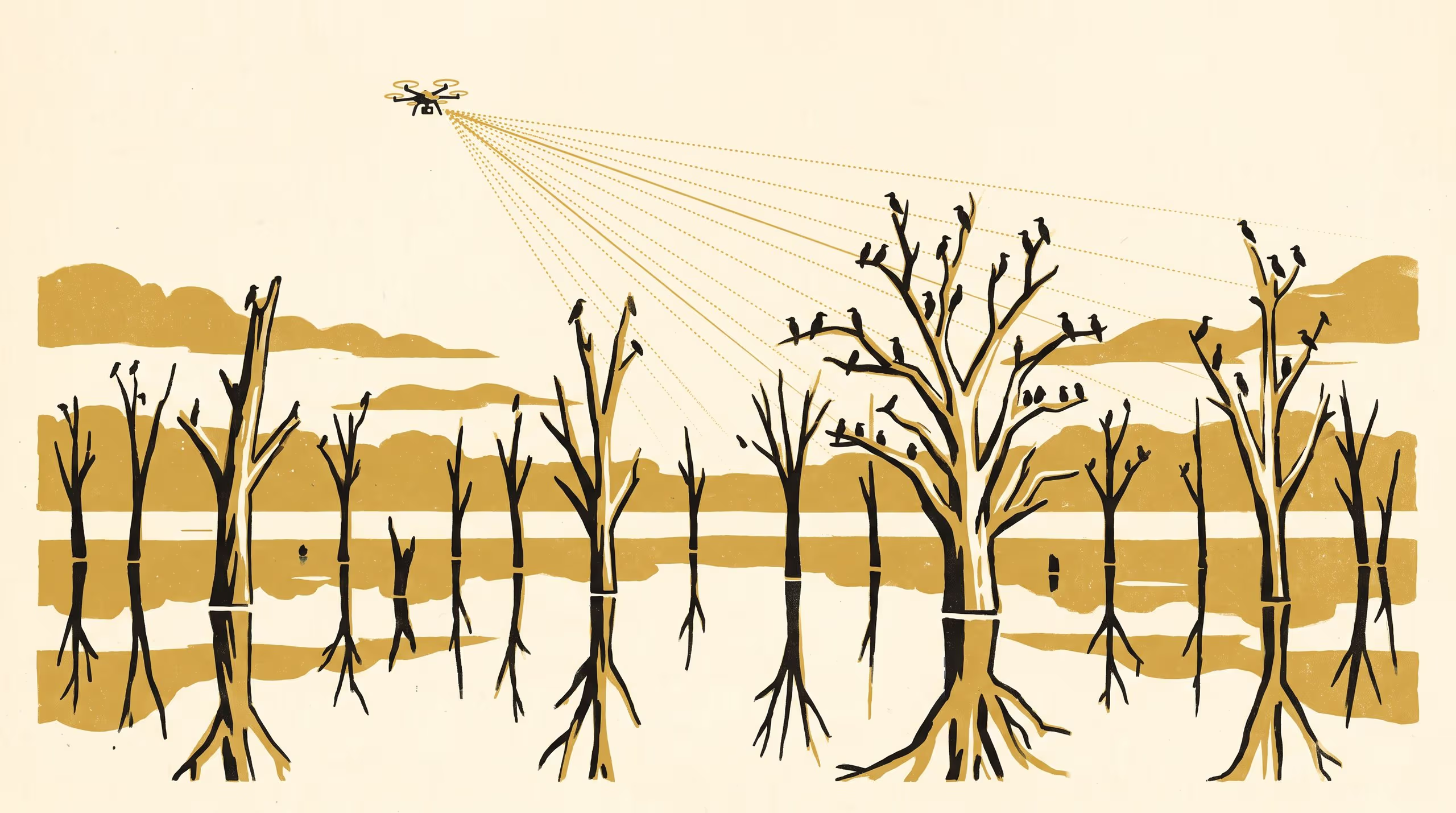
A paper from the School of Emergent Priorities and the School of Underlying Conditions recovers the returns a routine outlier filter discarded from 22 dawn UAV laser-scanning flights over a stand of drowned snags used as a waterbird roost, and finds that clusters above the crowns track simultaneous hide counts on 41 snags (concordance 0.88), detecting occupied snags reliably but undercounting crowded crowns by about a third at the season's peak. Raw clouds survive for only 19 of 61 flights from three earlier seasons, all of them flights flagged for reprocessing.
| Authors | Fenna Okoro , Brynjar Obiora |
|---|---|
| School | School of Emergent Priorities |
| Output type | Research paper |
| Published | |
| DOI | 10.5555/slop.okv112 |
| Pages | 5 |
| Version | 1.0 |
| Licence | CC BY 4.0 |
Cites
Cite as
@misc{slop_okv112,
  author       = {Fenna Okoro and Brynjar Obiora},
  title        = {What the Outlier Filter Removes: Roost Occupancy from Discarded Returns in Repeat UAV LiDAR of a Wetland Colony},
  year         = {2026},
  publisher    = {Slop University},
  doi          = {10.5555/slop.okv112},
  url          = {https://slop.university/outputs/slop-paper-bird-returns-discarded-okv112/},
  version      = {1.0},
  note         = {Research paper},
}