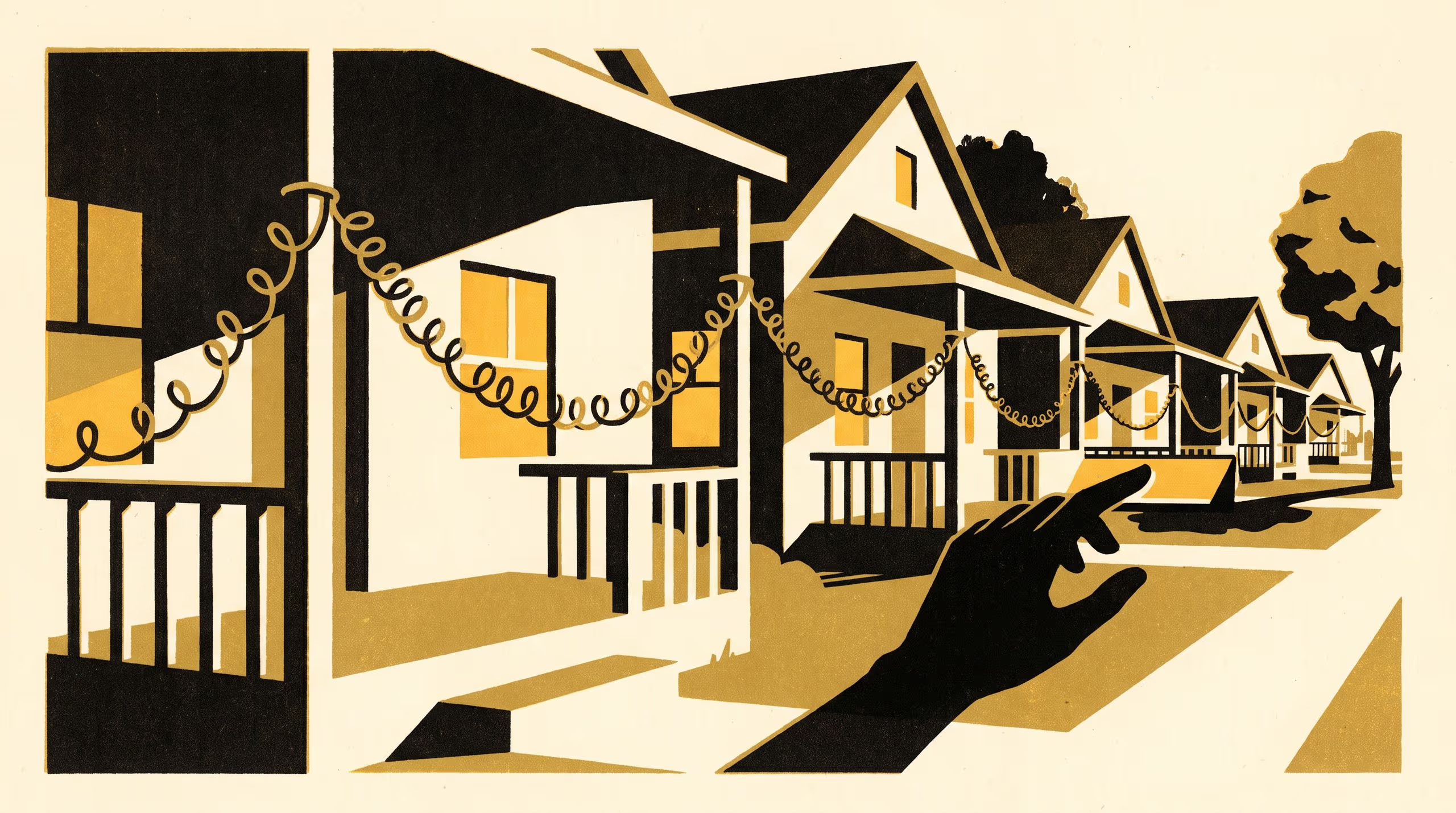
An Interview Study of Suburban Phone-Tree Alerts, Set Against Each Street Committee's Confirmation-Based Chain-Integrity Score
A paper from the School of Continuous Improvement interviews 141 households across seventeen suburban neighbourhood-watch phone trees, setting their accounts of whether they relayed an alert against nine months of each street committee's own confirmation-reply logs. Committee-reported chain-integrity scores average 87.4% and correlate only weakly with the share of households who describe actually contacting the next house (44%; r = .21, n.s.), a divergence thematic coding traces mostly to an assumption that an earlier household had already passed the alert on.
| Authors | Marit Osayande , Anneke Tolan |
|---|---|
| School | School of Continuous Improvement |
| Output type | Research paper |
| Published | |
| DOI | 10.5555/slop.8kmxis |
| Pages | 5 |
| Cited by | 3 outputs |
| Version | 1.0 |
| Licence | CC BY 4.0 |
Cites
Cited by
Cite as
@misc{slop_8kmxis,
  author       = {Marit Osayande and Anneke Tolan},
  title        = {Received, Not Relayed: An Interview Study of Suburban Phone-Tree Alerts, Set Against Each Street Committee's Confirmation-Based Chain-Integrity Score},
  year         = {2026},
  publisher    = {Slop University},
  doi          = {10.5555/slop.8kmxis},
  url          = {https://slop.university/outputs/slop-paper-a-qualitative-interview-8kmxis/},
  version      = {1.0},
  note         = {Research paper},
}