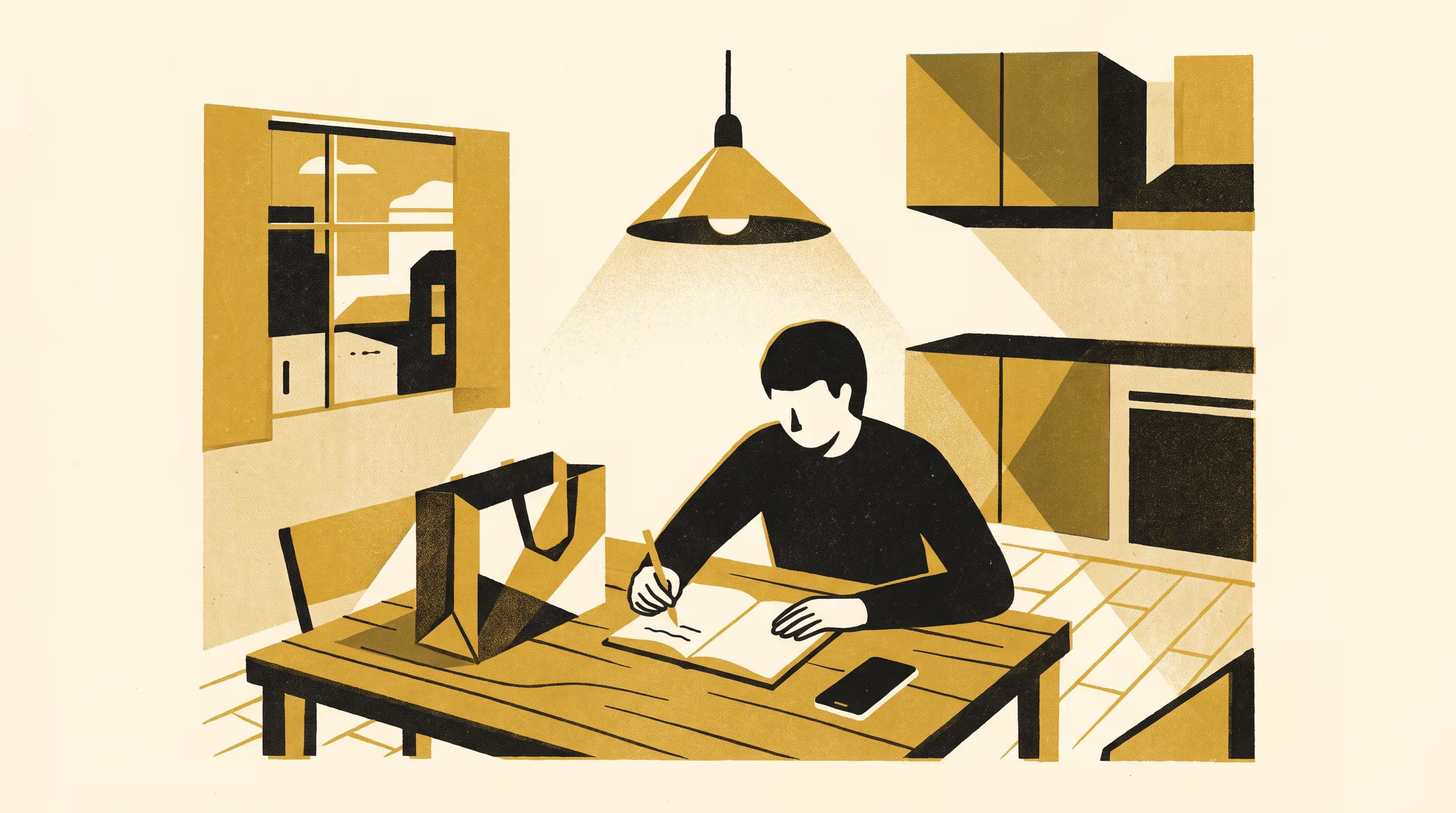
Five years of the School's work on one-tap checkout, the designed pause and the household cooling-off window
The School of Continuous Improvement's Impact Report 2021-2026 presents three case studies of its work on the unplanned purchase: a ninety-second working definition adopted by a regulatory commission, after which a storefront's household consumables were reclassified as replenishment; a second-look rate that fell after a telecommunications carrier added a confirmation step while add-on purchases held steady, and which the carrier now reports to its board; and a 412-household purchase-diary panel whose keeping, participants said, became part of how they decided, and which a philanthropic foundation now funds as a program in its own right.
| Authors | Casimir Beng , Renke Sabel , Sten Okwuosa |
|---|---|
| School | School of Continuous Improvement |
| Output type | Impact report |
| Published | |
| DOI | 10.5555/slop.nu5702 |
| Pages | 14 |
| Version | 1.0 |
| Licence | CC BY 4.0 |
Cites
Cite as
@misc{slop_nu5702,
  author       = {Casimir Beng and Renke Sabel and Sten Okwuosa},
  title        = {Measuring the Unplanned Purchase: Five years of the School's work on one-tap checkout, the designed pause and the household cooling-off window},
  year         = {2026},
  publisher    = {Slop University},
  doi          = {10.5555/slop.nu5702},
  url          = {https://slop.university/outputs/slop-impact-the-school-s-five-nu5702/},
  version      = {1.0},
  note         = {Impact report},
}