A new paper from the School of Underlying Conditions and the School of Continuous Improvement finds that a soil-bed odour filter's working life depends on which layer of soil meets the air first.
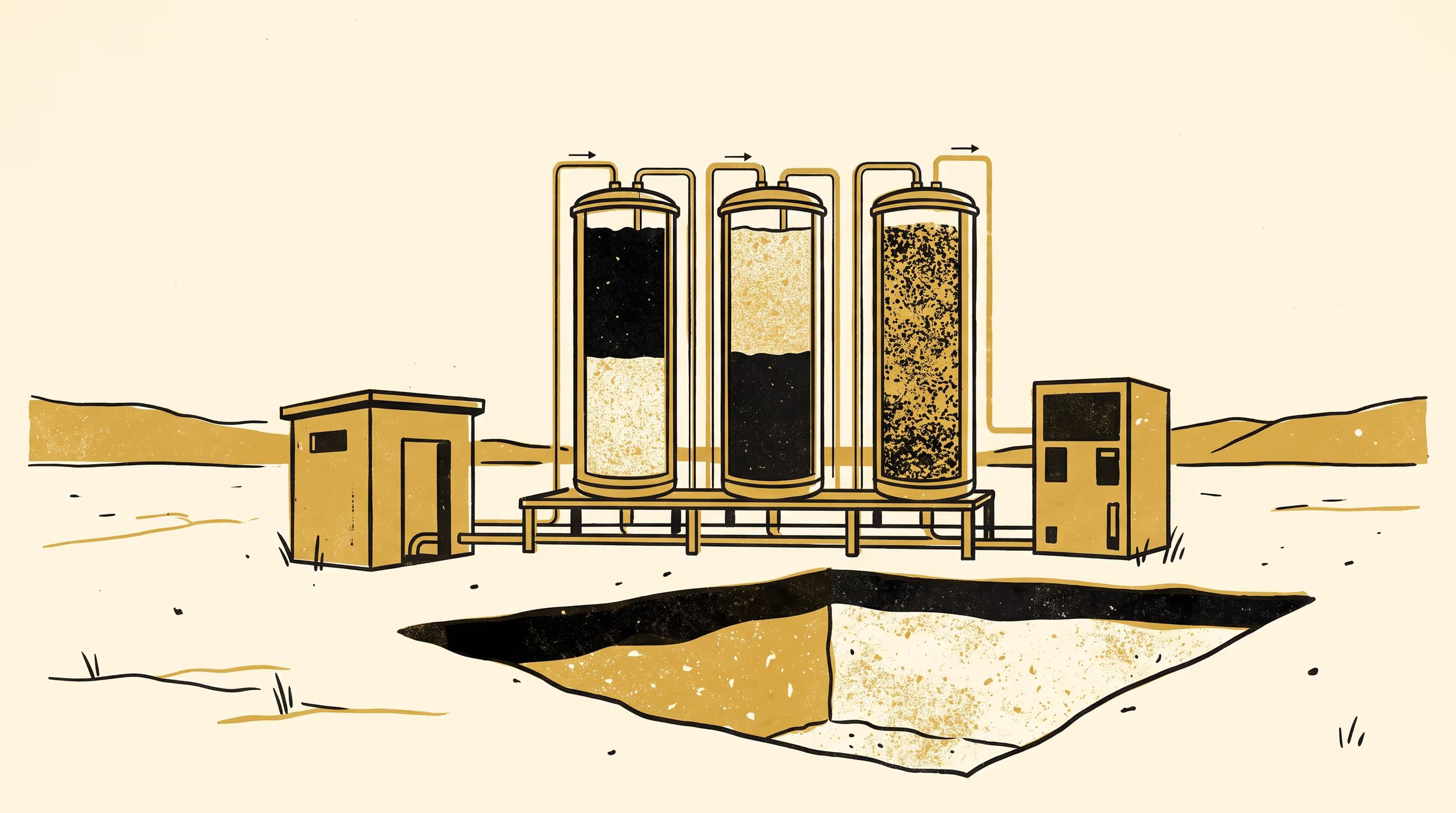
Three soil-bed columns packed from the same two horizons treated a pump station's air for over a year, and the column laid as the ground lies gave out first
Slop University’s research on the air around everyday infrastructure has found its way back into the ground. Which Horizon Meets the Gas First, a new paper from the School of Underlying Conditions and the School of Continuous Improvement, reports that a filter made of soil lasts longest when its layers are stacked in the opposite order to the one the field gave them.
A pump station is rarely anyone’s favourite neighbour, and the School would like to be part of the conversations that happen around one. I suspect we will be digging a good many more pits before those conversations are finished.
— Dr Brynjar Obiora, Senior Research Fellow, School of Underlying Conditions
Working at a rural pump station for 412 days, Dr Obiora and Dr Bram Ntuli packed three columns with equal amounts of the same topsoil and the same chalky subsoil, arranged three ways, and followed each as the air it cleaned slowly turned it sour. The study draws together field description, pilot-scale process engineering and a simple model of a moving front, bringing the School’s long practice at the soil pit into closer alignment with the treatment of odorous air.
Dr Ntuli, Lecturer and Convenor of Improvement Grand Rounds, said the work had left the team with “more questions about the ground than we started with, which is the right way round for a study of this kind”.
The paper continues the University’s steady investment in the slow, physical side of environmental engineering, where a year is a short time and a soil profile is a long one.
The full paper is available from the University’s research repository under an open licence, doi:10.5555/slop.v8pnce.