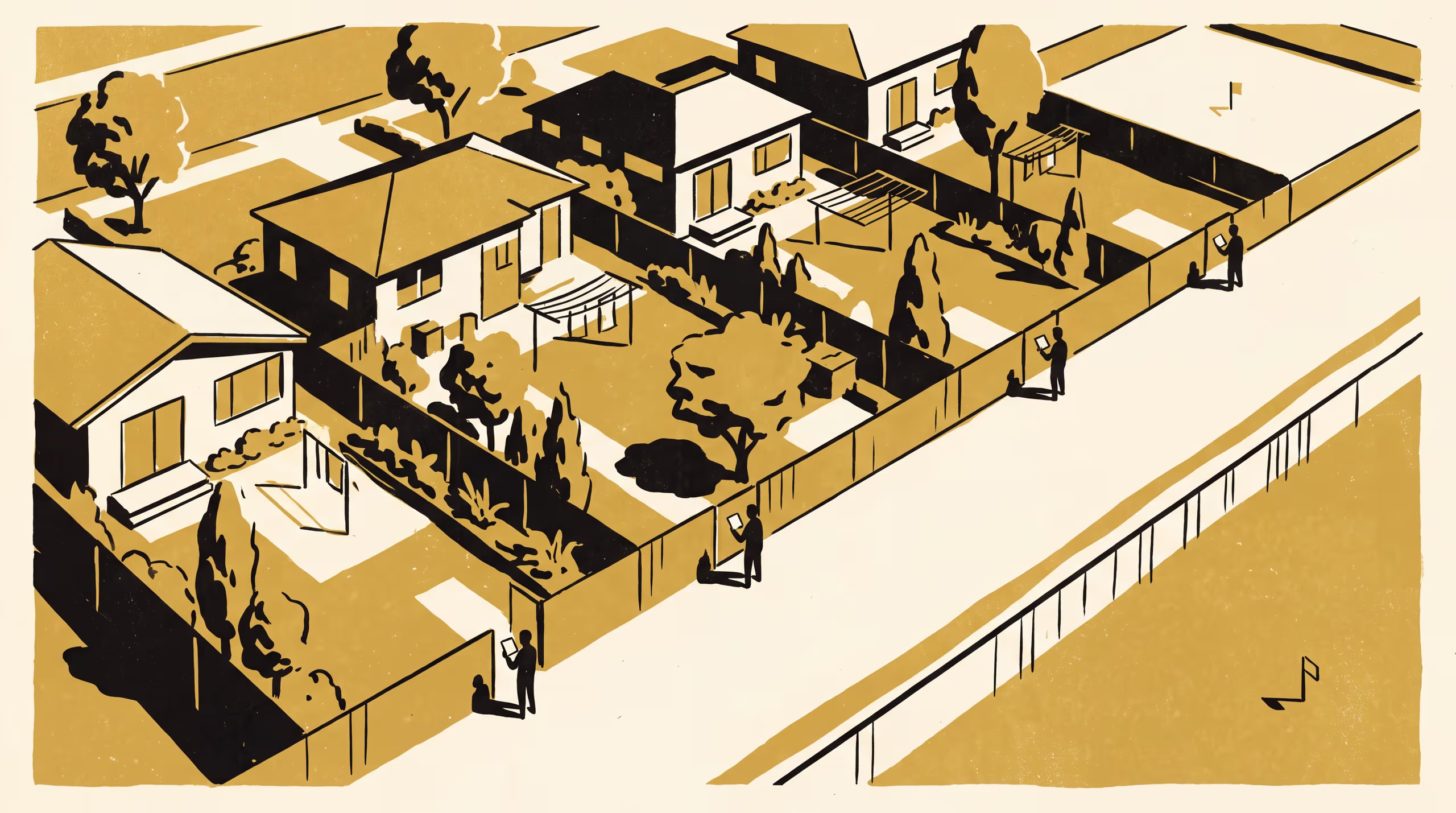
A new research poster finds that when a tribunal may discharge an obsolete covenant, the owners it benefits stop competing to sign last and start competing to sign first.
A School of Settled Matters poster takes the release of an obsolete covenant into the bargaining laboratory, with and without a discharge backstop
The University’s law school has taken its land-law expertise into the economics laboratory, and come back with an answer to a question every conveyancer has asked at some point: who gets paid when everyone has to agree?
The Race to Sign First, a new research poster by Dr Clemency Tredinnick of the School of Settled Matters, Dr Bram Ntuli and Ylva Onyekwere, finds that the owner who signs last is usually paid most, until a tribunal is given the power to discharge the covenant. Then the order turns over, and the first signature becomes the valuable one.
At a settlement table you learn early that the last signature in the room is the expensive one. It was a strange pleasure to watch a room of volunteers learn the same thing in an afternoon, and then unlearn it the moment a tribunal was mentioned.
— Dr Clemency Tredinnick, Lecturer, School of Settled Matters
Working within a structured laboratory bargaining environment, the team recast the release of a forgotten covenant as a staged consent pathway, benchmarking a unanimity setting against a tribunal-enabled alternative and calibrating 216 participants’ signing behaviour against a suite of equilibrium expectations.
The University is pleased to see a question first met across a settlement table find a home in the decision sciences, and to see three schools’ worth of method brought to bear on it. Dr Ntuli, Convenor of Improvement Grand Rounds, welcomed the questions the result is likely to attract. “A chance of discharge that small should not be able to move a whole queue of signatures, and yet it did,” he said. “I expect we will be asked about that for some time, and I hope we are.”
The full poster is available from the University’s research repository under an open licence, doi:10.5555/slop.9vq9y2.