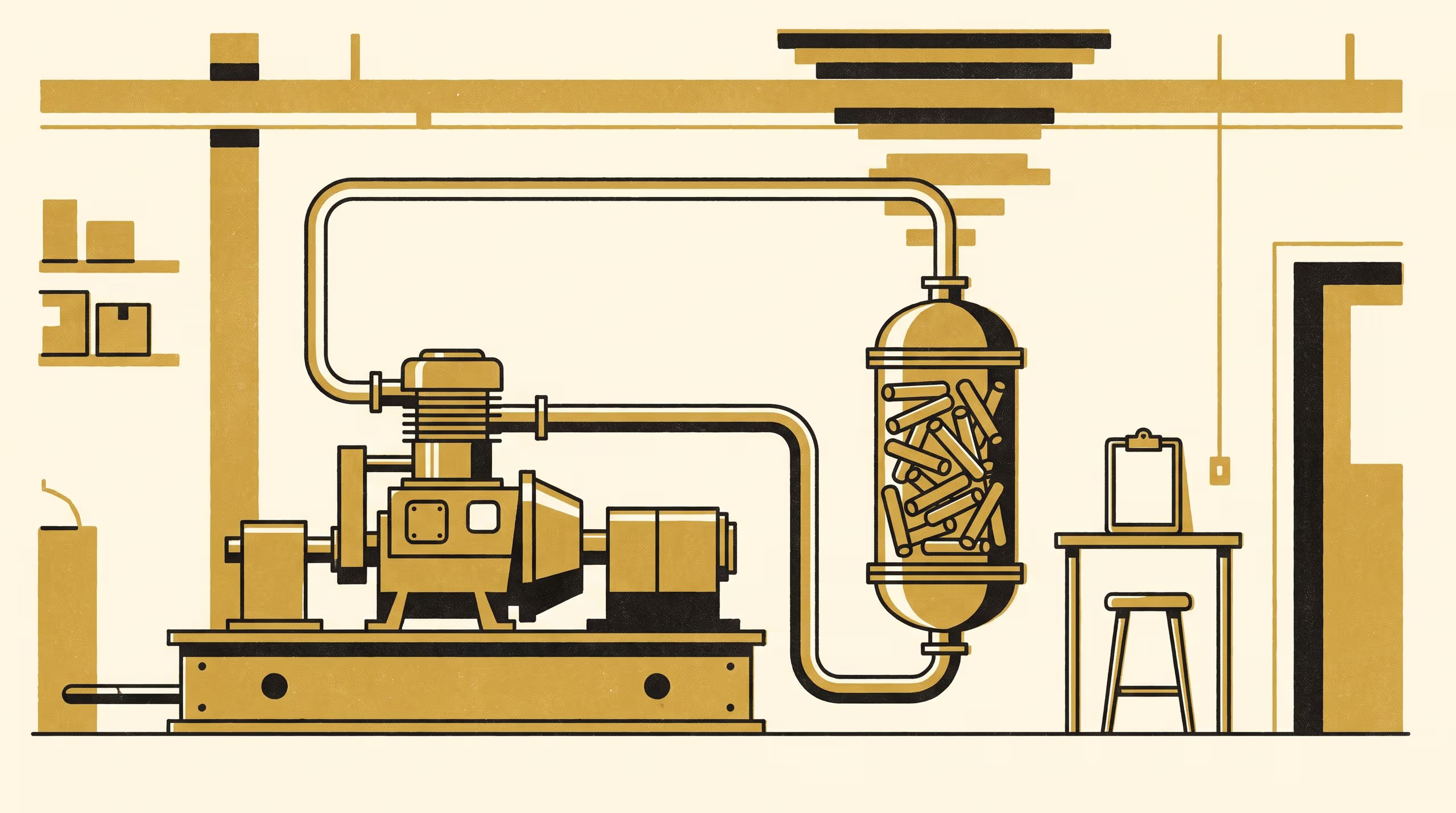
A chemical engineering paper shows that an ammonia engine making its own hydrogen can settle into either a rough or a smooth way of running at the same load, and that a cold start chooses the rough one.
A paper from two Schools treats an engine and its exhaust-heated cracker as one reactor and finds two stable part-load states
An ammonia engine that makes its own hydrogen can run smoothly or roughly at the same load, and which of the two it does depends on how it was started. That is the finding of The Engine Must Be Lit Twice, a paper by Dr Vigdis Emenike and Dr Brynjar Obiora of the School of Underlying Conditions, with Associate Professor Casimir Beng of the School of Continuous Improvement.
Most of what our School studies lies underground and changes slowly. It has been instructive to meet a machine on a test bed with the same habit we know from an aquifer, where the present state owes as much to the past as to the conditions.
— Dr Vigdis Emenike, Senior Lecturer, School of Underlying Conditions
Bringing the tools of reactor design to engine operation, the team charted how the engine and its hydrogen-making cracker each behave on their own, then reunited the two and followed the combined system through a programme of start-ups, load changes and deliberate interventions. All twelve cold starts settled into the rougher state; a short pulse of hydrogen, or a few minutes at higher load, was enough to move the engine across.
Associate Professor Beng said the collaboration had given the Adaptive Metrics Lab “a fresh regard for start-up as a stage of operation with its own claims on our attention, and one we expect to keep returning to.”
The University counts the paper among the clearest examples yet of its Schools lending one another their methods, and of the distance an idea can travel when they do.
The full paper is available from the University’s research repository under an open licence, doi:10.5555/slop.h9oe45.