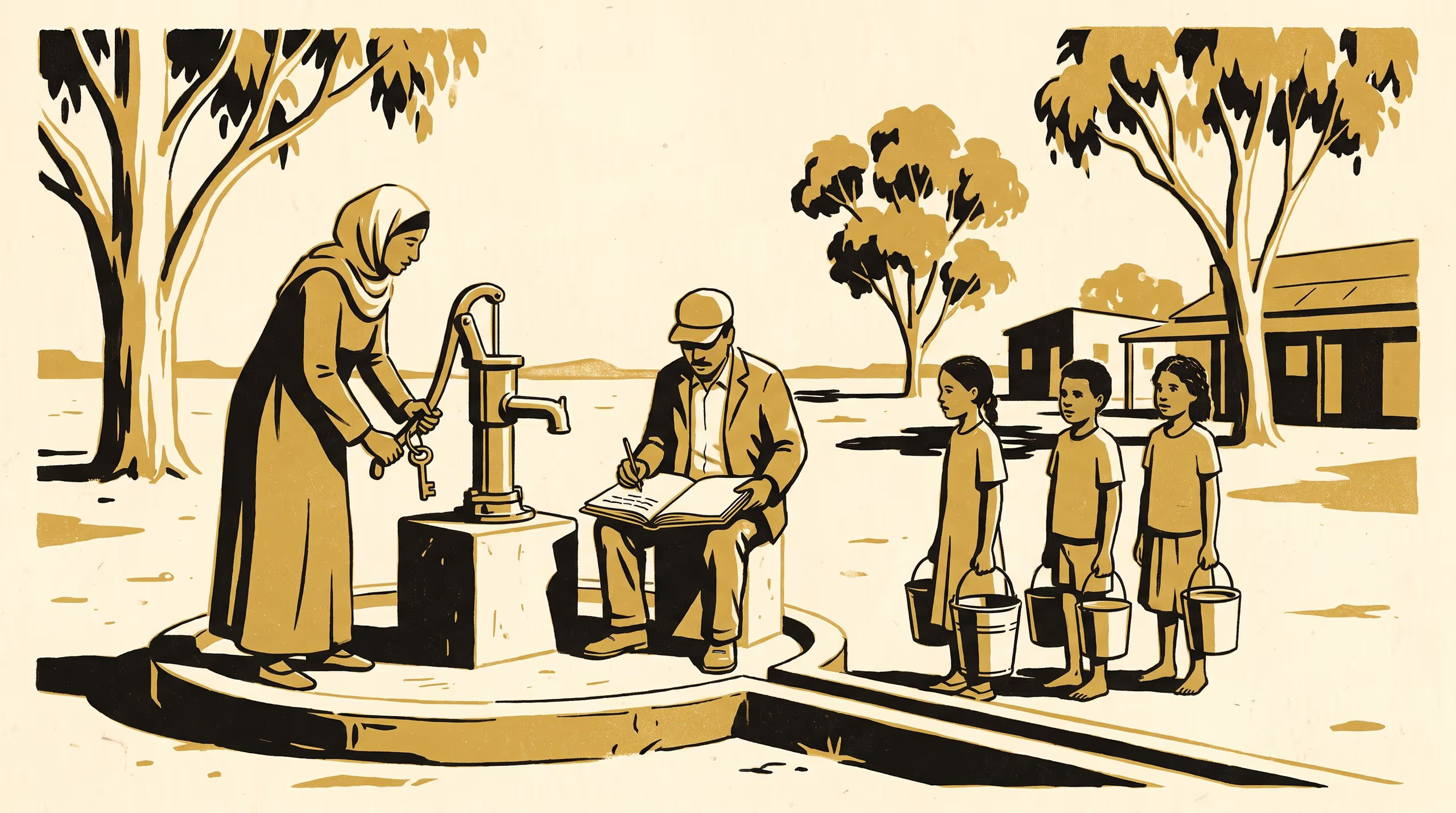
A new civic brochure from the School of Underlying Conditions invites the church, mosque, chapel and shrine committees that keep a district's shared bores to read their records beside the School's measurements of the ground.
Every Bore Has a Keeper invites the faith committees that keep a plural town's shared water into the School of Underlying Conditions' groundwater fieldwork
The church, mosque, chapel and shrine committees that keep a district’s shared bores have been asked to bring their bore books, pump rotas and memories of the dry years to the University. The invitation is set out in Every Bore Has a Keeper, a civic brochure from the School of Underlying Conditions prepared by Dr Vigdis Emenike, Senior Lecturer, Dr Brynjar Obiora, Senior Research Fellow, and Dr Ronja Oyelaran, Senior Lecturer and Deputy Convenor of the Strategic Drift Survey in the School of Emergent Priorities.
Most of the bores we would like to measure were never drilled to be measured. They were sunk for neighbours, and the people who keep them have been paying attention for longer than we have.
— Dr Vigdis Emenike, Senior Lecturer, School of Underlying Conditions
The brochure brings the School’s groundwater fieldwork into conversation with the faith-based stewardship of shared water, positioning congregational record keeping and hydrogeological monitoring as complementary sources of evidence about a single underlying resource. It anchors that offer in six published University studies, among them work on a congregation’s intercession book, the bounds a church court drew between two parishes, common wells kept under rotation rosters, and the committees that set a shared aquifer’s pumping cap.
For the University, the brochure extends a long-standing interest in what lies beneath the surface to the institutions that have quietly looked after it. “Every committee we have spoken with already knows something about its bore that no instrument recorded,” said Dr Obiora. “We would like to be told it.”
The full brochure is available from the University’s research repository under an open licence, doi:10.5555/slop.jmu6ka.