A new research poster shows how a summer wet season can lend a small neutrino detector an annual signal that looks very like the Sun's.
Groundwater radon in a shallow underground hall rises in step with perihelion, and with the rain
None of this would have been possible without the landholders who let us dip their bores every week for three years, in the wet and in the dry. The detector was underground, but the study was up there with them.
— Dr Ingeborg Nwachukwu, Lecturer and Convenor, Capability Sprints
Dr Nwachukwu’s new research poster, Perihelion in the Wet Season, prepared with Dr Vigdis Emenike, Senior Lecturer, and Associate Professor Ragnhild Uzoma, Lead of the Basement Relations Group, both of the School of Underlying Conditions, brings the School of Continuous Improvement into neutrino physics, and brings the water table in with it.
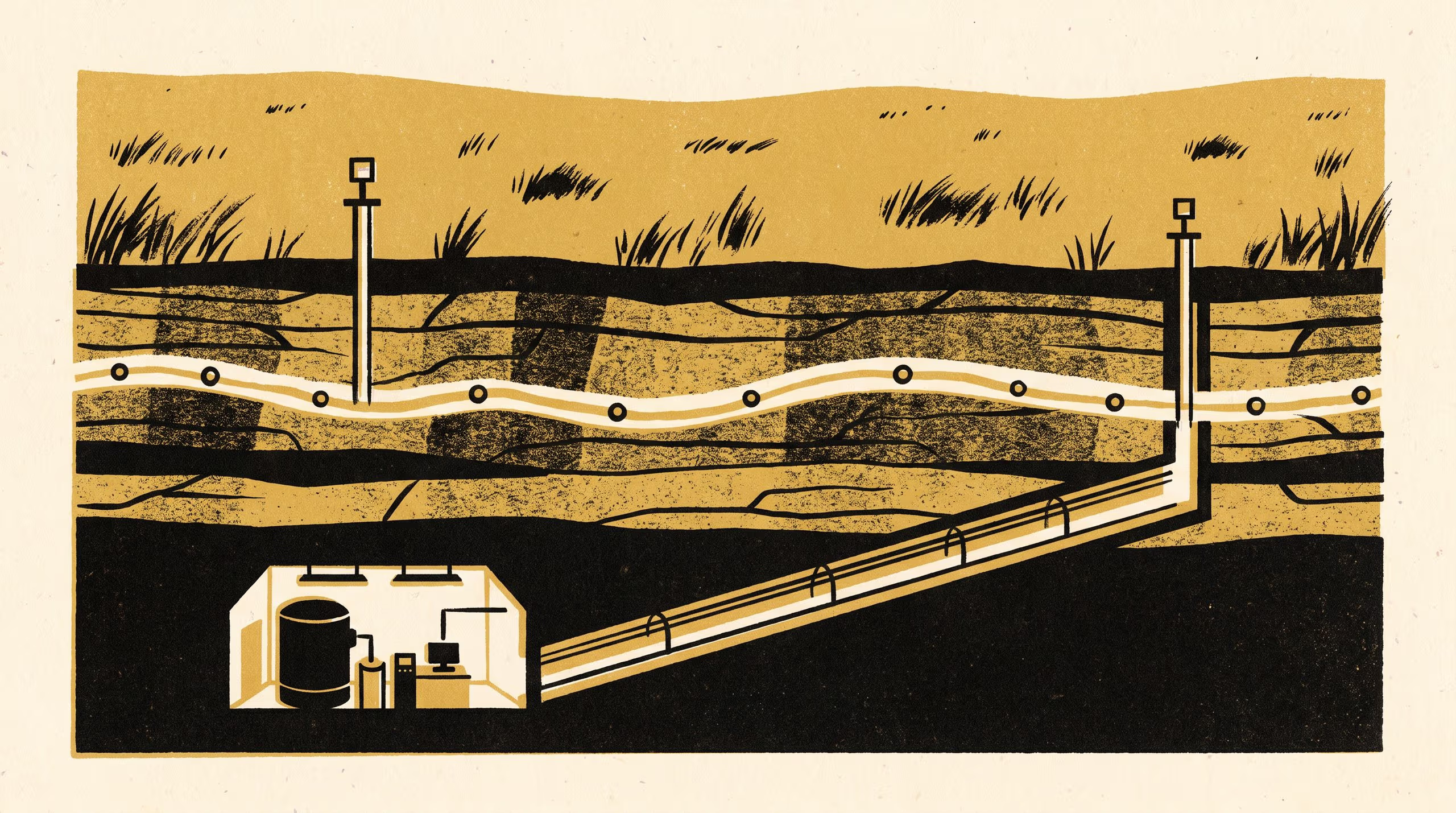
The poster follows a small liquid-scintillator prototype in a disused mine drive alongside the monitoring bores on the surface above it, aligning a detector record, a hall-air record and a groundwater record into a single seasonal picture. Its central observation is that the radon carried into the hall by the wet season peaks within weeks of the Earth’s closest approach to the Sun, close enough to nearly double the annual modulation the detector would otherwise attribute to its orbit. In the one dry year of the record, the excess disappears.
The work takes its place in a growing strand of University research that treats the ground around an instrument as part of the instrument.
“Every season we ran it, the rock told us something new about the calendar,” said Dr Emenike. “We are grateful to have been listening.”
The full poster is available from the University’s research repository under an open licence, doi:10.5555/slop.6xtea3.