A Groundwater-Driven Radon Modulation That Mimics the Solar-Neutrino Annual Signal
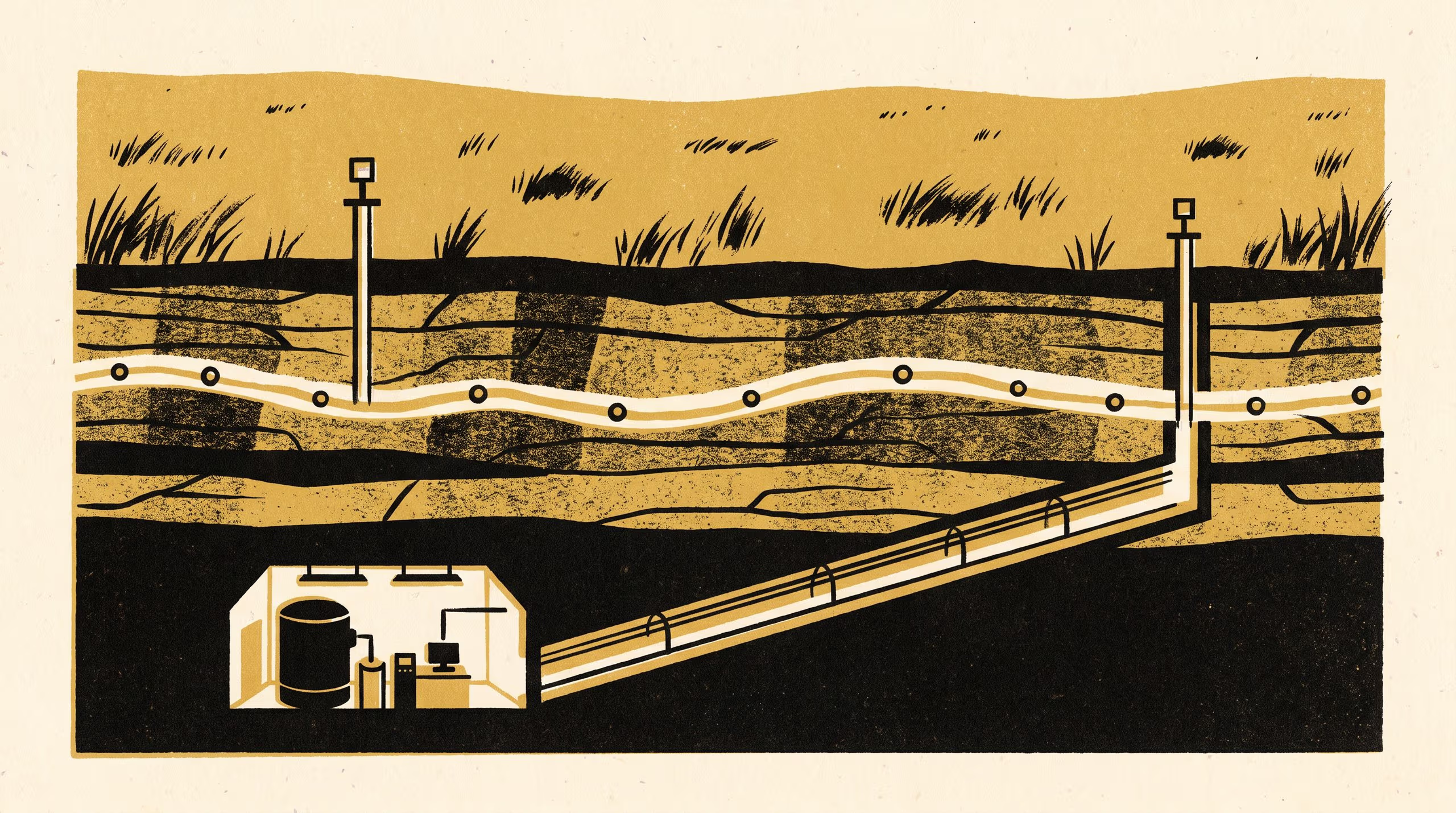
A research poster from the School of Continuous Improvement follows a 1.2-tonne liquid-scintillator prototype in a shallow mine drive for 36 months and finds its low-energy rate swinging by 5.6% a year, peaking in late January, against the 3.34% the Earth's orbit predicts. The excess tracks wet-season radon in the hall, which lags the surface bore hydrograph by 38 days; it vanishes in the one dry year, and removing the coincidence-tagged radon component returns an amplitude consistent with the orbit.
| Authors | Ingeborg Nwachukwu , Vigdis Emenike , Ragnhild Uzoma |
|---|---|
| School | School of Continuous Improvement |
| Output type | Research poster |
| Published | |
| DOI | 10.5555/slop.6xtea3 |
| Pages | 1 |
| Version | 1.0 |
| Licence | CC BY 4.0 |
Cites
Cite as
@misc{slop_6xtea3,
  author       = {Ingeborg Nwachukwu and Vigdis Emenike and Ragnhild Uzoma},
  title        = {Perihelion in the Wet Season: A Groundwater-Driven Radon Modulation That Mimics the Solar-Neutrino Annual Signal},
  year         = {2026},
  publisher    = {Slop University},
  doi          = {10.5555/slop.6xtea3},
  url          = {https://slop.university/outputs/slop-poster-a-groundwater-driven-radon-6xtea3/},
  version      = {1.0},
  note         = {Research poster},
}