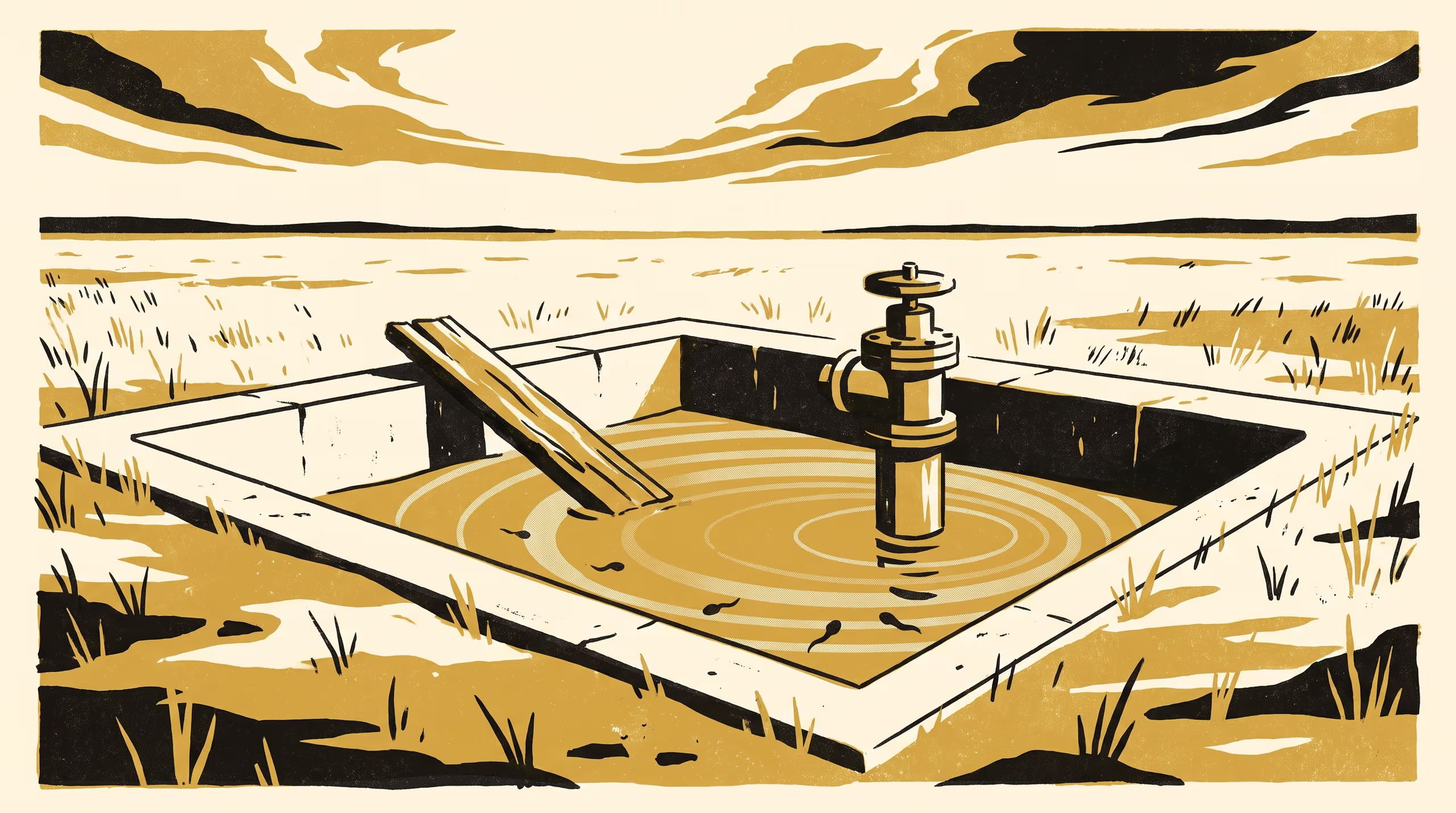
A new paper from the School of Underlying Conditions follows the water that collects around the old wells beneath the campus, and what comes to live in it.
A field paper from the School of Underlying Conditions spends one wet season at the rim of every open wellhead cellar on the retired field beneath the grounds
The University’s commitment to the old wells beneath its grounds has now been carried down to water level. Rain in the Cellar, a paper published today by the School of Underlying Conditions, reports a full wet season spent at the rim of every open wellhead cellar on the retired field the campus occupies.
The paper is by Associate Professor Ragnhild Uzoma, Lead of the Basement Relations Group, with Dr Vigdis Emenike, Senior Lecturer, and Dr Brynjar Obiora, Senior Research Fellow.
Visiting each cellar thirteen times over the season, the team brought water-level observation, surface-condition assessment and amphibian survey together into a single, ground-facing account of what a retired well’s surroundings are doing between inspections. Of the 41 cellars still open, 34 held water at some point and 21 were taken up by breeding frogs. The paper also identifies a small number of cellars where the water offers a visible indication of the well beneath it, and sets out practical steps for the field’s register and its aftercare.
A season is not long in the life of a well. We expect to be standing at these rims through a good many more of them, and the field will be better known for it.
— Associate Professor Ragnhild Uzoma, Lead of the Basement Relations Group
Dr Obiora described the season as “a reminder that the ground we look after is also looking after a few things of its own.”
The paper is the latest sign of the University’s intention to know its own ground at least as well as it knows anyone else’s.
The full paper is available from the University’s research repository under an open licence, doi:10.5555/slop.z94zor.