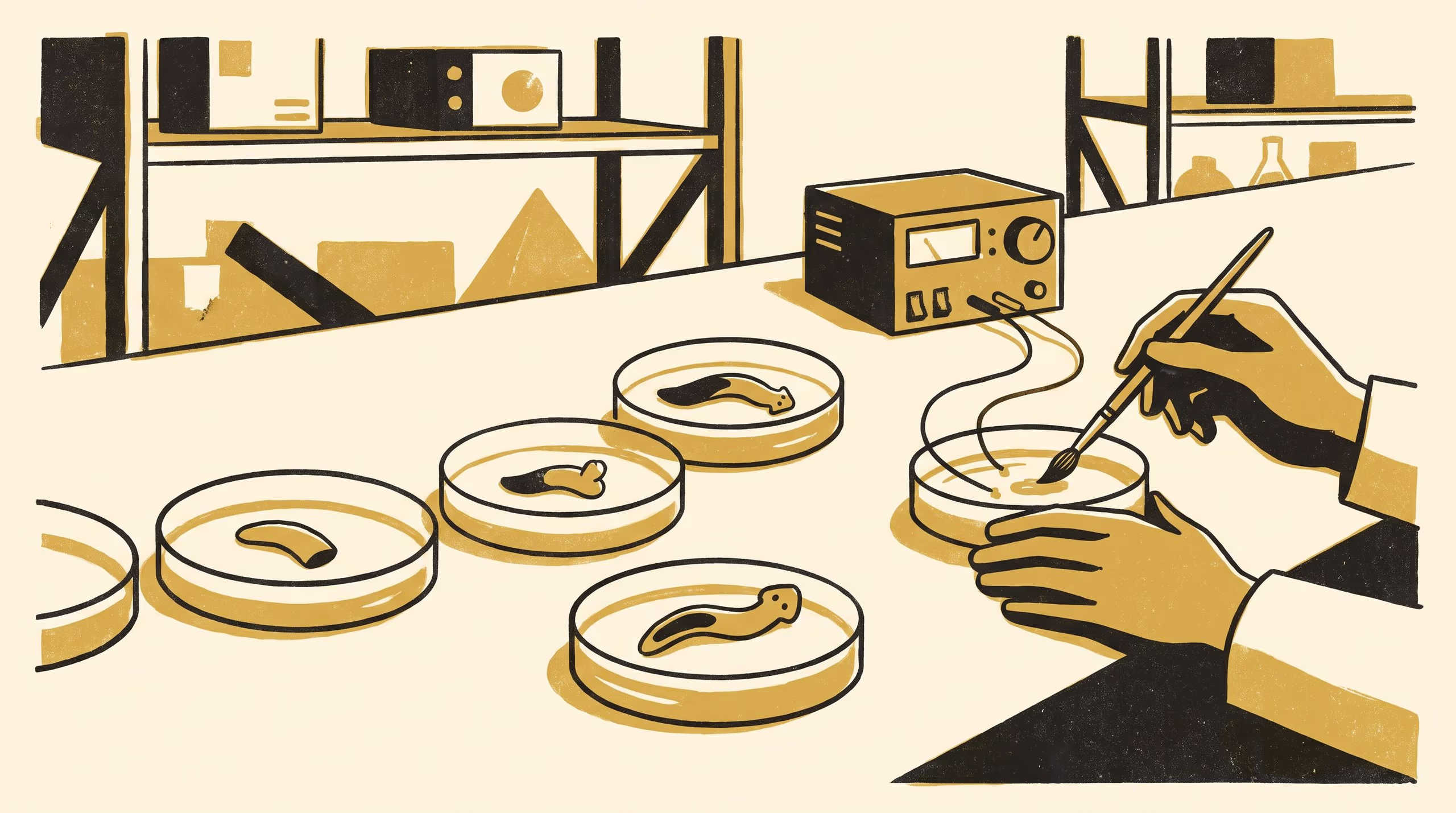
A civic brochure from the School of Underlying Conditions introduces the eyeless flatworms of the district's bores and springs, and invites the households and schools above the water to help keep count.
A civic brochure from the School of Underlying Conditions on animals that regrow from a fragment, and the neighbours who help keep count of them
Anyone who has lifted the cap on a farm bore and found something small and pale moving in the bucket has, in a modest way, already taken part in the newest publication from the School of Underlying Conditions.
What Grows Back is a civic brochure by Associate Professor Ragnhild Uzoma, Lead of the Basement Relations Group, with Dr Vigdis Emenike, Senior Lecturer, and Dr Brynjar Obiora, Senior Research Fellow. It introduces the eyeless flatworms of the district’s bores and springs, animals able to rebuild a whole body from a fragment of one, and the people living above the water who help the School keep track of them.
Most of what we know about the water under this district was handed to us over a fence. This brochure is our way of handing some of it back.
— Associate Professor Ragnhild Uzoma, Lead of the Basement Relations Group
Across three features, the brochure situates bench-level work on regeneration within a wider ecosystem of groundwater stewardship, connecting the School’s field record of bore-dwelling fauna with an emerging pattern of school and household partnership. Six published studies anchor the showcase, from the eyes of a groundwater amphipod to the regrowth of a suburban lawn.
The publication speaks to the University’s settled view that the ground beneath a town is held in common, and that the research done on it should be too. Dr Emenike said she hoped “more of the district’s bores will come to be read by the people who live beside them”, and that the School would “be there with a dip meter when they are”.
The full brochure is available from the University’s research repository under an open licence, doi:10.5555/slop.90r07u.