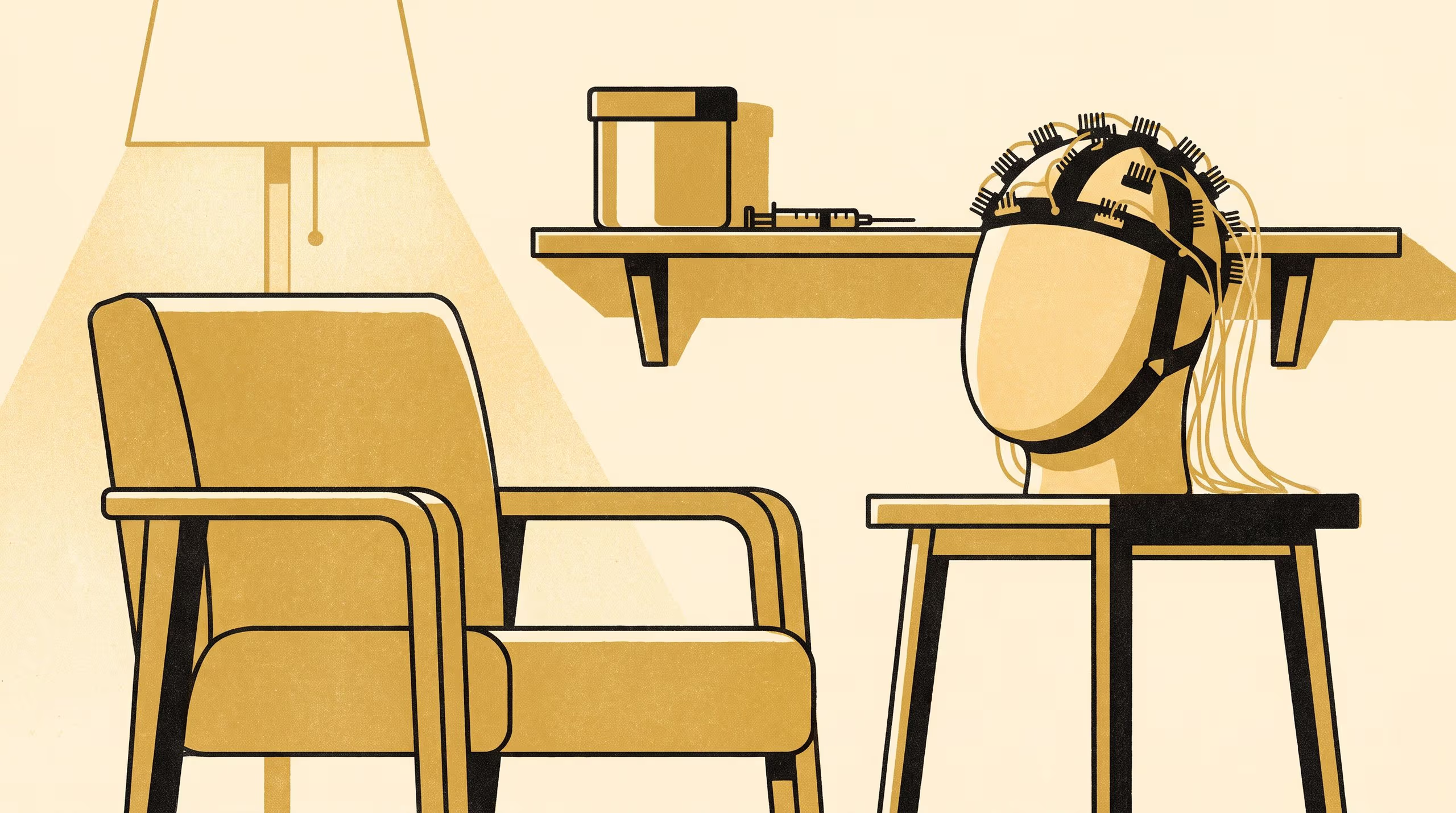
A paper from the School of Emergent Priorities traces how a stopgap switch from gel to dry-electrode caps reshaped participation among autistic and non-autistic adults in one EEG laboratory over three years.
A borrowed dry-electrode cap changed who finished a session in one laboratory, and with it the picture its recordings give
When a laboratory runs short of something on the shelf, the usual question is how soon more can be ordered. A new paper from the School of Emergent Priorities asks a different one: who came through the door while it was gone.
Whose Resting State? is by Tove Ilesanmi, Doctoral Candidate, with Dr Iben Chikere, Lecturer, and Dr Lindiwe Achterberg, Lecturer. It follows an electrode cap adopted as a stopgap in one EEG laboratory, and finds that completion among autistic participants rose from around two thirds to almost nine in ten once it was in use.
Most of what a laboratory decides, it decides on an ordinary afternoon with a box missing from the shelf. We wanted to give one of those afternoons the attention it was never expected to receive.
— Tove Ilesanmi, Doctoral Candidate, School of Emergent Priorities
Pairing a close reading of procedure files with three years of session records, the team traced how a change of equipment reshaped participation across the laboratory’s community of volunteers, and what that shift means for the picture its recordings provide.
The University regards the paper as a natural next step for a School whose interest in the arrangements institutions make in the meantime has already taken it from the clubhouse noticeboard to the committee room, and now to the laboratory bench.
“We hope colleagues will bring us the procedures they have stopped noticing,” said Dr Chikere. “There is usually a story in the first line of the file.”
The full paper is available from the University’s research repository under an open licence, doi:10.5555/slop.dk69a6.