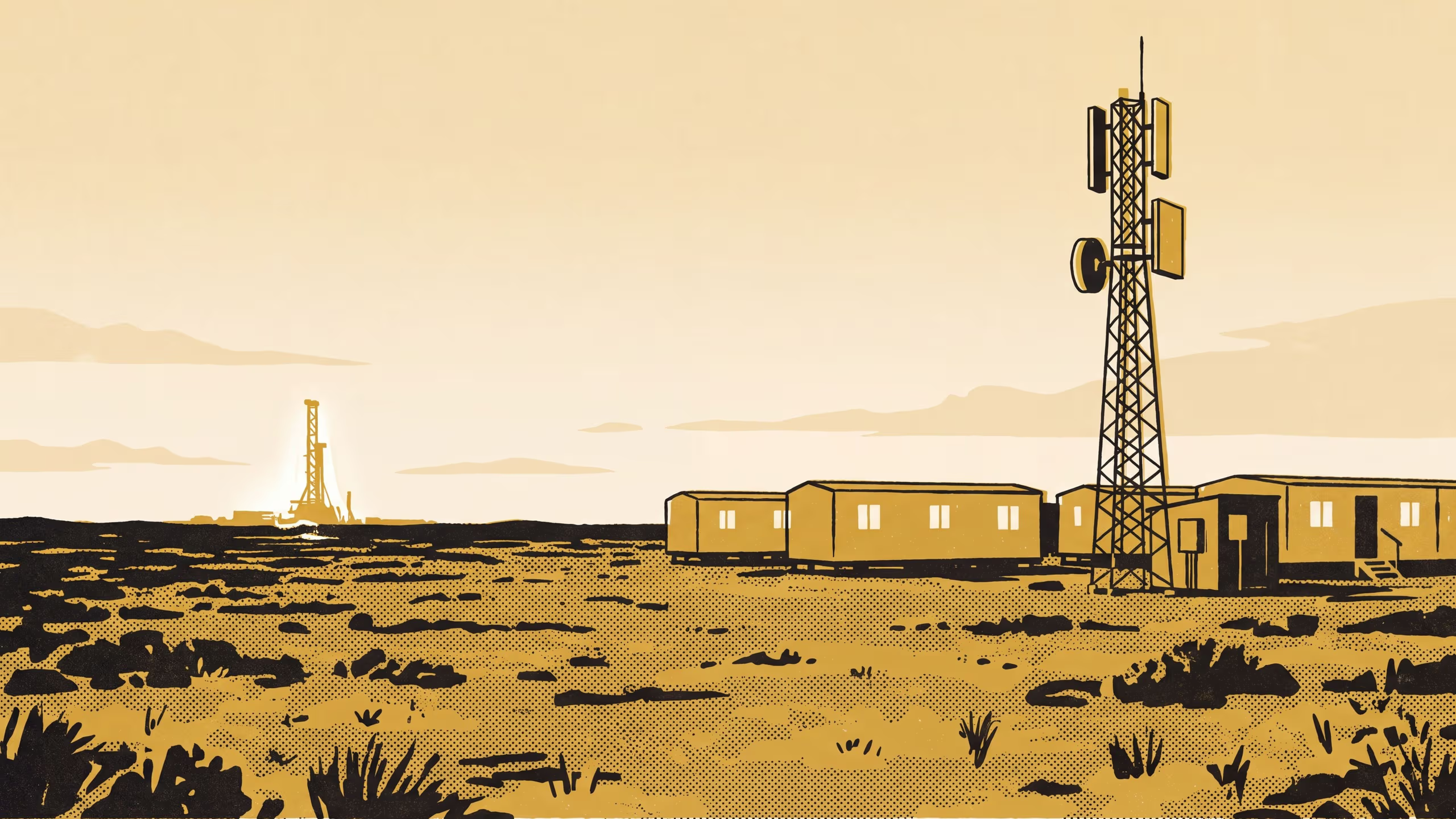
A new research poster shows how a remote exploration camp's shared private network can keep its drilling record intact through the busiest hours of the day.
A poster from the School of Underlying Conditions holds radio capacity back for drilling telemetry in the hours the camp calls home
A network is a promise made in advance. We have been grateful for the chance to help one camp make its promises at the right hour.
— Dr Bram Ntuli, Lecturer and Convenor, Improvement Grand Rounds
So begins the account of Drilled While the Camp Called Home, a new research poster from the School of Underlying Conditions on the radio capacity a remote exploration camp sets aside for its drilling telemetry. The work is led by Associate Professor Ragnhild Uzoma, Lead of the Basement Relations Group, with Dr Ntuli and Associate Professor Casimir Beng, Lead of the Adaptive Metrics Lab.
Pairing optimisation under uncertainty with the working rhythm of a drill camp, the team aligns network records, rig logs and the shift roster into a single anticipatory posture for capacity the whole camp shares. Over the weeks held back for testing, the resulting schedule reduced the drilled interval left without a telemetry record from 41.6 m to 3.2 m, reserving capacity chiefly in the hours after each change of shift.
Associate Professor Uzoma said the School “has always kept a careful account of the intervals that do not come up, and is glad to see so many more of them coming up now”.
The poster brings the School’s long attention to the drilling record into the air above the drill pad, and the University is quietly proud to find its earth scientists and its improvement specialists reading the same log.
The full poster is available from the University’s research repository under an open licence, doi:10.5555/slop.0kpvh4.