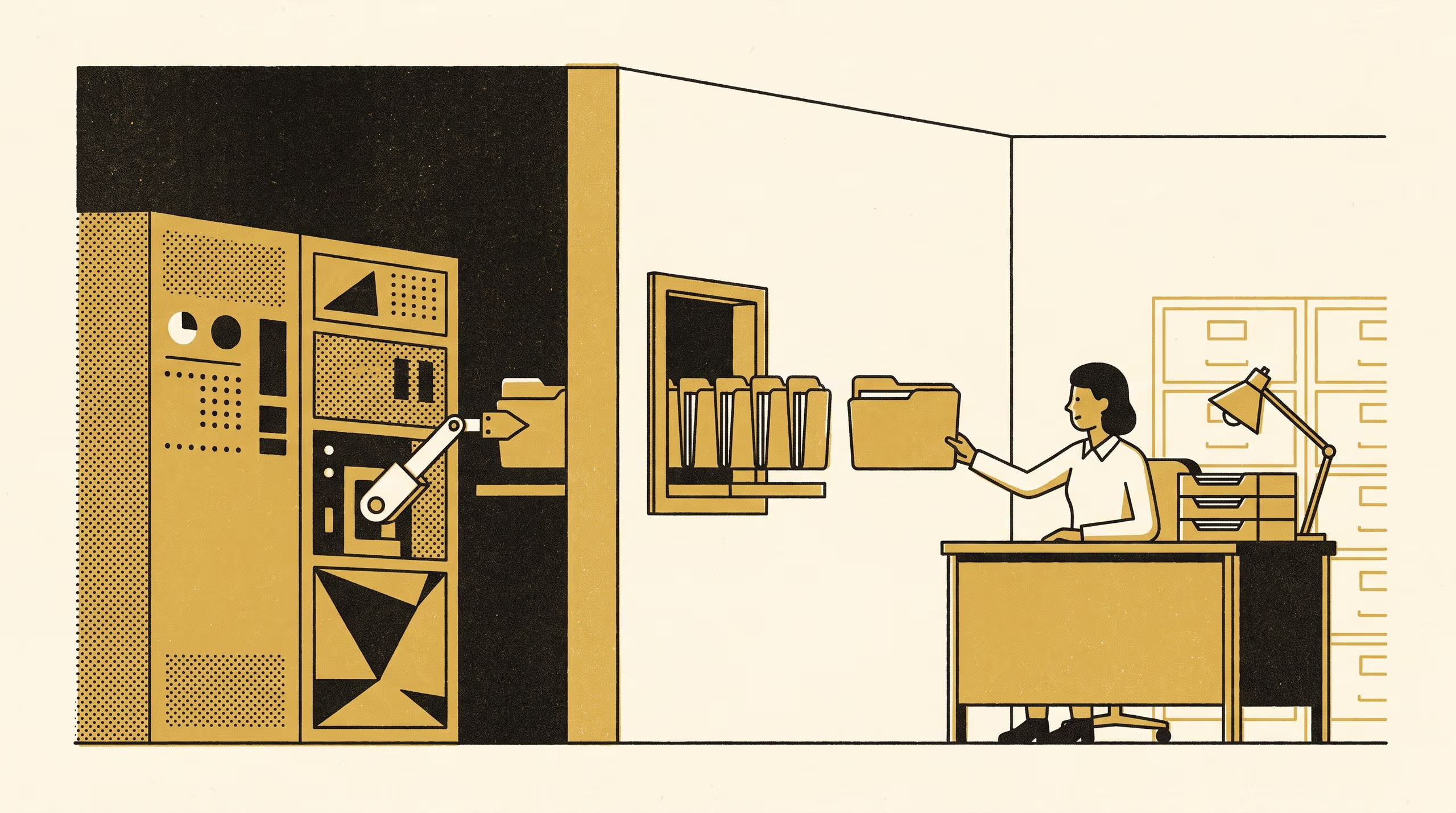
A new research poster from the School of Underlying Conditions brings the theory of the firm to the software robot and asks where its share of a clerical process should end.
A Coasean model shows step-by-step automation running a few steps long, at the exception desk's expense
With a single cost function and five illustrative office processes, two researchers have set out a new account of where a software robot’s share of the paperwork ought to end. One Step Too Many, a research poster released today by the School of Underlying Conditions, finds that the familiar practice of automating a process one justified step at a time tends to carry the robot a little past the point its owners would have chosen, had they seen the whole picture.
The poster is the work of Dr Brynjar Obiora, Senior Research Fellow in the School of Underlying Conditions, and Ms Signy Okpara, Doctoral Candidate in the School of Continuous Improvement. It situates the boundary between machine and clerk within a long tradition of thinking about where organisations begin and end, weighing the convenience of each automated step against the effort of returning its exceptions to human hands.
Every office will draw this line again next year, and the year after that. We would like whoever draws it to have the desk in view when they do.
— Dr Brynjar Obiora, Senior Research Fellow, School of Underlying Conditions
The overshoot adds under two per cent to the cost of a case, the poster reports, while the time clerks spend picking up hand-offs rises by as much as 48 per cent. Ms Okpara described the study as “a modest contribution to a conversation the University has been having with its own in-trays for some time”.
It is the kind of patient, foundational thinking the University has always been content to let take its time.
The full poster is available from the University’s research repository under an open licence, doi:10.5555/slop.l94dfq.