A Coasean Theory of the Automation Boundary in Clerical Processes
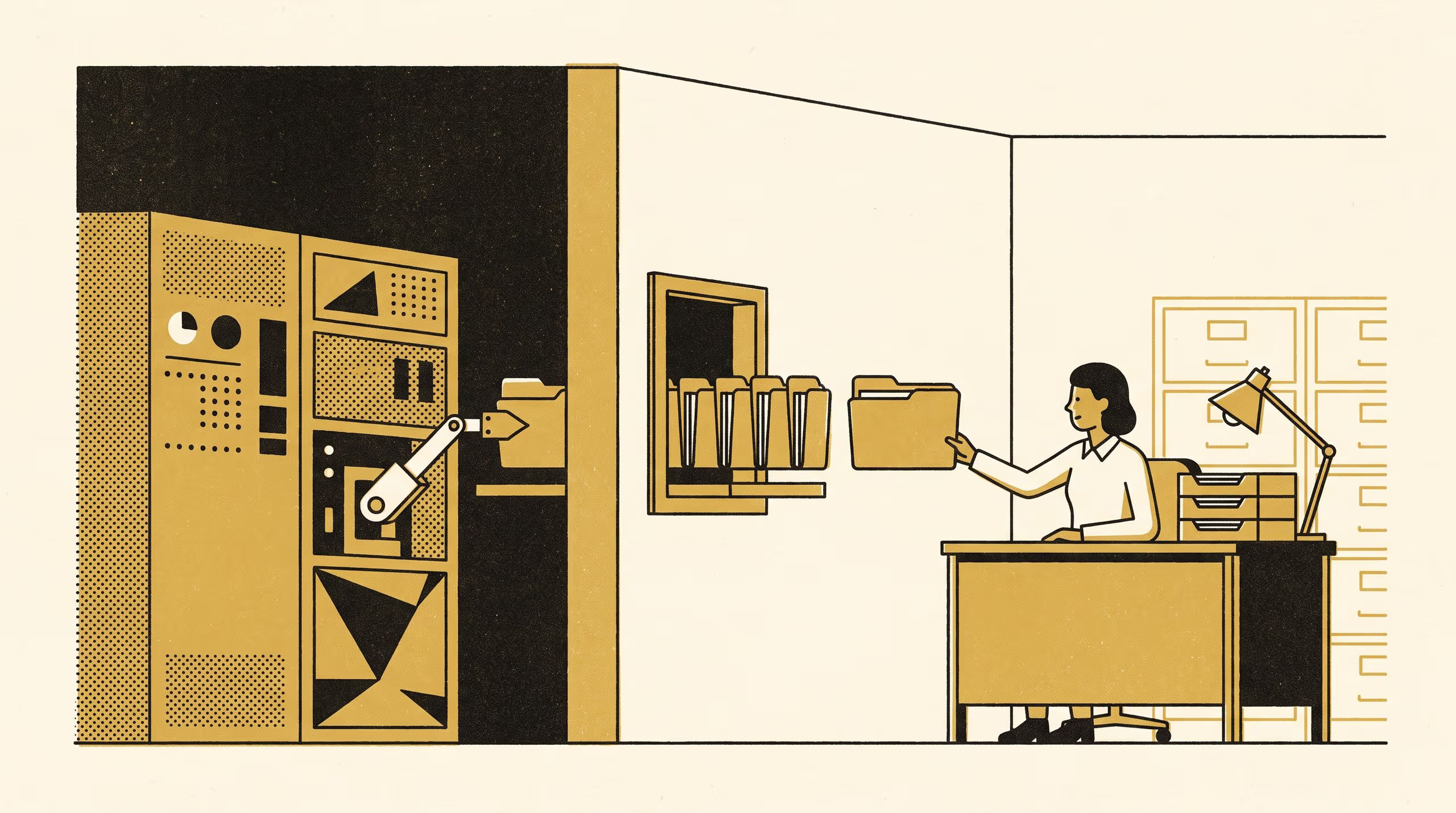
A research poster from the School of Underlying Conditions models a clerical process as a chain of steps that a software robot performs up to a boundary, handing each exception back to a clerk at a cost that grows with how far the robot ran. It shows that the step-by-step automation business case sets the boundary beyond the cost-minimising point, at a cost per case of only second order but with hand-off time rising 28 to 48 per cent across five stylised processes.
| Authors | Brynjar Obiora , Signy Okpara |
|---|---|
| School | School of Underlying Conditions |
| Output type | Research poster |
| Published | |
| DOI | 10.5555/slop.l94dfq |
| Pages | 1 |
| Version | 1.0 |
| Licence | CC BY 4.0 |
Cites
Cite as
@misc{slop_l94dfq,
  author       = {Brynjar Obiora and Signy Okpara},
  title        = {One Step Too Many: A Coasean Theory of the Automation Boundary in Clerical Processes},
  year         = {2026},
  publisher    = {Slop University},
  doi          = {10.5555/slop.l94dfq},
  url          = {https://slop.university/outputs/slop-poster-where-a-software-l94dfq/},
  version      = {1.0},
  note         = {Research poster},
}