Research-led, metrics-forward, and continuously improving. News from the Office of Research Outputs.
3 November 2026
A research poster from the School of Continuous Improvement finds that when central transfers run late, municipal schools and clinics keep wages and heating paid and let small local suppliers carry the delay.
A paper from the School of Emergent Priorities and the School of Continuous Improvement replays a city tabulating bureau's handwritten scheduling rules against nine years of its job logs, and finds one priority letter carrying three successive meanings.
A research poster from the School of Emergent Priorities finds that on one class of alarm at a batch chemical plant, operators are usually already acting by the time it sounds.
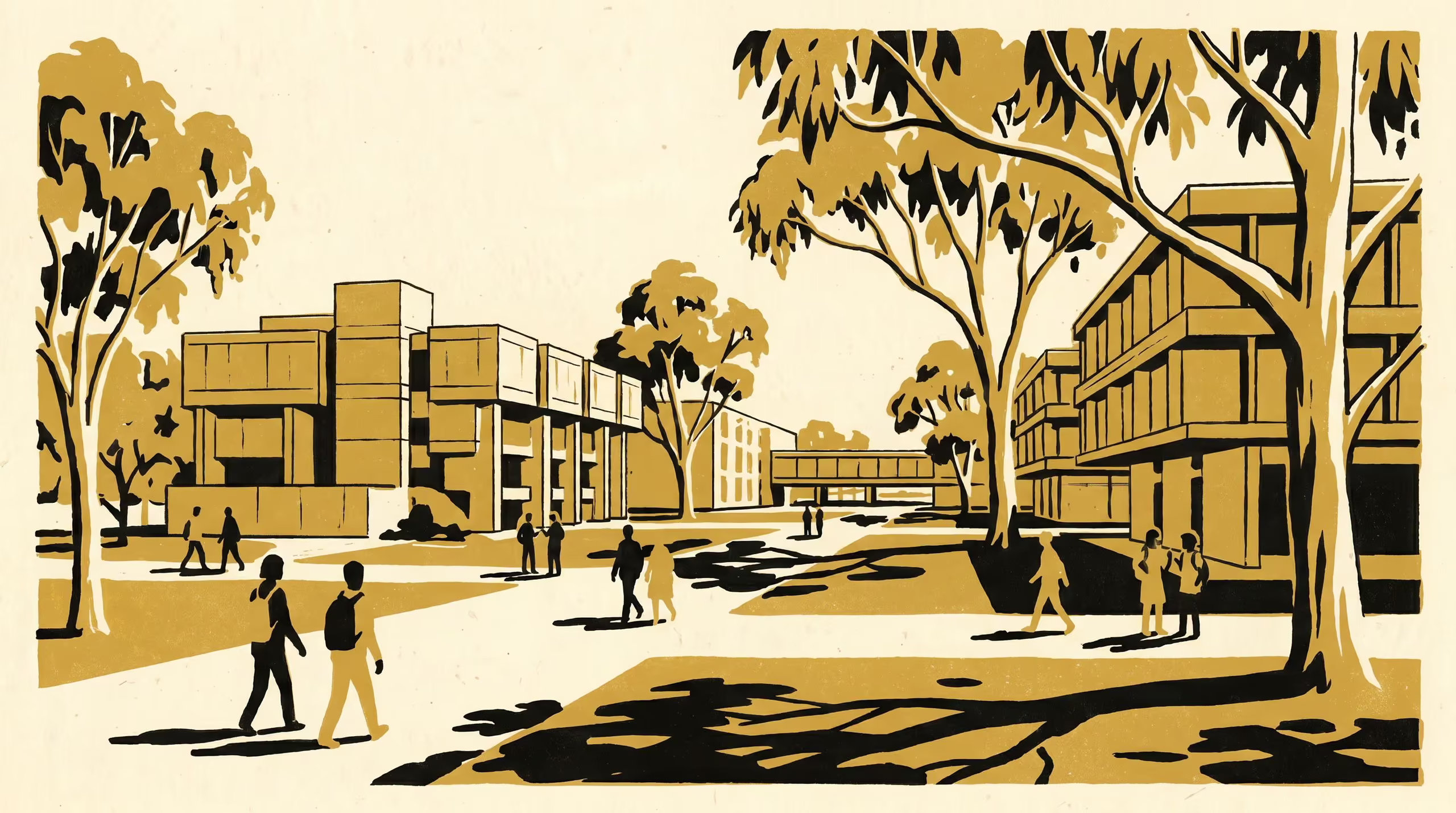
A new landscape advertisement carries the School of Underlying Conditions' work on branching monitoring networks to the University's campus screens.
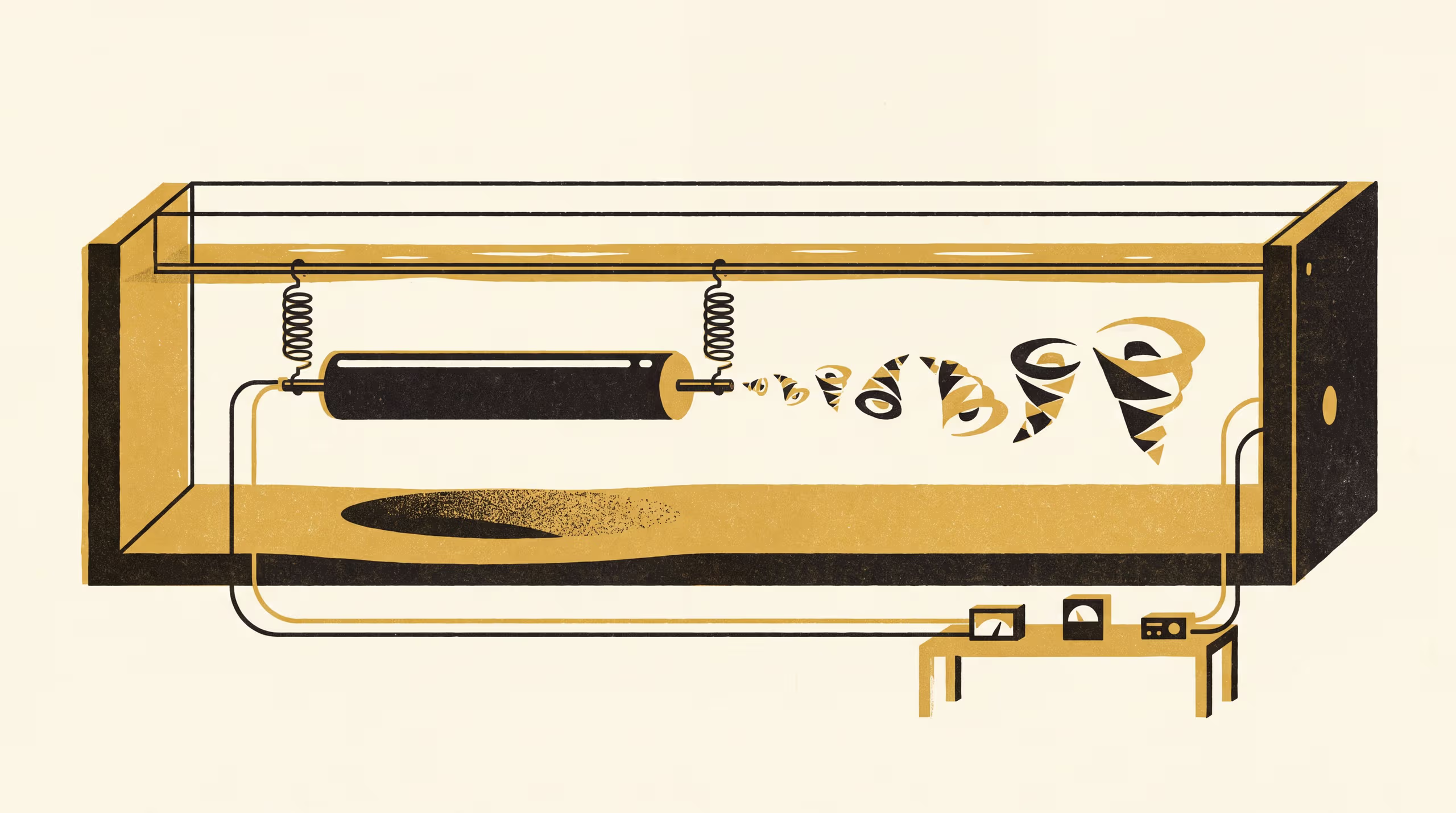
A research poster from the School of Underlying Conditions tracks a spring-mounted cylinder over a sand bed as the hole it digs carries its vibration from one response branch to the next.
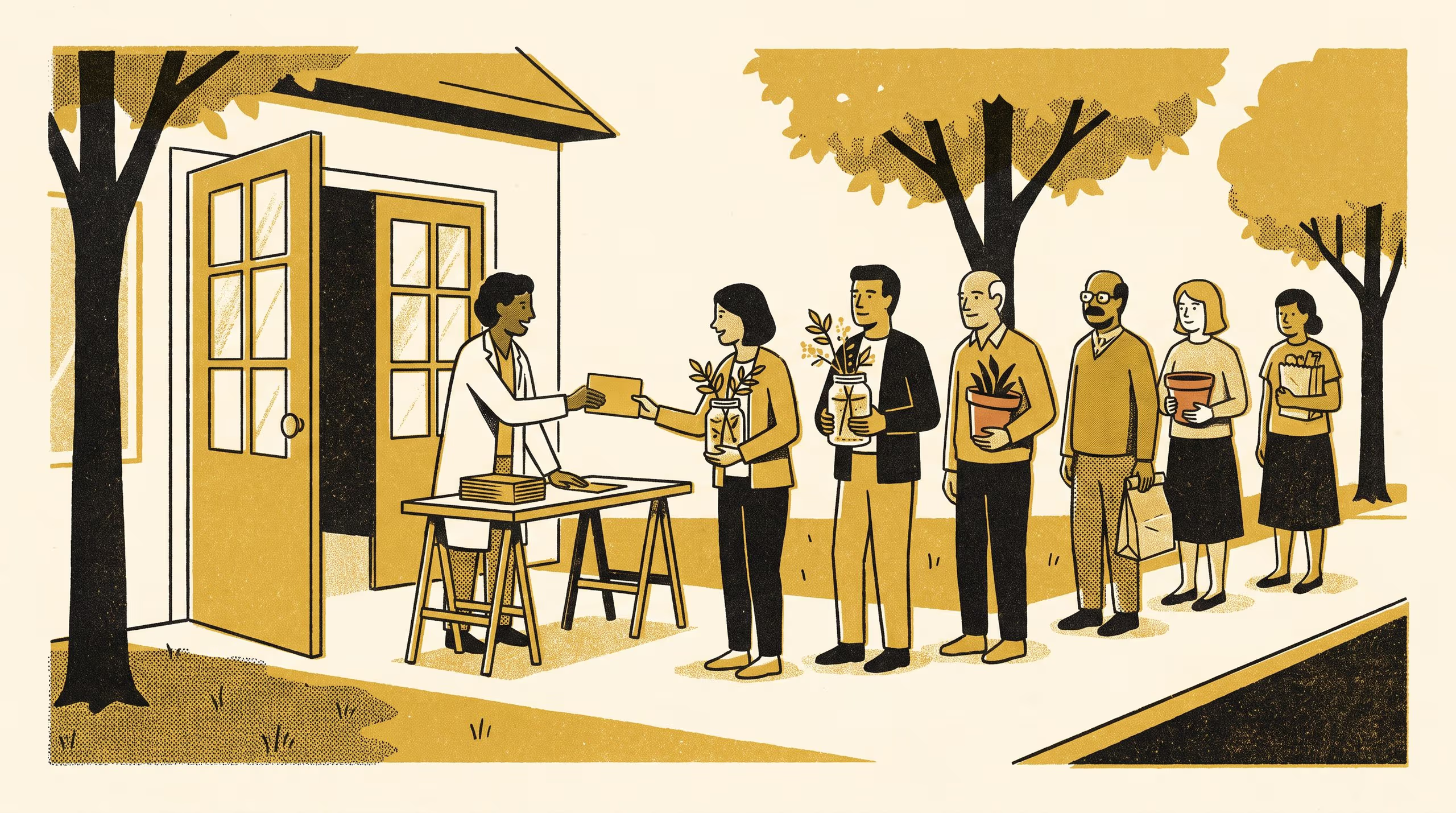
A new civic brochure from the School of Emergent Priorities invites neighbours to bring garden cuttings to the University's open screening bench, and to learn at evening seminars why an extract that slows cells in a dish is a long way from a medicine.
A research poster from the School of Continuous Improvement argues that a claim of synergy between co-dopants in a microwave ceramic depends on the scale chosen to report its loss.
A new civic brochure from the School of Underlying Conditions asks communities that keep a mark of a past flood to read it alongside the University's work on soil profiles, groundwater records and incomplete core.
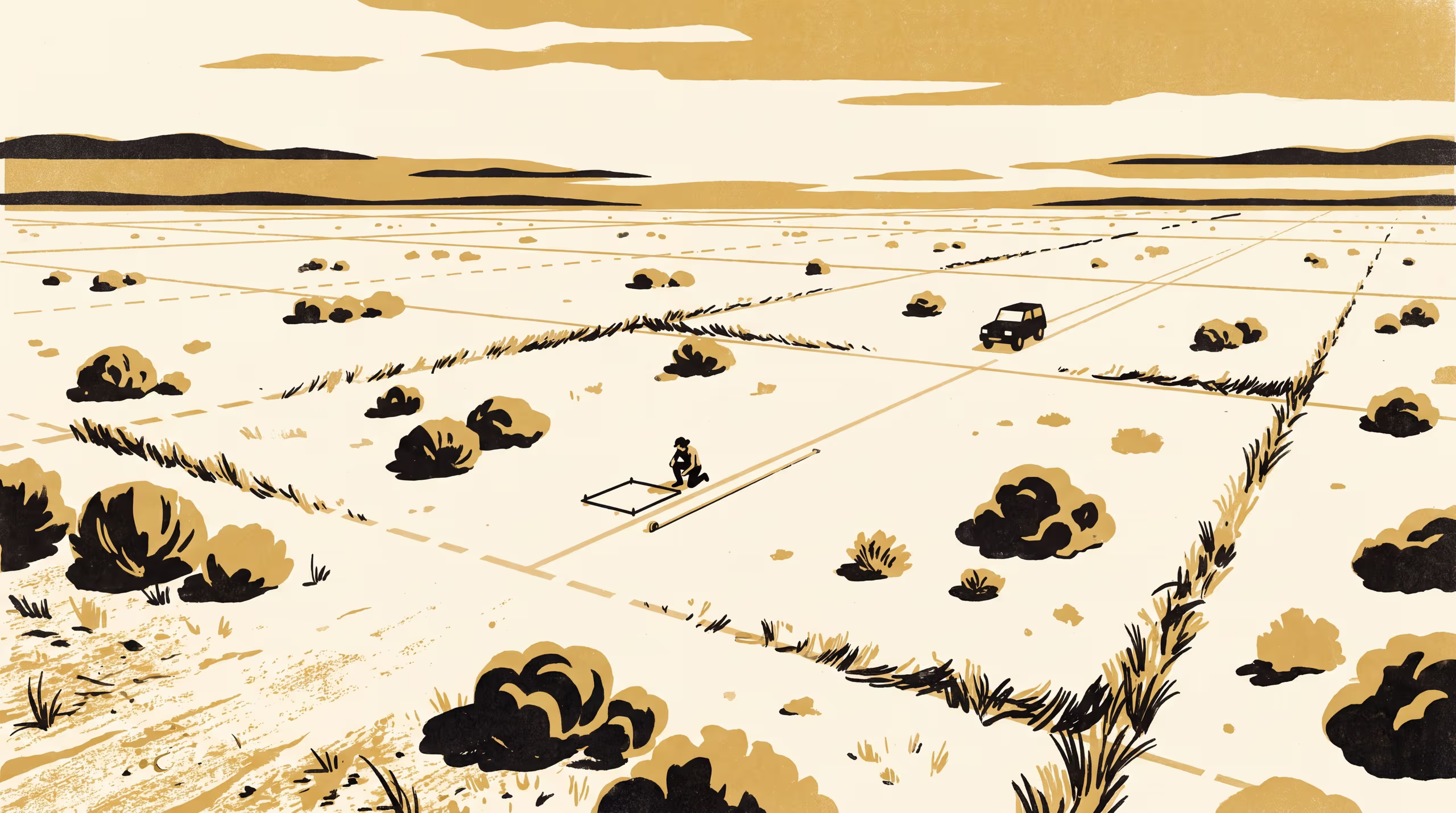
A new landscape advertisement for Slop University takes a paper on regrowth across an abandoned seismic survey grid to campus screens and bus-stop panels.
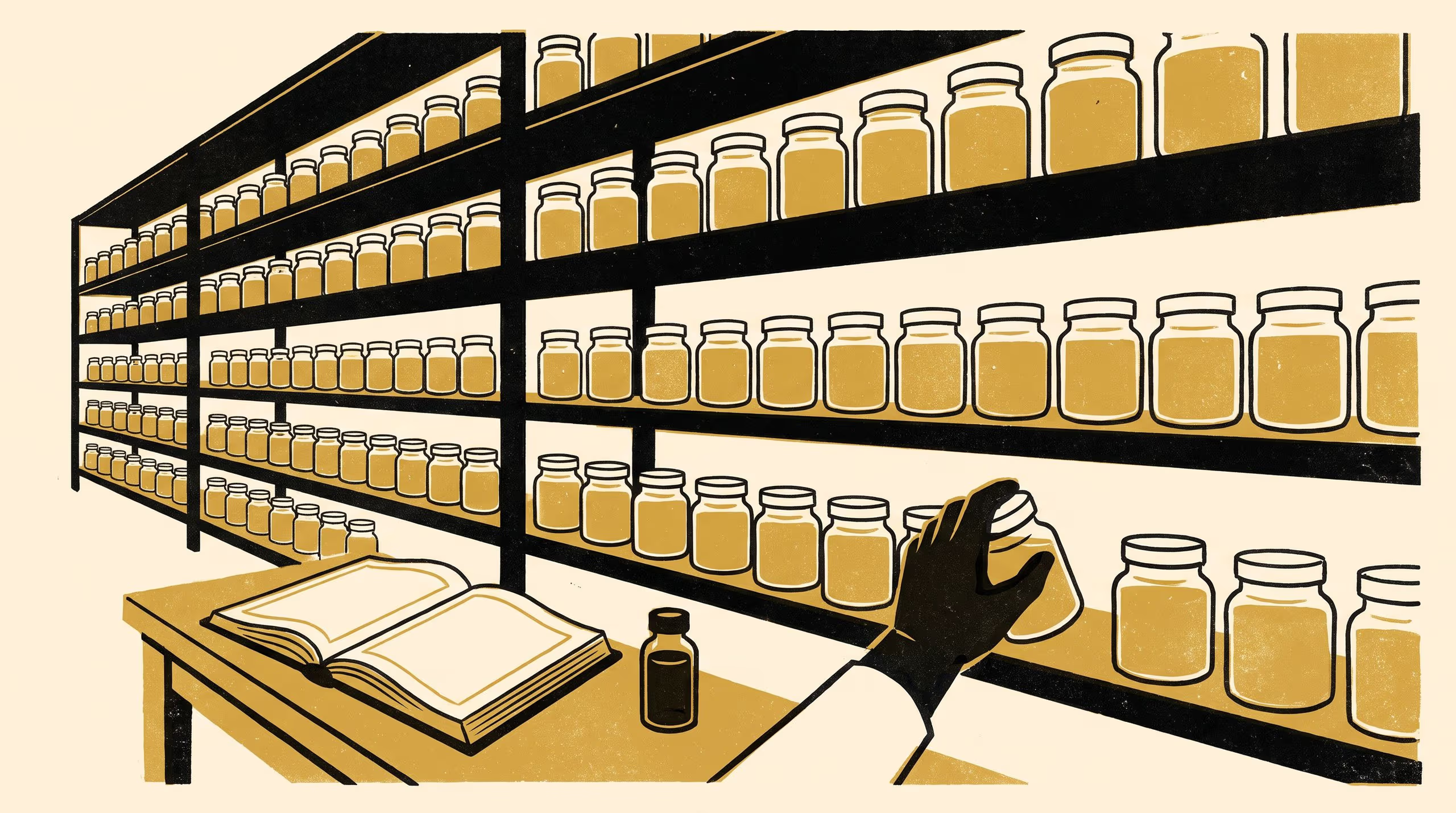
A paper from the School of Emergent Priorities reads a honey-testing laboratory's shelf of retained samples as an archive, and finds its analysts writing down, each time a jar is opened, what it can still be asked.
A research poster from the School of Underlying Conditions sets out how many decades of record are needed before a fractional relaxation law can be told from a pair of ordinary exponential decays.
Slop University's Strategic Plan 2026-2031 commits the University to a cross-school capability in adversarial robustness for machine learning, and to studying the classification boundary as carefully as the systems that draw it.